A Trip to Parliament

A Trip to Parliament

Sophie Johns, CA intern, describes attending the CA’s #CelebratingClassics reception at the Houses of Parliament this September.

For a recent graduate juggling job applications and the prospect of living with her parents again after four years of university, the invitation to ‘A Celebration of Classics’, a parliamentary reception hosted by Dr Peter Swallow MP earlier this month, was an exciting opportunity to come to London and meet some new and inspiring classics enthusiasts. The Reception marked the sixtieth anniversary of Classical Civilisation as a qualification subject in England, a milestone recognised by Prof. Arlene Holmes-Henderson and Prof. Edith Hall in their seminal 2025 publication, Classical Civilisation and Ancient History in British Secondary Education, which we also celebrated. It was brilliant to come together to celebrate the study of the entirety of the classical world, not just ancient languages, and the ongoing work of the All-Party Parliamentary Group for Classics, chaired by Peter and administered by Gráinne here at the CA.

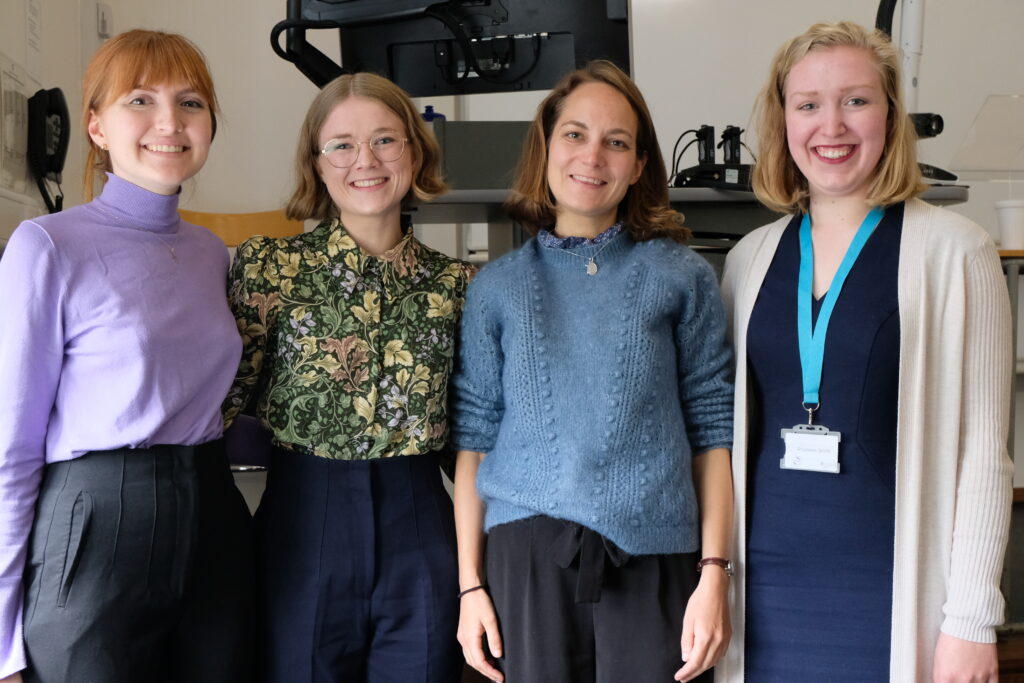
Embarrassingly early due to Tube strike anxiety, I waited in Parliament Square and watched pigeons fly between the stone heads of various parliamentarians until it seemed appropriate to start queuing at the visitors’ entrance. Some initial networking came from an unexpected source in the queue (at 22, usually I am the enthusiastic instigator) – a friendly Welsh engineer thought I was also attending the twentieth anniversary celebration of the Nuclear Disarmament Agreement; instead, we chatted about his teenage daughter and parted ways at security. Heading through the cavernous Westminster Hall to the picturesque Thames Pavilion, with its views of Westminster Bridge and the London Eye, I was greeted, in what I can only describe as the fanciest and warmest marquee I’ve ever been in, by Katrina, the CA’s Engagement Co-ordinator and my manager during my time as an intern this summer, as well as my fellow interns Jasmine and Claud.
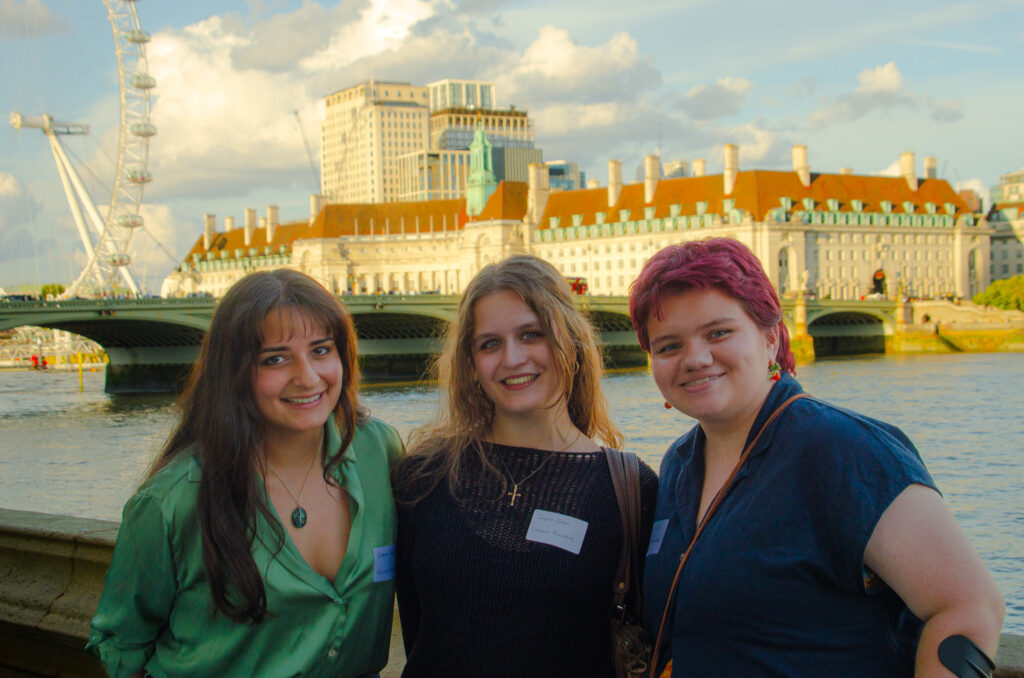
Having previously only seen each other in tiny boxes on a screen, we were delighted to discover that we were all almost exactly the same height, and we soon become firm friends. Canapés were handed around, and there is a wonderful photo of the CA’s Honorary Secretary, Prof. Sharon Marshall, and myself laughing as we realise that Jasmine is snapping pictures of us as we shove bits of fish on crackers into our mouths. The highlight of the event for me was meeting so many inspirational and fascinating people, like Sharon, who have succeeded in making their passion for Classics their career. As a woman in her early twenties trying to do the same, it was encouraging to feel the support and understanding of those who, in my mind, have ‘made it’, including academic editors and museum professionals.

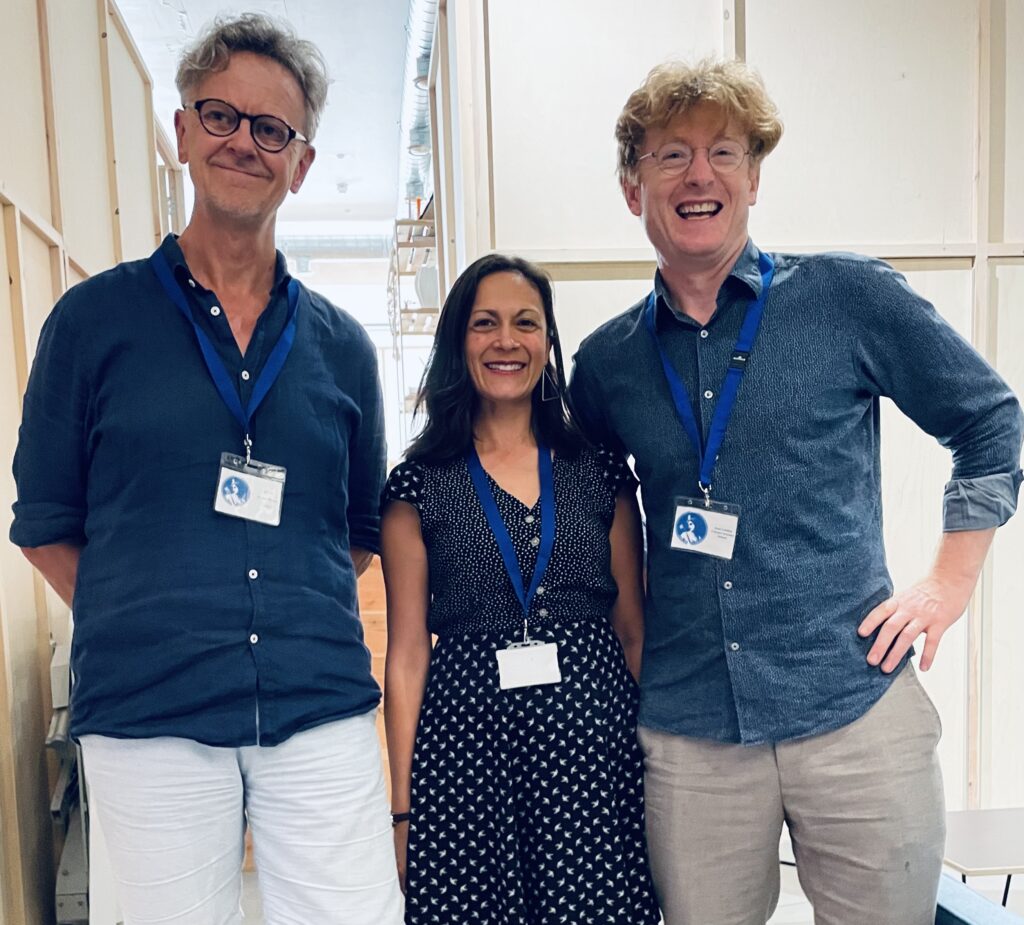
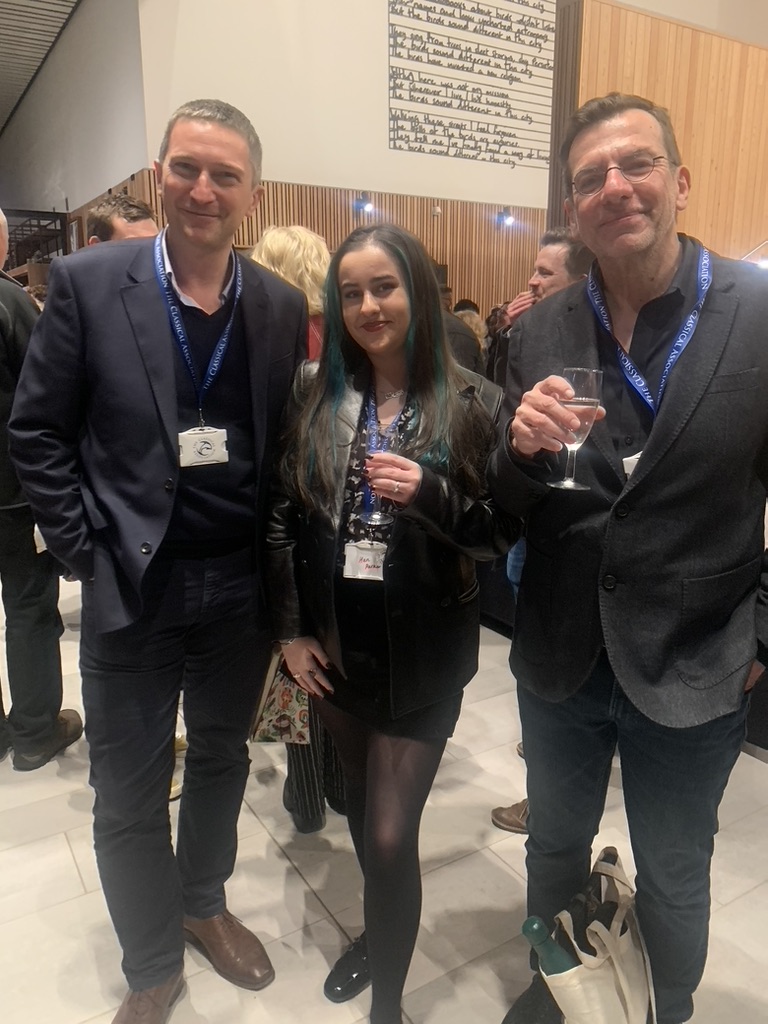
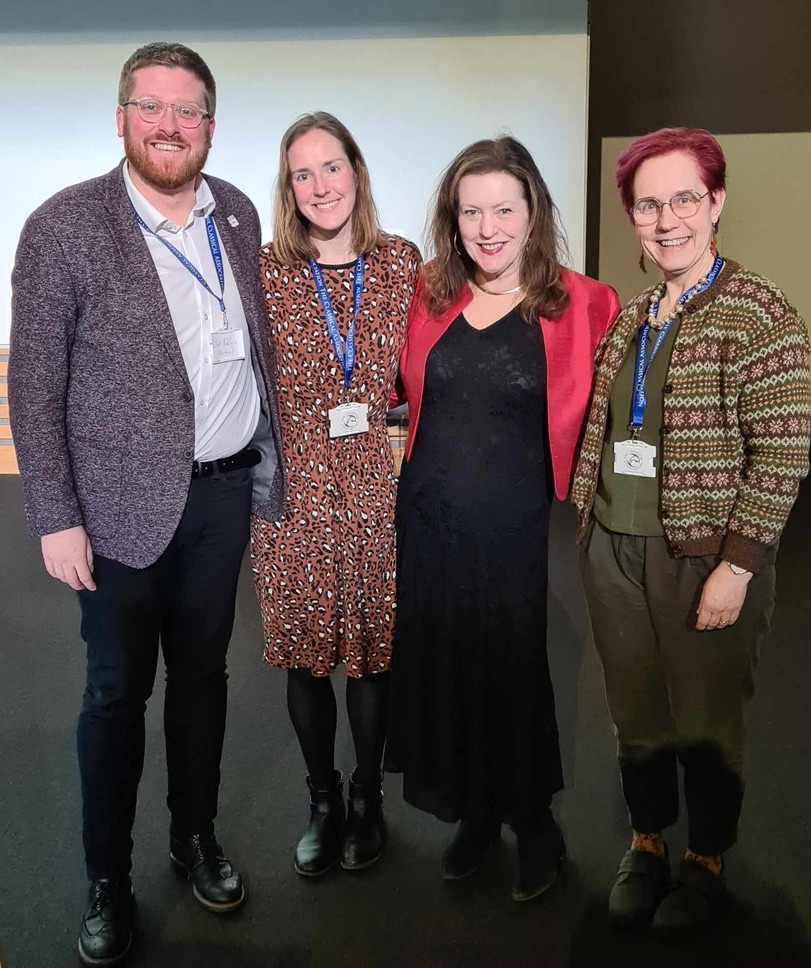
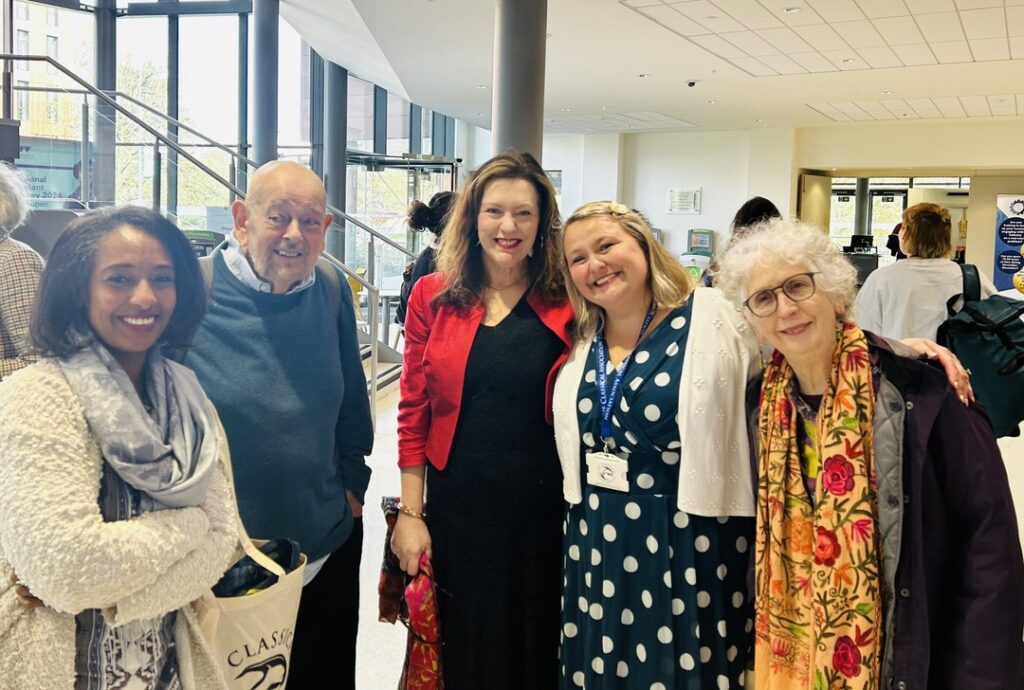
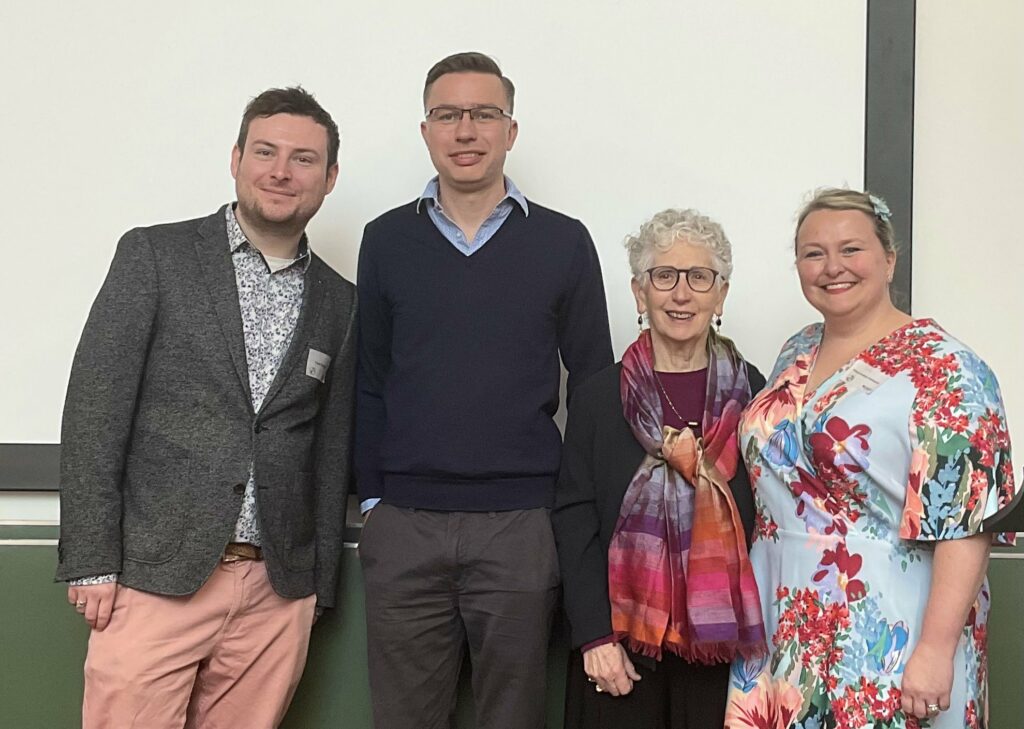
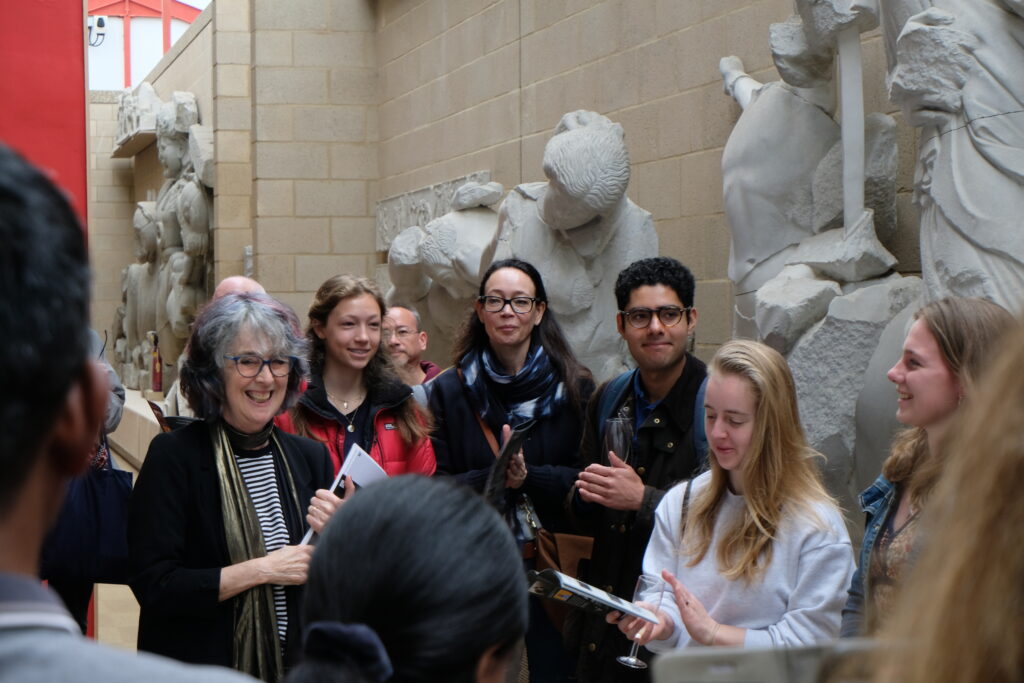
It was great to meet Prof. Katherine Harloe and Dr Kathryn Tempest from the Institute of Classical Studies (pictured here with Prof. Claire Gorrara, Pro Vice-Chancellor (Research and Public Engagement) and Dean of the School of Advanced Study) and other members of the Classics Development Group, and find out more about their joint work to advocate for classical subjectsI was particularly excited to meet my academic hero, Prof. Edith Hall, whom I shocked into silence by talking incessantly about how much I liked her translation of line 742 of Aeschylus’ Agamemnon. You can enjoy Edith’s Life in Classics’ video as part of the CA’s Campaign.
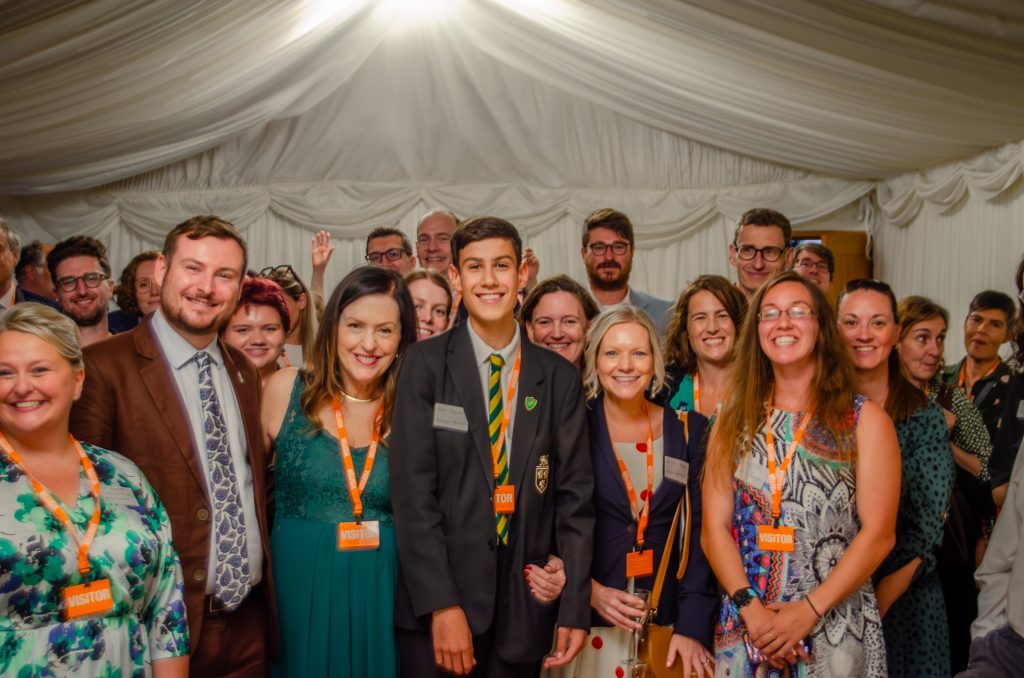
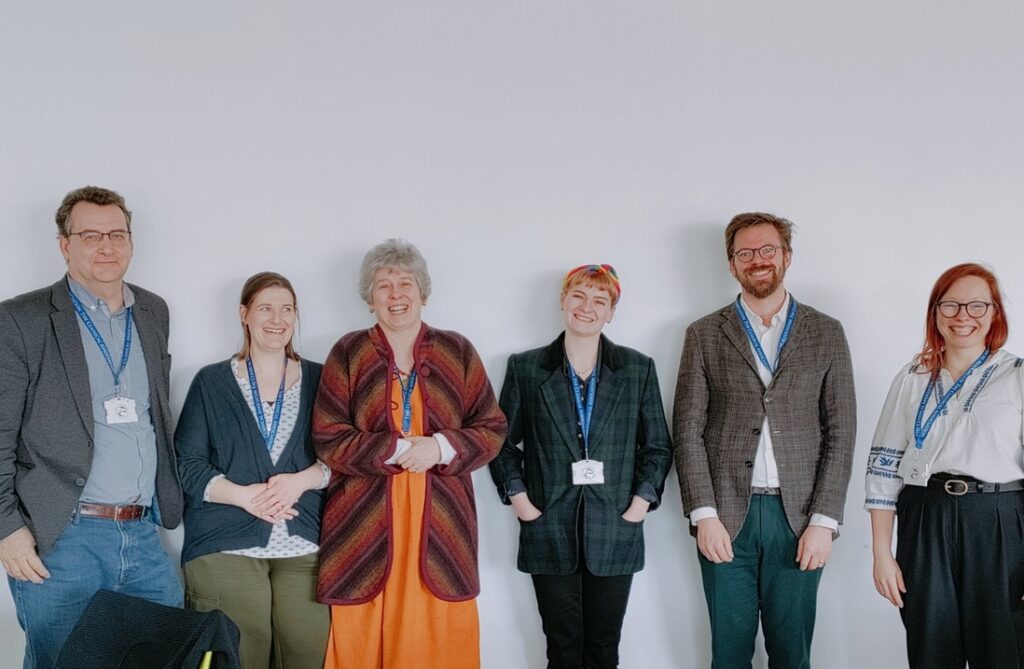
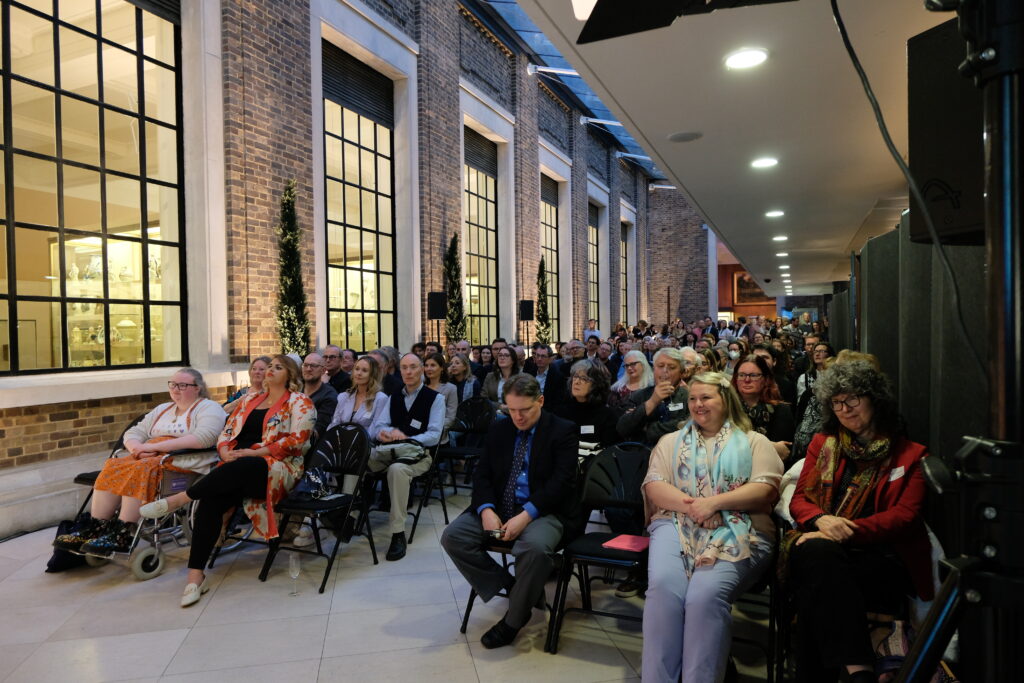
After speeches from Peter and Katrina, we all posed for a group photo (see above!). Although I was lucky enough to study Latin in secondary school, I am certain that I would not have chosen to study Classics at university had I not taken Classical Civilisation A Level at college. Declensions and ablative absolutes are important, yes, but they do not solely a classicist make. More often than not, young classicists are inspired by myth, religion and culture, not just the complexities of ancient grammar, and an engaging, well-rounded classical education necessitates that we interact with material culture and literature (in translation too!) as well as language.

Prospective young classicists are devouring Natalie Haynes, Emily Hauser, Madeleine Miller and other authors who write about ancient cultures in all their complexity. If we want to produce classicists who are both excited by their discipline and are thoughtful, open-minded and productive members of their community, Classical Civilisation is undoubtedly an essential part of the curriculum.

©SophieJohns

All photos thanks to Jasmine Klein
Posted in CA News, Event Roundups
The East London Classics Summer School
The East London Classics Summer School

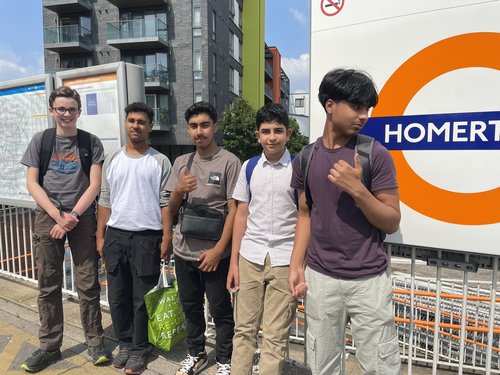
Course Director Sarah reports back on this year’s ELCSS – one of several fantastic summer schools which the CA is proud to support. To find out more about our outreach activity and grants scheme, browse our pages here.

We were so pleased to have been able to offer a record number of full and half bursaries this year, courtesy of the Classical Association, the Society for the Promotion of Hellenic Studies, and Professor Mary Beard. We offered financial support to over 75% of our students. These students have Pupil Premium or Free School Meals eligibility, and/or are from single parent families, and/or from families experiencing other financial difficulties. 68% of our students are from non-white backgrounds, and over half spoke languages other than English at home with their families.

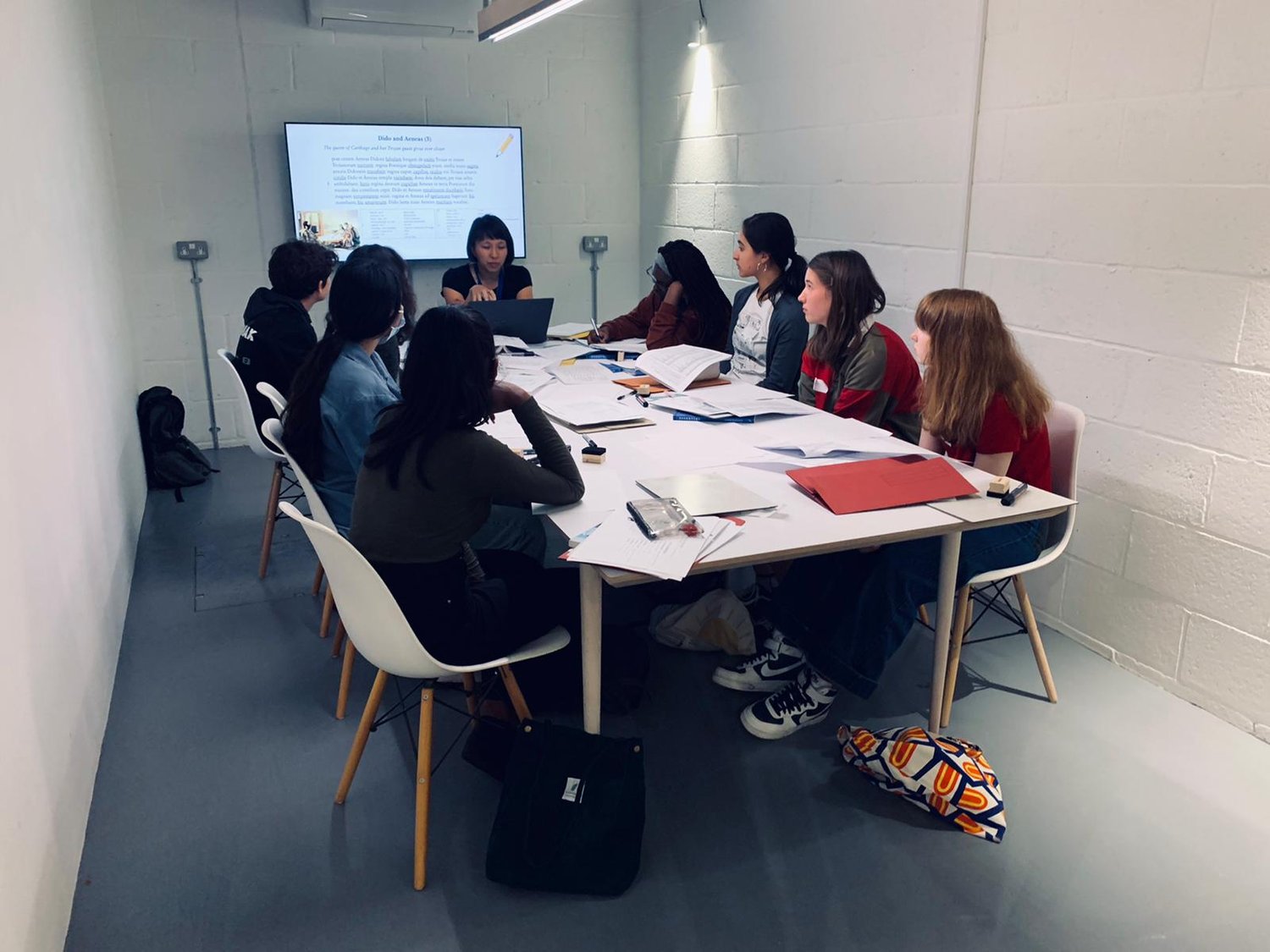
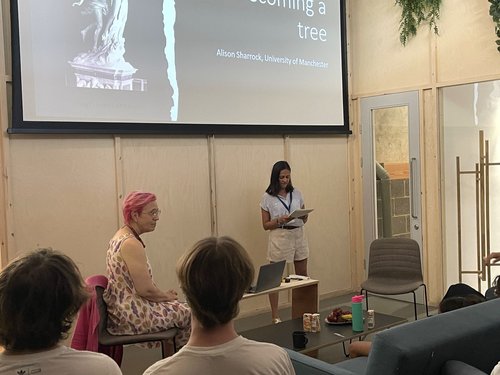
Our first lecture was delivered by William Lawrence, who spoke about the influence of ancient Greece and Rome in all aspects of our lives, and we were treated to a talk specifically on ‘Classical London’. This was the perfect way to start the week. Professor Alison Sharrock (Manchester) delivered a spectacular session on ‘eco-criticism’ and more specifically, Ovid’s beautiful story of Baucis and Philemon, which will be the students’ prescribed Verse text next year.

Dr Olivia Elder (Oxford) spoke about Messalina, the Emperor Claudius’ third wife, who features in the work of the historian Tacitus, the students’ prescribed Prose author. We also invited Laura Thomson-Turnage, who came to us from the London Museum and gave us a sneak preview of the gallery’s newest collection on the Romans. We were treated on the Thursday afternoon to a lecture by Professor Daniel Orrells at King’s College, London itself. Daniel spoke on the other set verse text, Virgil’s Aeneid I, which is the story of Rome’s legendary founder, Aeneas. This is a story of migration, of families, of people, of hard work and perseverance in the face of adversity.

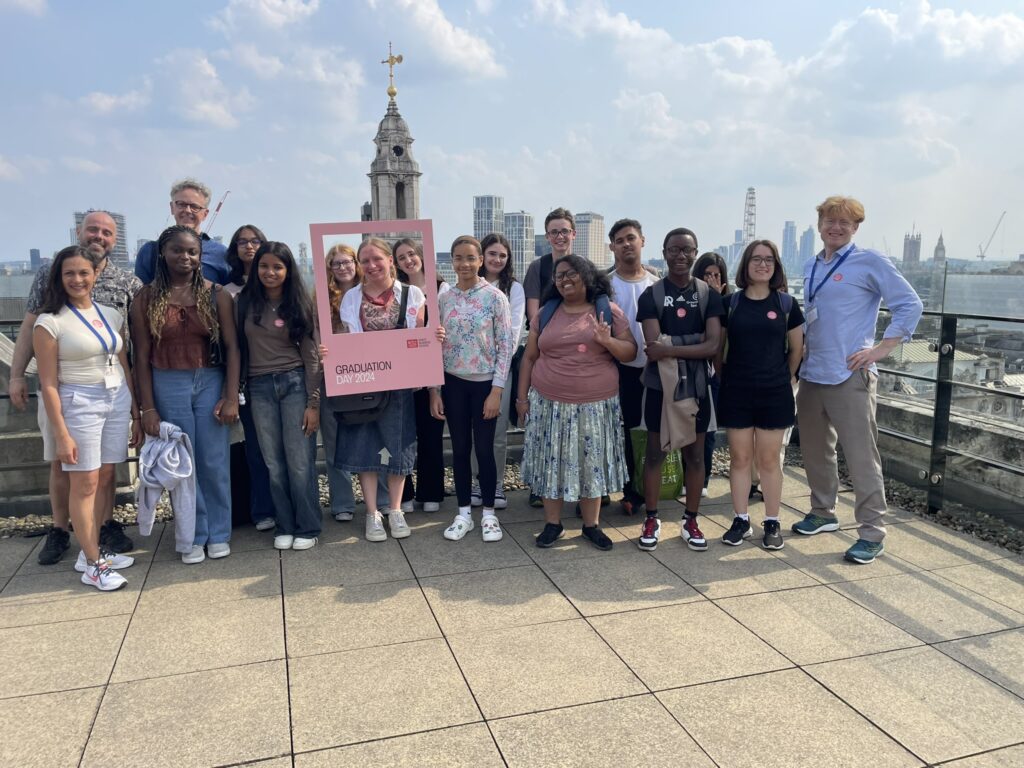
The students were given a taste of university life as we were taken on a tour of the college, which included exclusive terrace views of London in the sunshine, a visit to the college chapel, and a little party at the end to congratulate the students on their hard work throughout the week! The lecture series and the off-site trip are designed to encourage the students to consider Higher Education alongside more advanced classical routes. There are many opportunities out there and ELCSS tries to demonstrate to young peoplethat these options are accessible to all who are keen. We are very grateful to all of our speakers who gave of their precious time, answered a whole array of different questions, inspiring another group of really keen budding Classicists.

A surprise appearance from Professor Mary Beard at the end of the week congratulated our students on their outstanding work ethic and dedication over the five days. She also spoke about the importance of Classics in her life and its relevance to modernity, citing empire, race, gender, and power in her message. The students were on the edge of their seats as they listened to her weighty words, and we all felt incredibly motivated. At the end of the week, the students, after a pizza lunch and a spot of table tennis, were presented with achievement certificates to recognise the progress they had made as well as a bespoke valedictory report detailing their strengths. Students and parents unanimously agreed that the summer school had been a very positive experience and, most notably, boosted their confidence in the subject. Some of our students also expressed the intention to continue with a Classical subject at A Level and even university, which was fantastic to hear!

As the students said: “I really just want to thank you so much for all the time and effort put into our lessons and the lectures. I really enjoyed it and it’s really helped improve my Latin!”

“Thank you to all the sponsors for the bursaries without which I wouldn’t be here. It’s been difficult but worth it. Definitely rewarding and certainly improved my Latin”

“Thank you so much for the amazing opportunity!”

And a teacher: “Thank you for sponsoring my students over the past few years! It’s made a big difference. Best wishes and keep up the good work”

A heartfelt ‘thank you’ to all of our sponsors and supporters of our initiative. We now look forward to welcoming students to our two-day Easter Revision course, which will take place on 7th and 8th April 2025. For further details, please visit our website: www.eastlondonclassicssummerschool.com and, if you have any questions, or would like to support us in any way, email us at eastlondoncss@gmail.com.

Posted in Event Roundups

A Weekend in Warwick

A Weekend in Warwick

This March, we headed to the University of Warwick for the 2024 CA Conference, where hundreds of delegates from across the world came to share their research, exchange ideas and build friendship and collaborations.

Our huge thanks to the organising committee, headed by Prof. Alison Cooley, Prof. David Fearn and Dr Paul Grigsby, and all of the conference, support and IT staff at the University of Warwick as well as everyone who contributed, joined us remotely, sponsored different parts of the conference, and who helped created such a friendly, positive and collegial atmosphere.

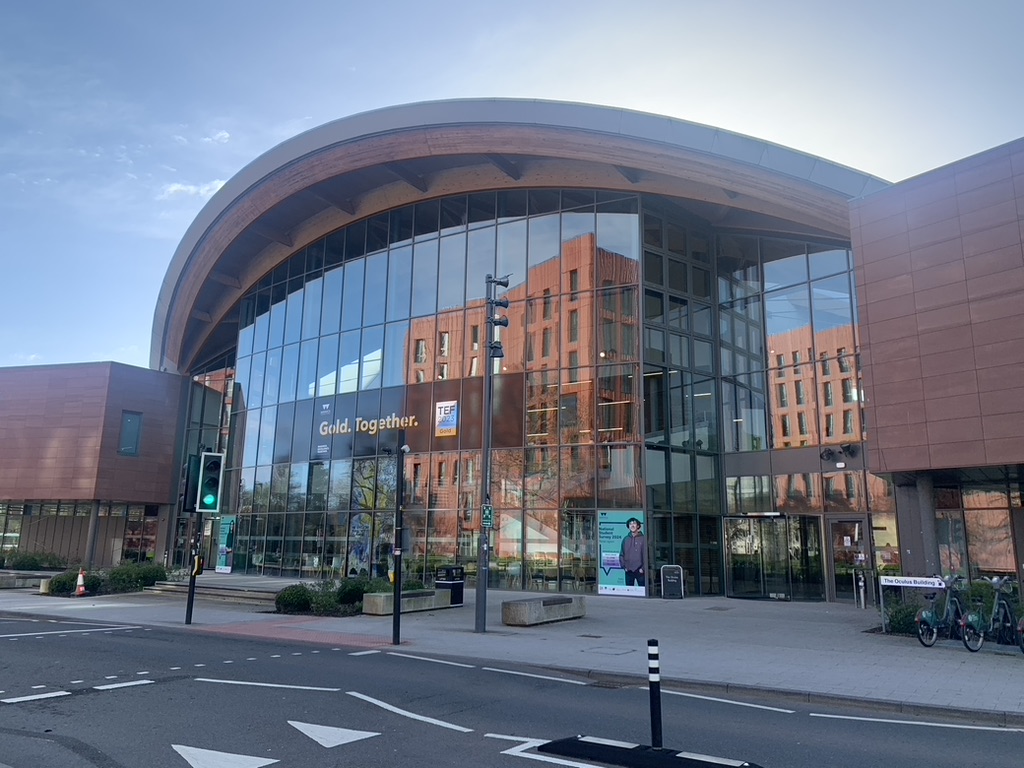
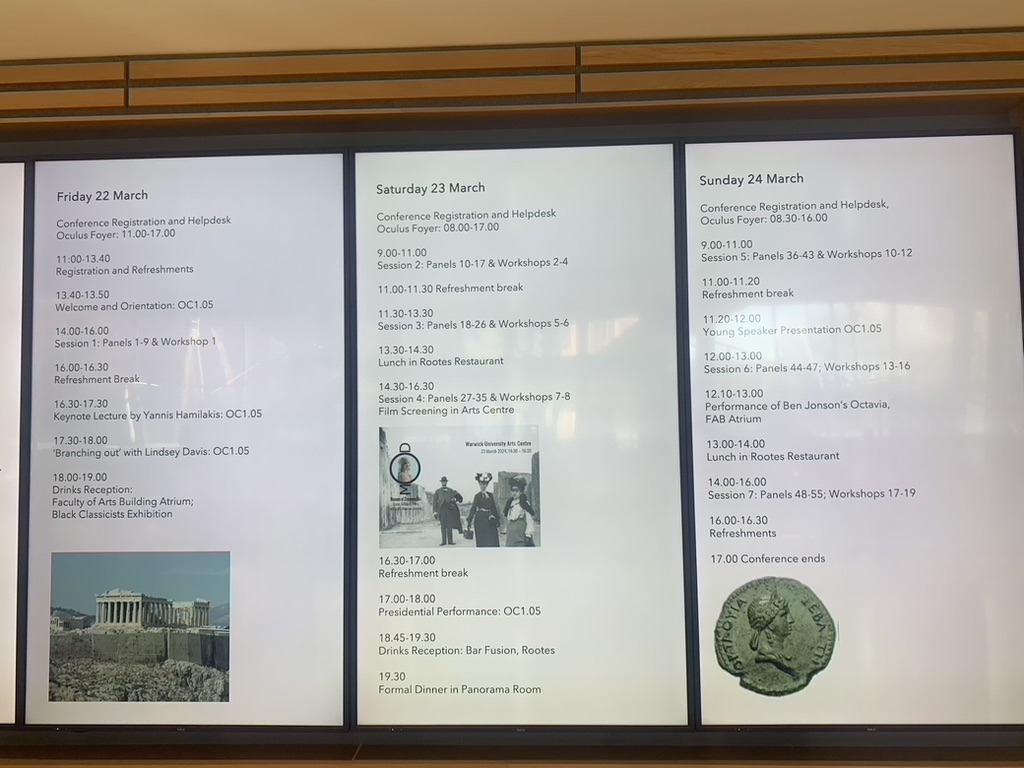
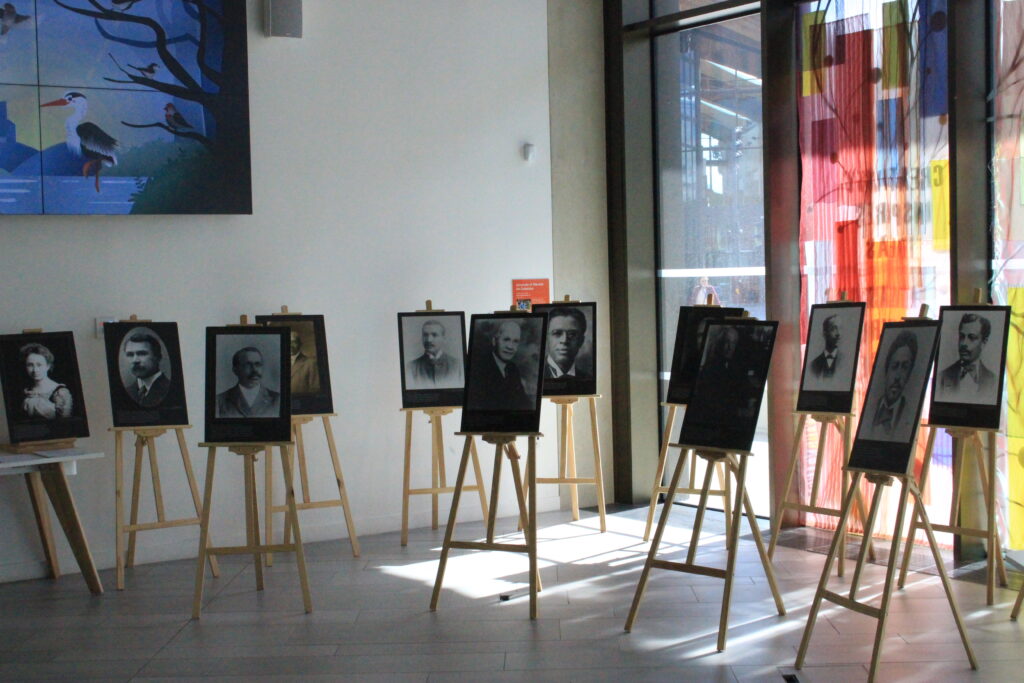
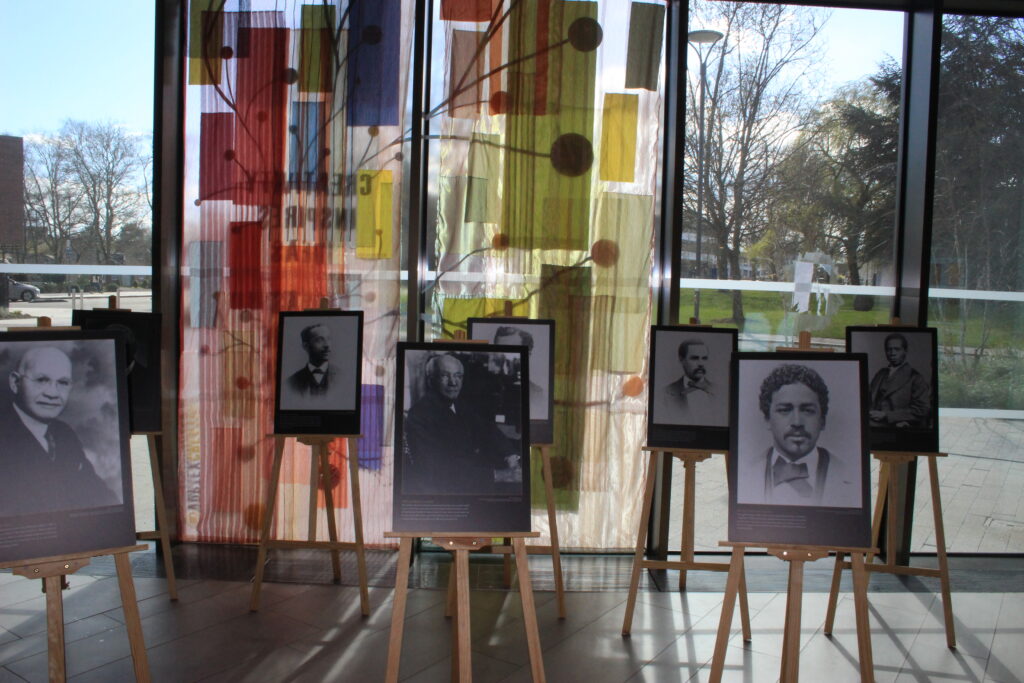
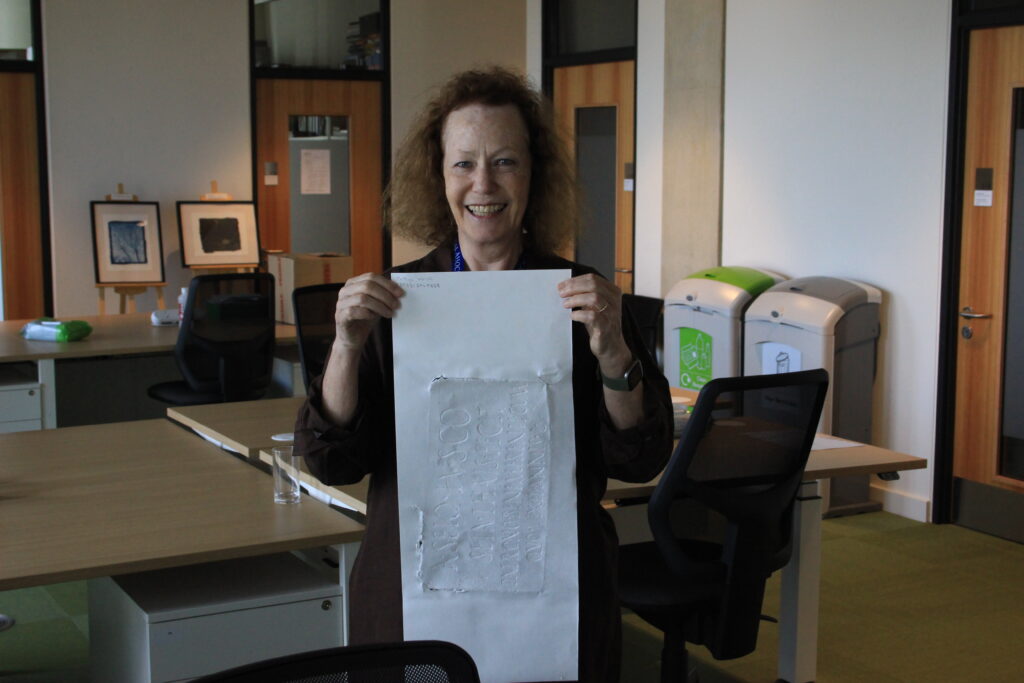
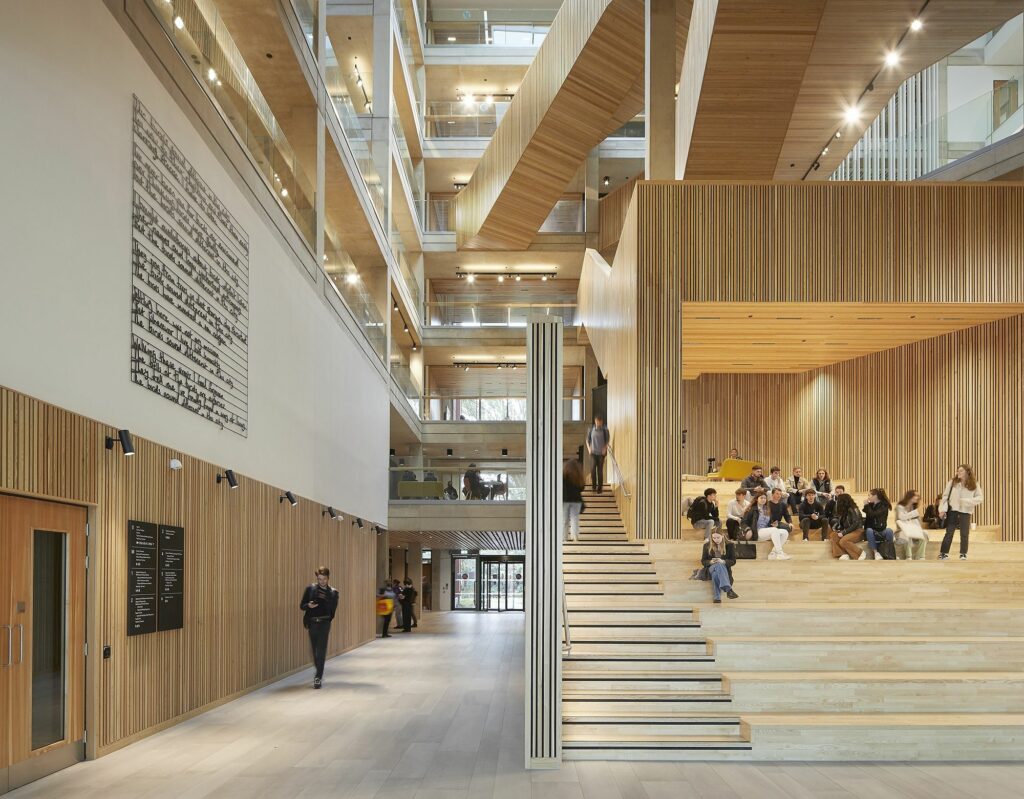
Based in the Oculus building, we enjoyed a packed schedule of papers, panels, workshops and plenary events; the award-winning Faculty of Arts building was also used for a trio of activities – a drinks reception, an epigraphic squeeze making workshop, and a performance of David Wiles’ Octavia – as well as to showcase the Black Classicists exhibition.

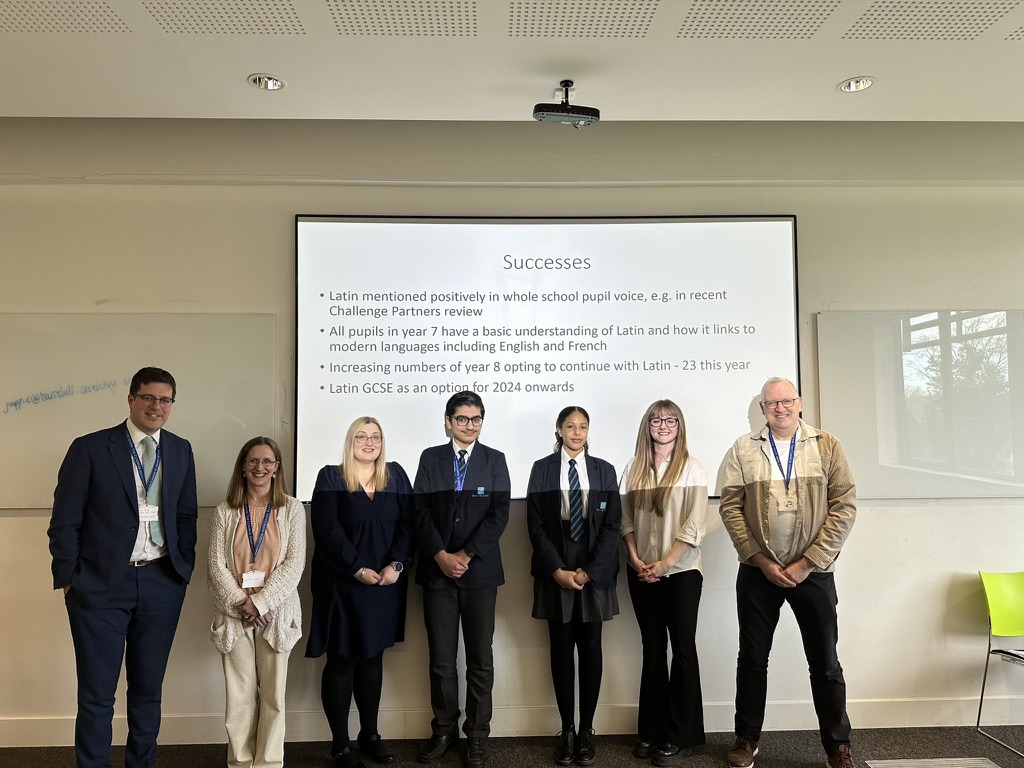
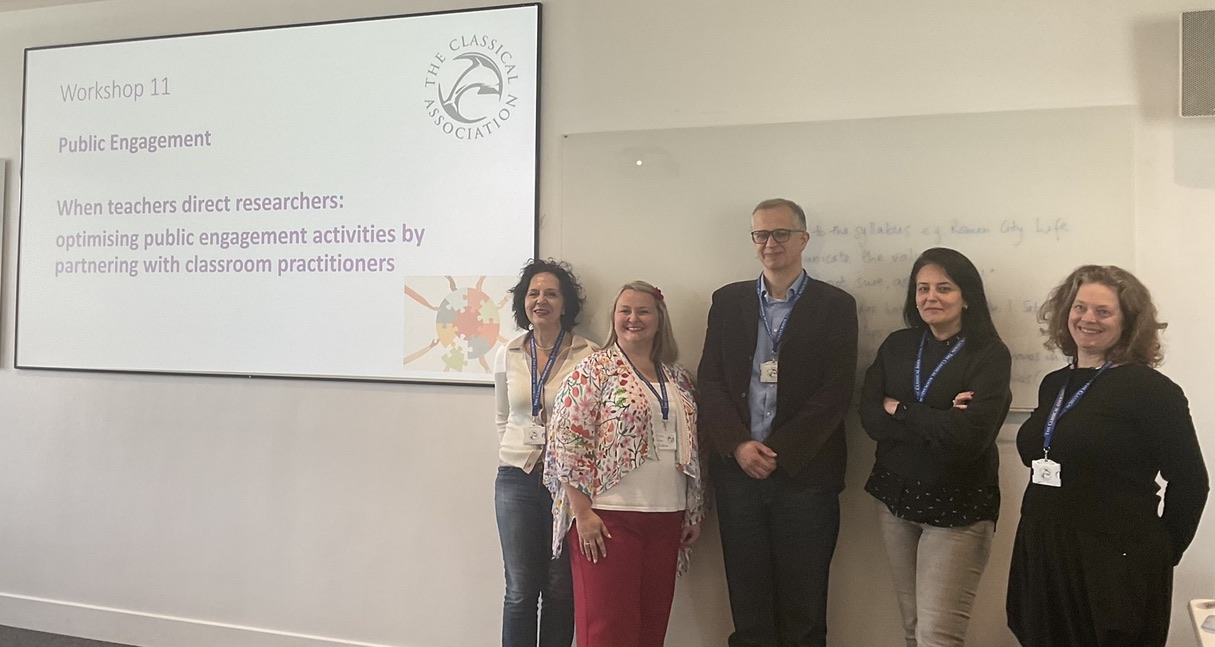
There was strong representation from the teaching community, with teachers from a wide range of schools both attending and presenting at the Conference. Panels and workshops with a pedagogical focus ran throughout the weekend, with papers focussed on topics such as teaching with inscriptions, teaching in diverse settings and teaching in translation. At the workshops, discussions centred on increasing engagement in classical subjects from school through to university, and EDI in Latin language teaching. The Classical Association Teaching Board also ran a very well attended session focussed on their Qualifications Review, and the work they are doing with the exam boards to prepare for the next round of reform. It was wonderful to see academics and teachers collaborating and sharing ideas both in and outside of these workshops, and we hope that these conversations inspired practitioners from both sectors to continue working together in the future. 

Student Blog

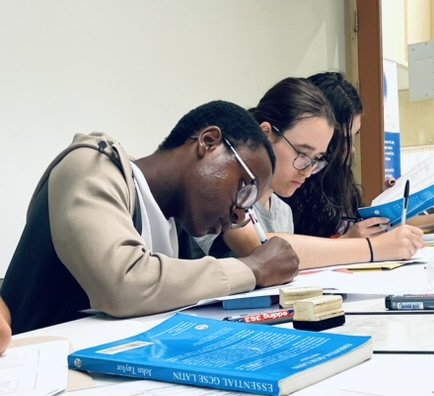
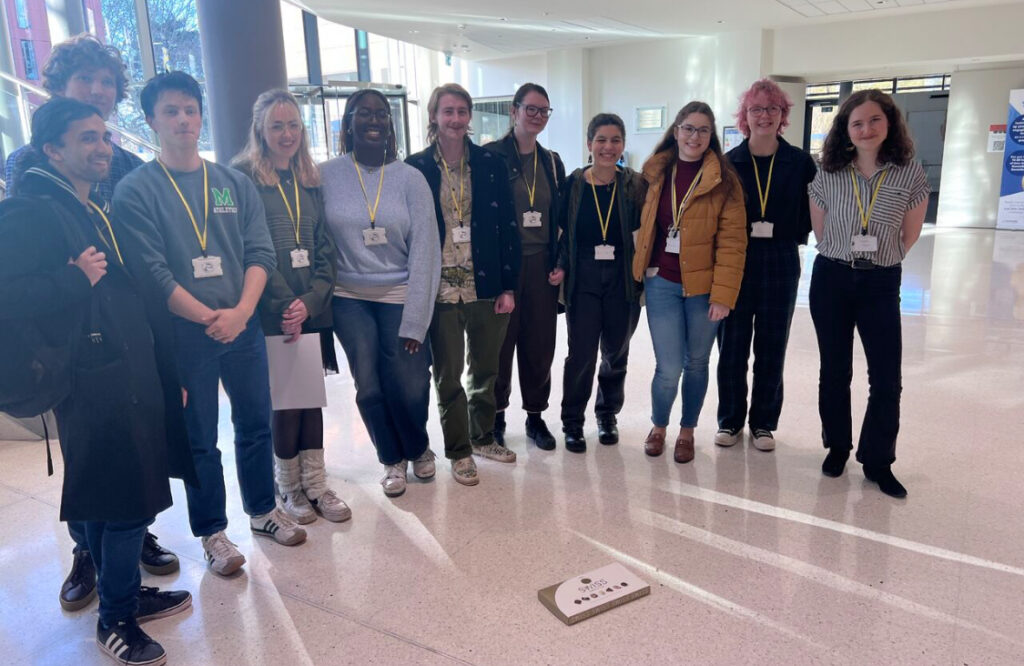
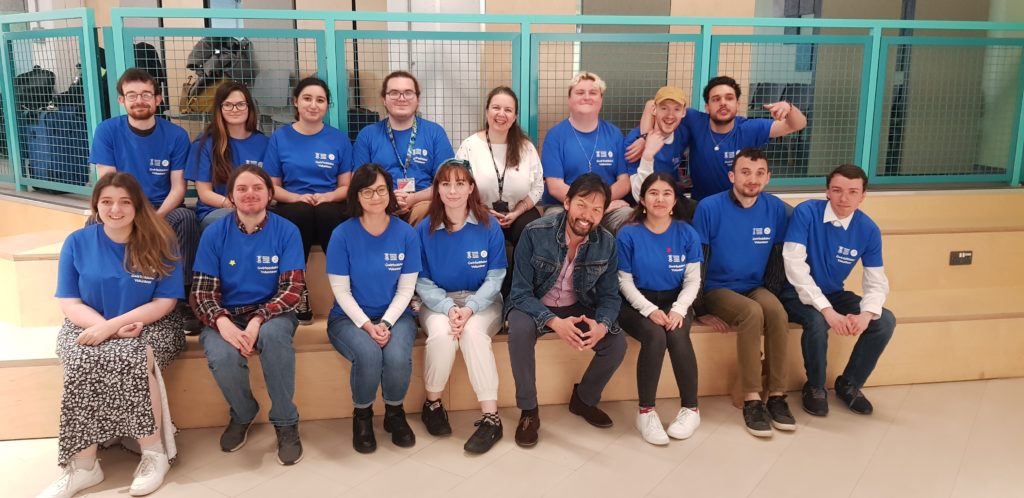
Undergraduate Lily Birch writes about her weekend as one of the team of enthusiastic and efficient student helpers:

Just some of the team of student helpers!

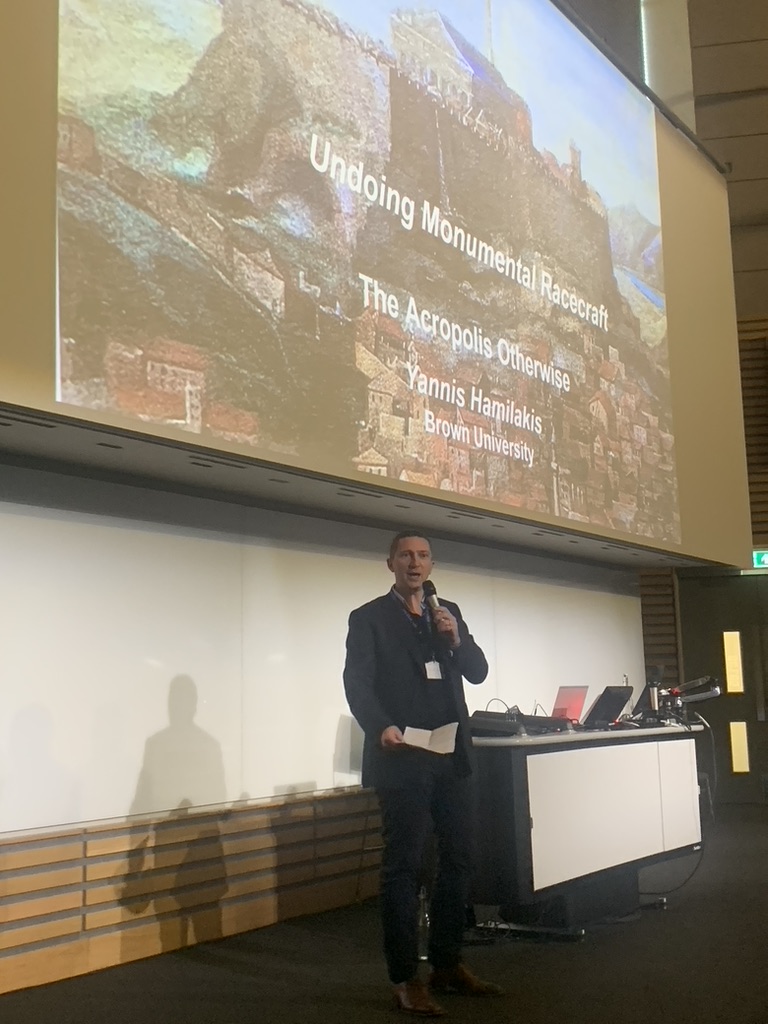
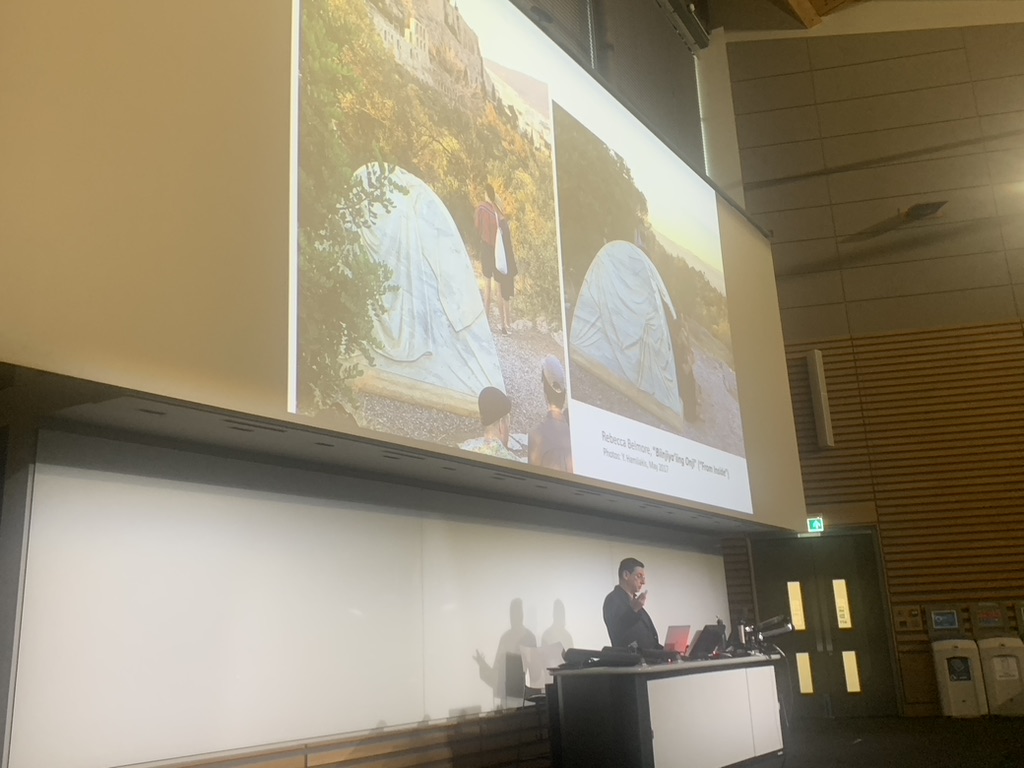
The plenary lecture by Prof. Yannis Hamilakis was outstanding. As I’m sure everyone who attended will agree, his insightful discussion on the often ignored history of the Acropolis particularly in the Ottoman period was enlightening. I was particularly fascinated by its use as an Islamic burial site, a history of the monument I had no awareness of. His message about the importance of deconstructing racecraft will stick with me throughout my studies of Classics, and is an important examination of how we can improve as a discipline. After that we enjoyed an interview with Katrina Kelly and Lindsey Davis, who inspired us to seek out our local CA Branch across England and Wales.

Prof. Michael Scott introducing and then handing over to Prof. Hamilakis

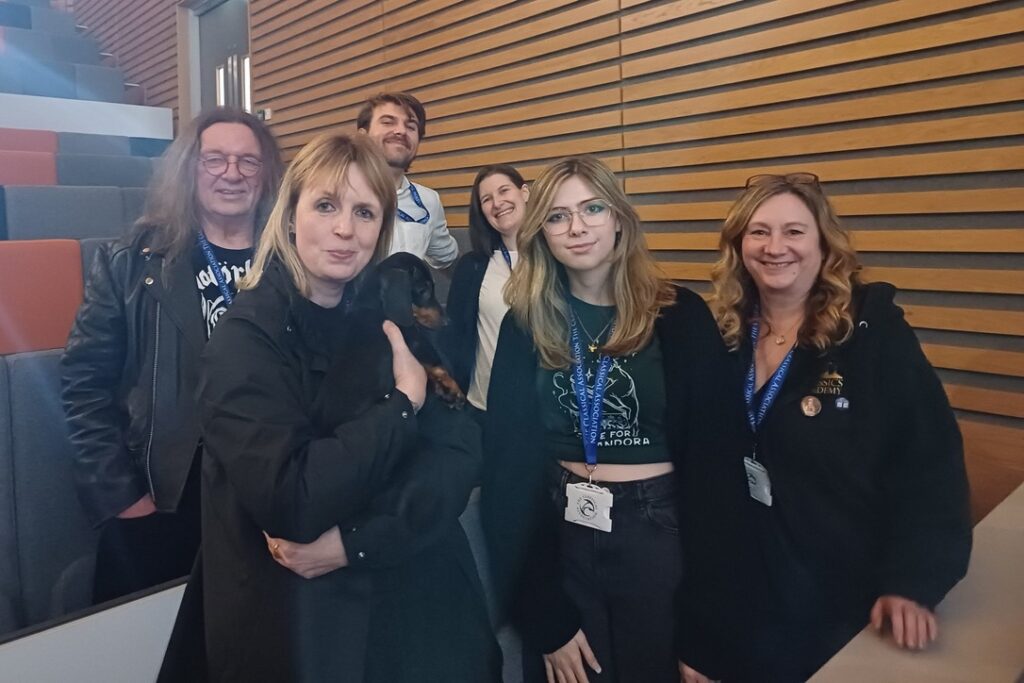
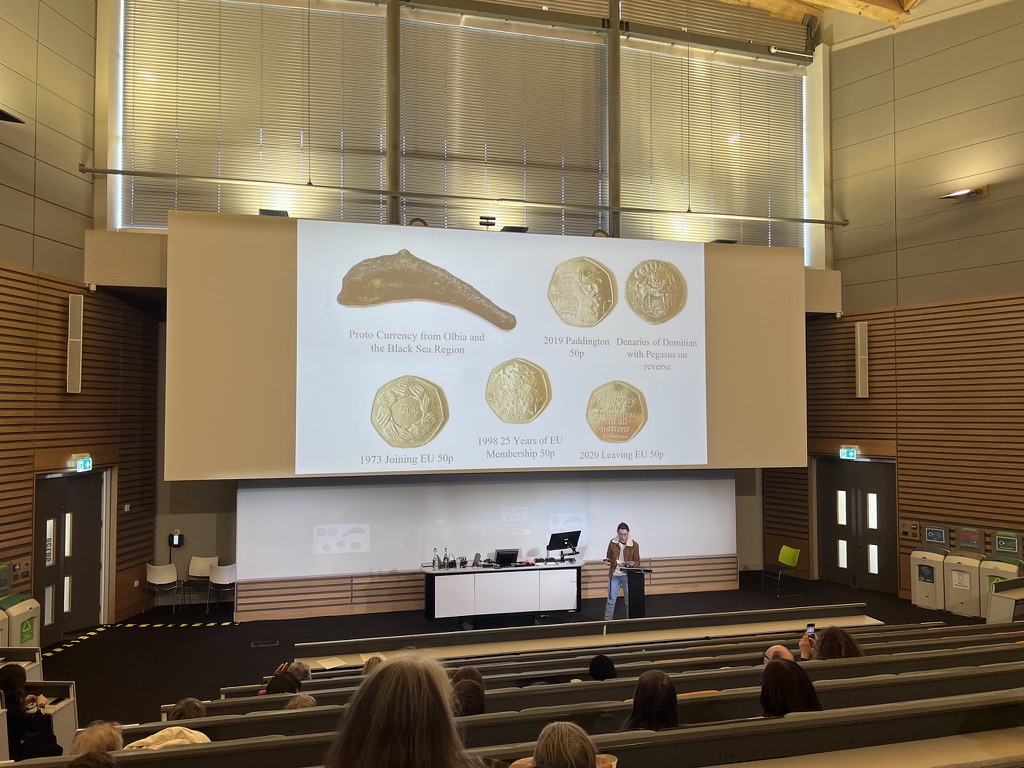
Saturday was an incredibly busy day, everyone was immersed in the conference for the entire day – at least once we’d fixed the revolving door – and those who met Mable the dachshund will agree that she was one of the stars of the conference!

Mabel the Daschund with friends!

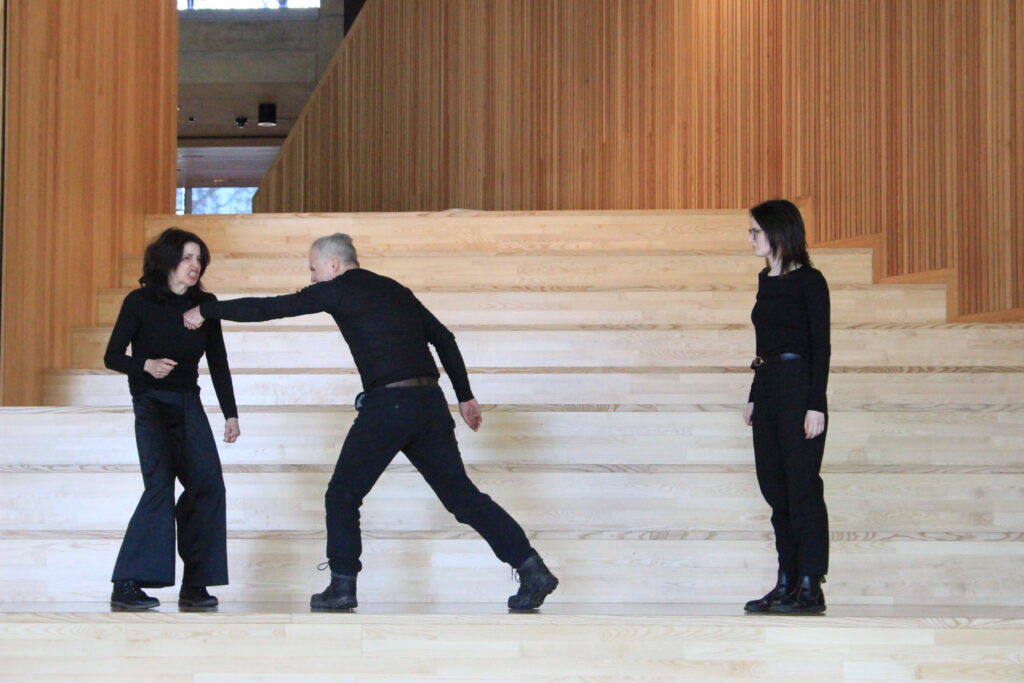
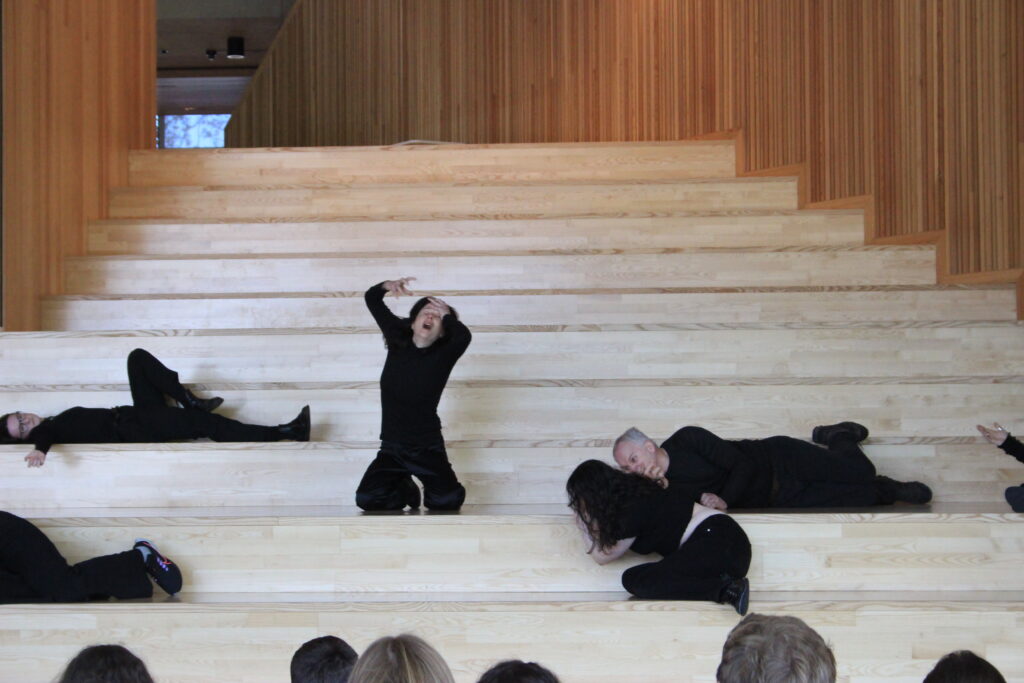
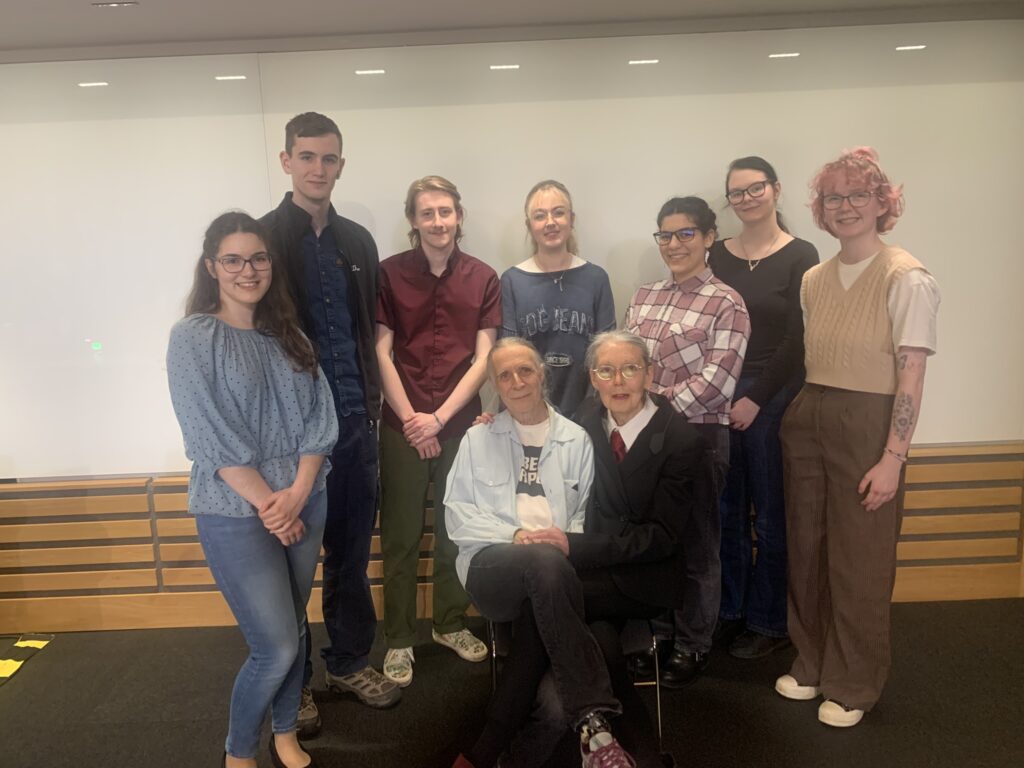
Without a doubt, my personal highlight of the weekend came on this day – I was part of the presidential performance Cassandra Float Can with the CA’s president, Anne Carson, as well as her partner, the artist Robert Currie. The group of student helpers which were involved with this performance formed an impromptu chorus, carrying around photographs of artwork to illustrate the messages of Anne’s speech. Granted, we didn’t know what exactly we were doing until a few hours before the performance. I think I speak for all the performers involved when I say the semi-improvisational aspect of the piece added to the chaotic but exciting energy of the day, and certainly bonded us. The unusual nature of the performance will certainly help it stick in the audiences’ minds for a long time to come. Anne and Robert were absolutely lovely people, and we were all struck by how down to earth they are. This was a truly once in a lifetime experience, and one which I will never forget.

Some of us with Anne and Robert!

The formal dinner hosted by the CA is another highlight for many delegates – a night of wonderful food and conversation with Classicists was truly inspirational- not to mention the awards presentation highlighting the incredible work people in the field are doing. Congratulations to all winners! Click on these links to view the winners of the CA’s 2024 Teaching Awards and CA Prize.

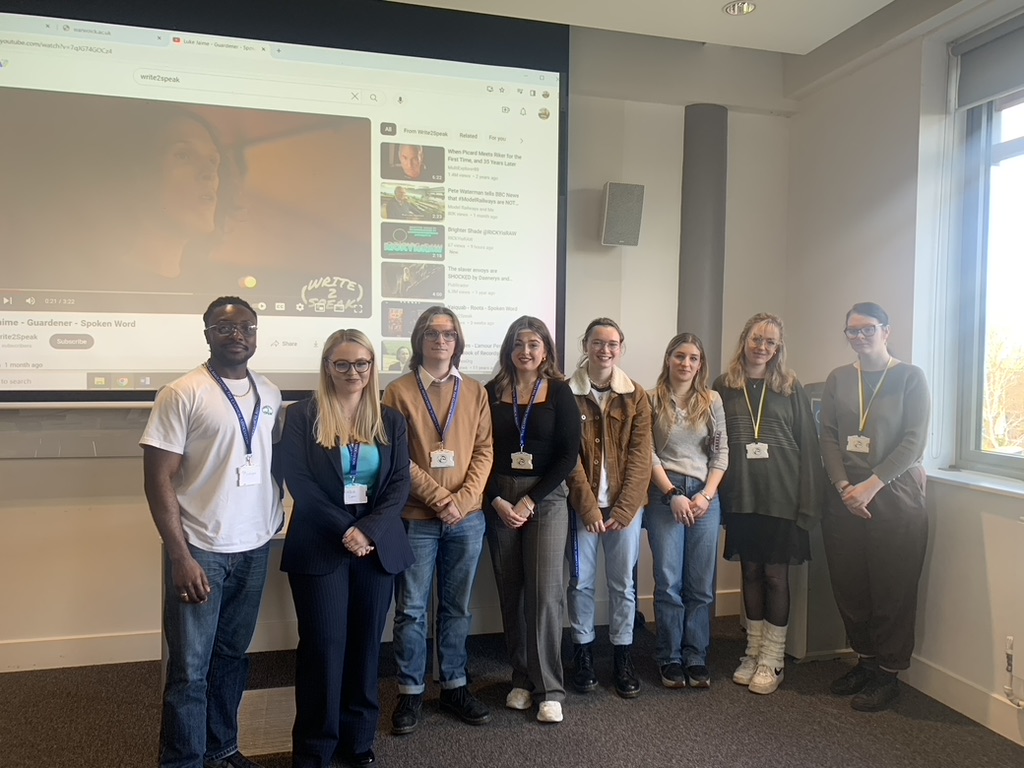
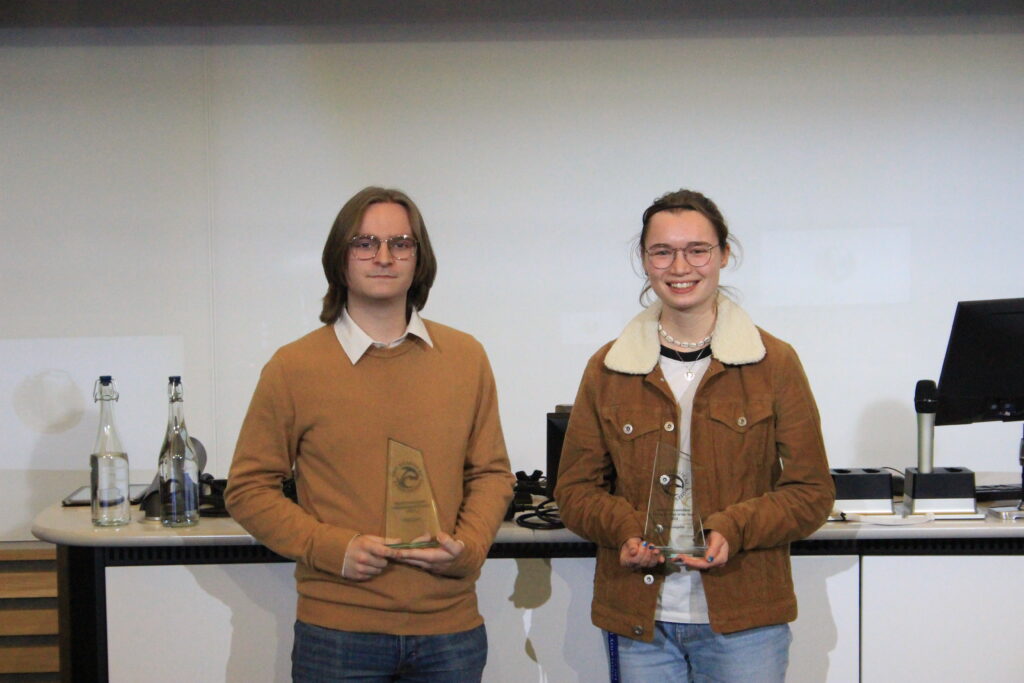
Speaking of awards, Sunday brought with it the Young Speakers presentation. Kitty and Oscar both delivered incredible speeches and I wish them every success in the future, they can only go from strength to strength. Congratulations to them and to the other highly commended speeches. Following this, the Write2Speak workshop was another incredible experience. Having the chance to hear from others as well as writing and sharing myself was cathartic. I’ve definitely taken away a lot from it.

Some of the Young Speakers with judge and workshop lead Tyler Luke Cunningham, an actor and spoken word artist

I attended a fascinating panel on teaching classics outside the UK, at which I heard the efforts of teachers from Canada and Slovenia in how they are keeping the subject alive and well. As well as a revaluation of the way languages are taught, and a look at increasing diversity within teaching of the subject. This was truly inspiring to me, and the topics raised are in my opinion key to increasing the uptake of Classics.

The weekend was an incredible experience, and everyone I spoke to throughout the conference only had good words to say about it. Hearing from so many incredibly intelligent and talented people has given me, as well as many others I’m sure, much to reflect on and new areas to explore. Thank you so much to everyone involved, and best of luck to St Andrews next July!”

Do be sure to join us all again in Scotland next summer – more news to follow soon!

There were so many other highlights to the Conference: catching up with former colleagues and students; seeing international collaborators meet for the first time in person; watching panels online for those attending virtually; witnessing the screening of silent films with a live pianist; workshops on topics as varied as virtual reality, lego building, Doctor Who, linguistics, numismatics and Classics in Coventry. The breadth was incredible!

Posted in Event Roundups

Wild Visions in Sheffield

Wild Visions in Sheffield

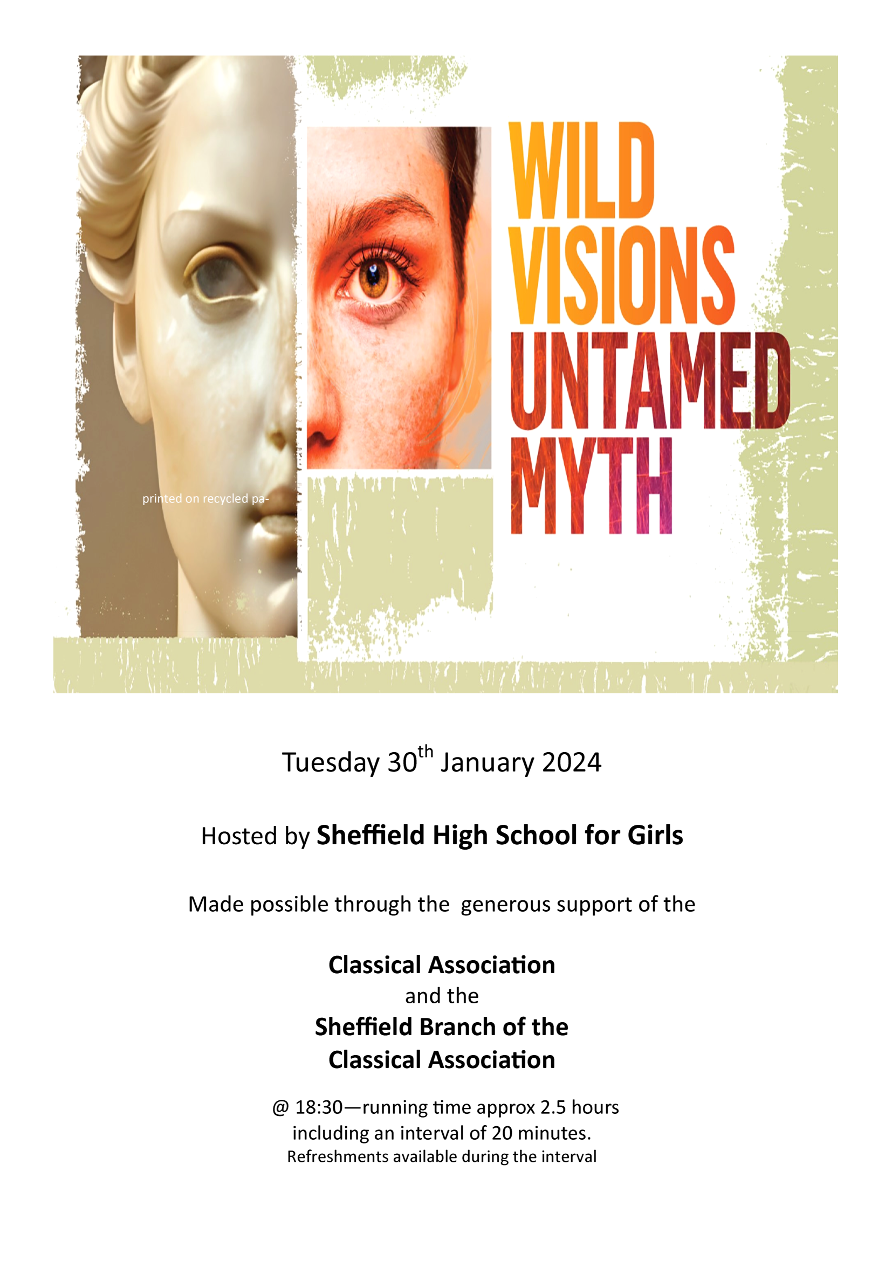
In January, thanks to a grant from the Classical Association and organisation from Sarah Fryer (Sheffield High School for Girls) and Gina Johnson (High Storrs School), the Sheffield and District CA branch held a schools workshop and special public event – a performance of Wild Visions: Untamed Myth by storytellers Katy Cawkwell and Lucy Lill.

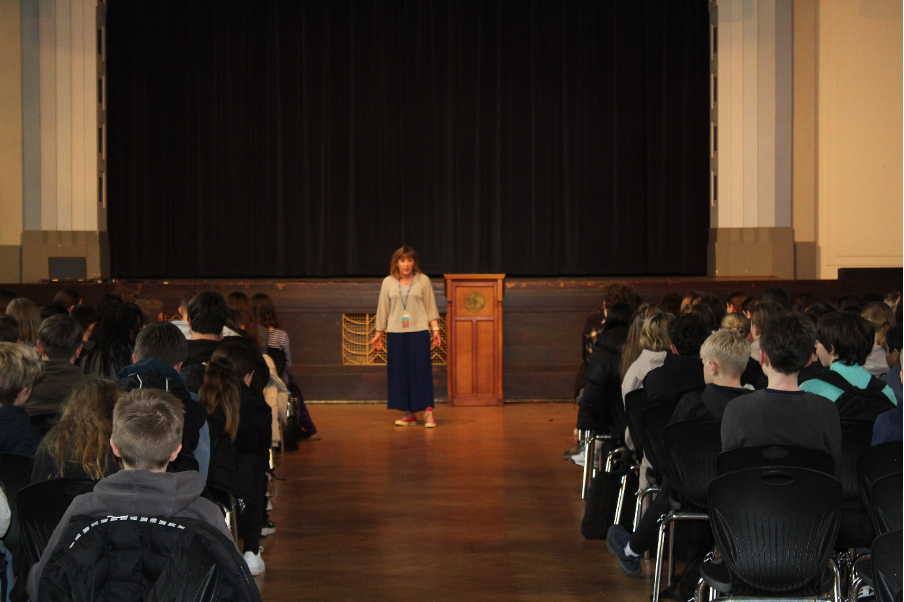
The event appealed to a wide audience and in the opening workshop Lucy told various episodes from the Jason cycle of stories to an entire Year 8 cohort of 240 students, plus a few Year 9s and Year 12s, for almost an hour, holding her audience spellbound throughout with her skill and energy. It was wonderful to see the oral tradition still alive and kicking! There was time for a few questions at the end and there were many hands up, mostly wanting to know what happened next – a sure sign that the students were fully engaged in the process. Applause was loud and long!

The event appealed to a wide audience and in the opening workshop Lucy told various episodes from the Jason cycle of stories to an entire Year 8 cohort of 240 students, plus a few Year 9s and Year 12s, for almost an hour, holding her audience spellbound throughout with her skill and energy. It was wonderful to see the oral tradition still alive and kicking! There was time for a few questions at the end and there were many hands up, mostly wanting to know what happened next – a sure sign that the students were fully engaged in the process. Applause was loud and long!

As Branch President John Drinkwater writes: ‘I can say without hesitation that this was the best-attended, most engaging and most stimulating meeting of the Branch that I have ever attended, and that since 1972! Katy offered her versions of the myths of Leto and the Swan, Artemis, and Procis;  Lucy gave us the sad tale of Cassandra. There was a near-capacity audience of almost 90, comprising people of all ages but, which was particularly encouraging, a large number of teenagers from several schools. Katy and Lucy’s narrations were astonishingly skilful. Time just flew by, and it was clear that all those watching and listening were wholly absorbed by them.’

‘Both before and after the performance, members of the audience keenly received information about the Branch and its activities by registering their email addresses on our website (for the management of which I must also thank our Secretary, Peter Hulse) which bodes well for the future of the Branch and is a justification of its decision to focus on local schools.’

If you would like to find our more or join the Sheffield CA branch, you can contact Peter at this address.

Posted in Event Roundups

Celebrating in Cambridge

Celebrating in Cambridge

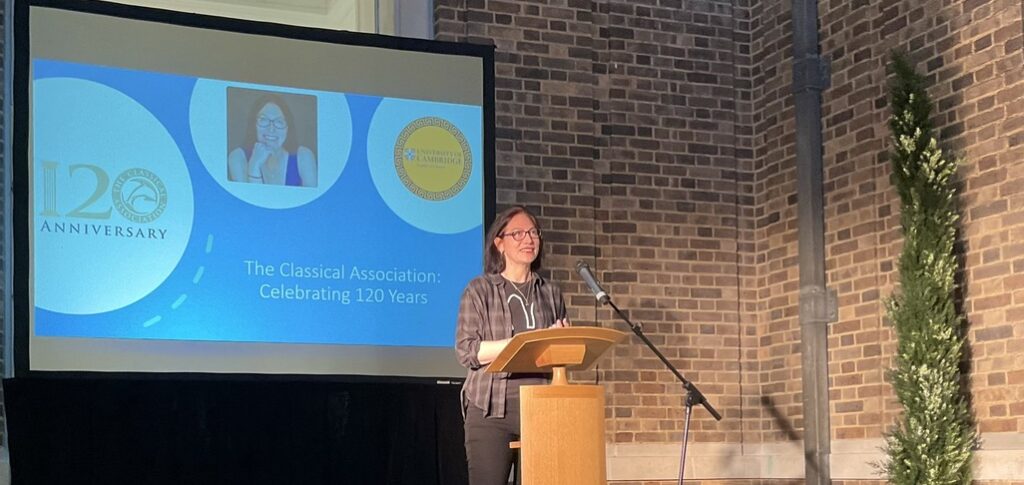
Our Engagement Co-ordinator Katrina Kelly reflects on CA 2023 and the range of events we enjoyed across the weekend.

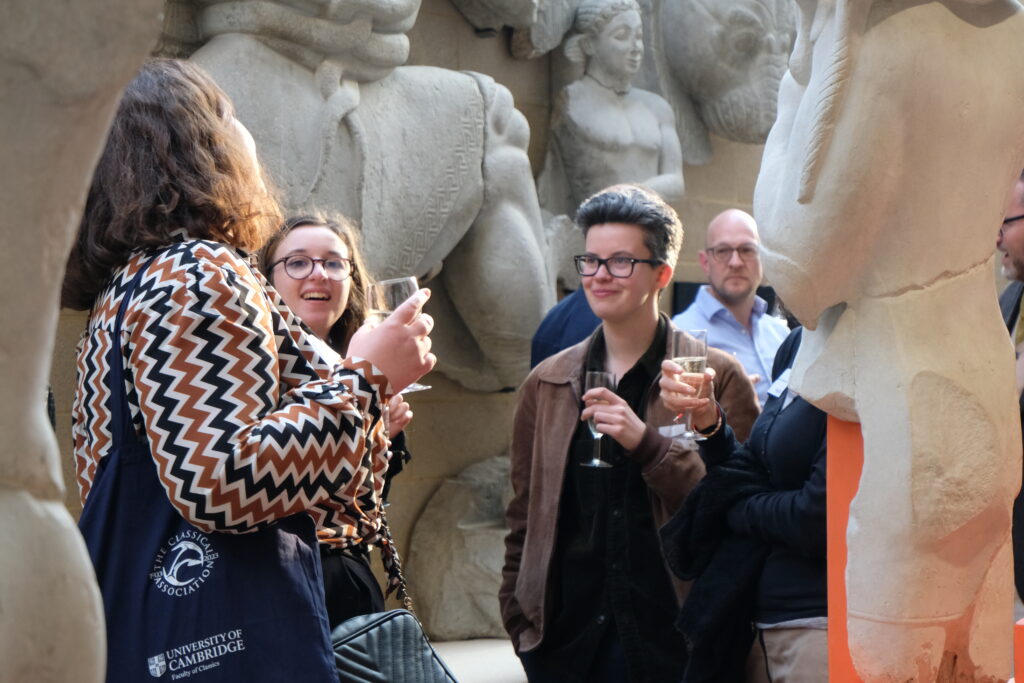
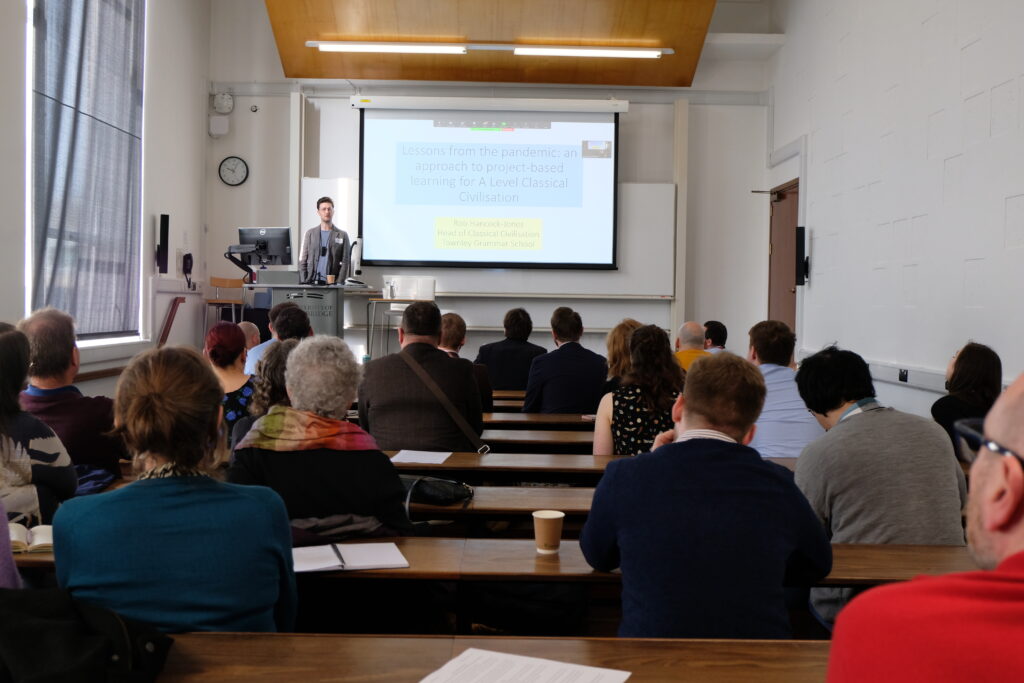
Devised and hosted by the CA’s Outreach Officer, a former schoolteacher herself, the event was a successful example of collaboration and knowledge exchange across educational phases, with both academics and teachers presenting.

It was a pleasure to welcome academics, teachers, students, publishers and booksellers, branch members, competition entrants and friends from across the world to this international event and particularly to see many familiar and friendly faces from the CA’s recent past who joined us to celebrate our 120th Anniversary, including several former Presidents, Prizewinners and Officers. There was a huge range of papers and panels delivered and you can browse the full brochure here (which may help inspire you when thinking about CA 2024!).

A key part of our remit is our professional development and outreach work with teachers, students and other organisations and it was brilliant to see this echoed in a record number of pedagogy panels and papers sharing innovative and interdisciplinary approaches to teaching and learning. Teachers also came together for a networking reception in the Museum of Classical Archaeology, and excellent professional practice was recognised with the awarding of the CA Teaching Awards, in partnership with Bloomsbury Publishing. Congratulations to this year’s worthy winners: Peter Swallow, Mireya Gonzalez Rodriguez, David Hogg, Sian Squire, David Midgley and Zoë Boland.

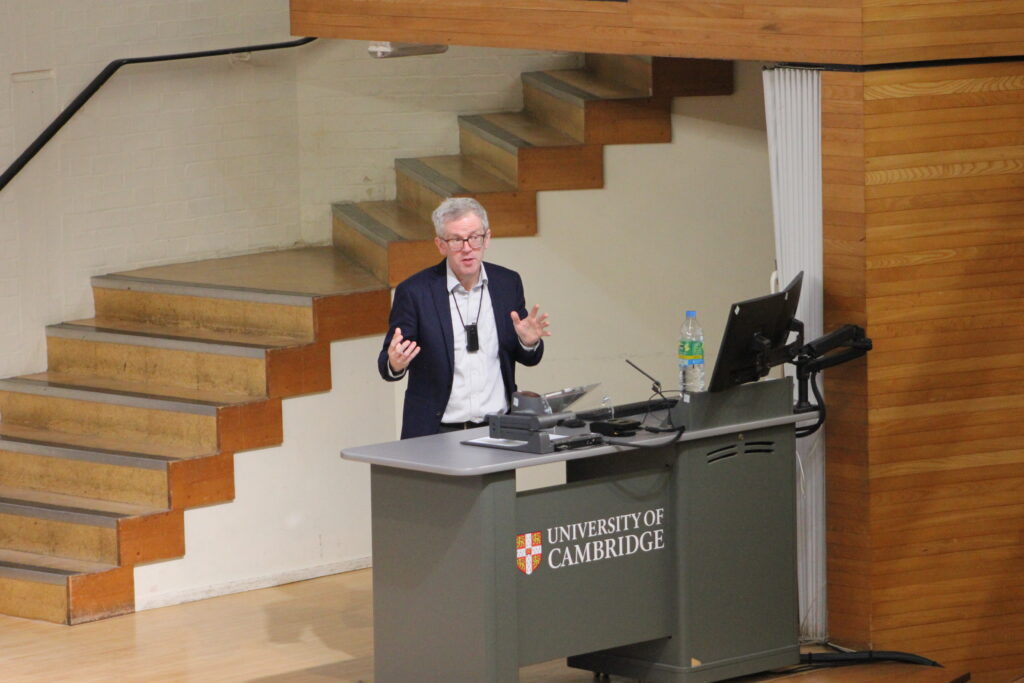
On Friday, committee members from seven of our regional branches and from the Classical Association of Scotland enjoyed lunch and the chance to swap stories and ideas about how local classics groups flourish. Professor Caroline Vout, Director of the Museum of Classical Archaeology, opened the conference with an excellent keynote entitled ‘Firing the canon: Greek and Roman art illuminated’, and we were treated to an inspiring talk by former CA Prizewinner Natalie Haynes after the première of the CA’s Anniversary Film at the Fitzwilliam Museum. This Film captures who we are, what we do (and have done) and our clear mission for the future – do give it a watch and join us to fulfil our mission!

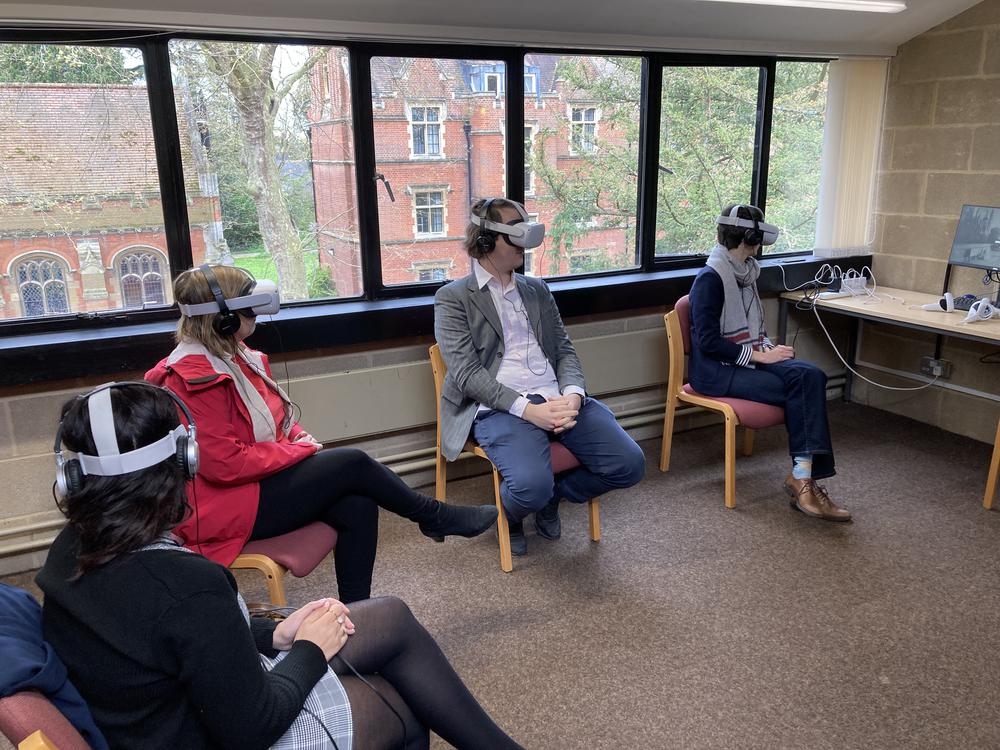
We were proud to host the Virtual Reality Oracle Team who gave a keynote presentation on Saturday morning before offering immersive experiences to all conference-goers, showing varied accessibility on headsets, tablets, laptops, and phones. The oracle of Zeus responded to over 90 visitors, and the feedback was terrific. To learn more about the project, access the teaching resources, and/or download the VRO for yourself and use it in a classroom or research setting, visit the VRO’s website.

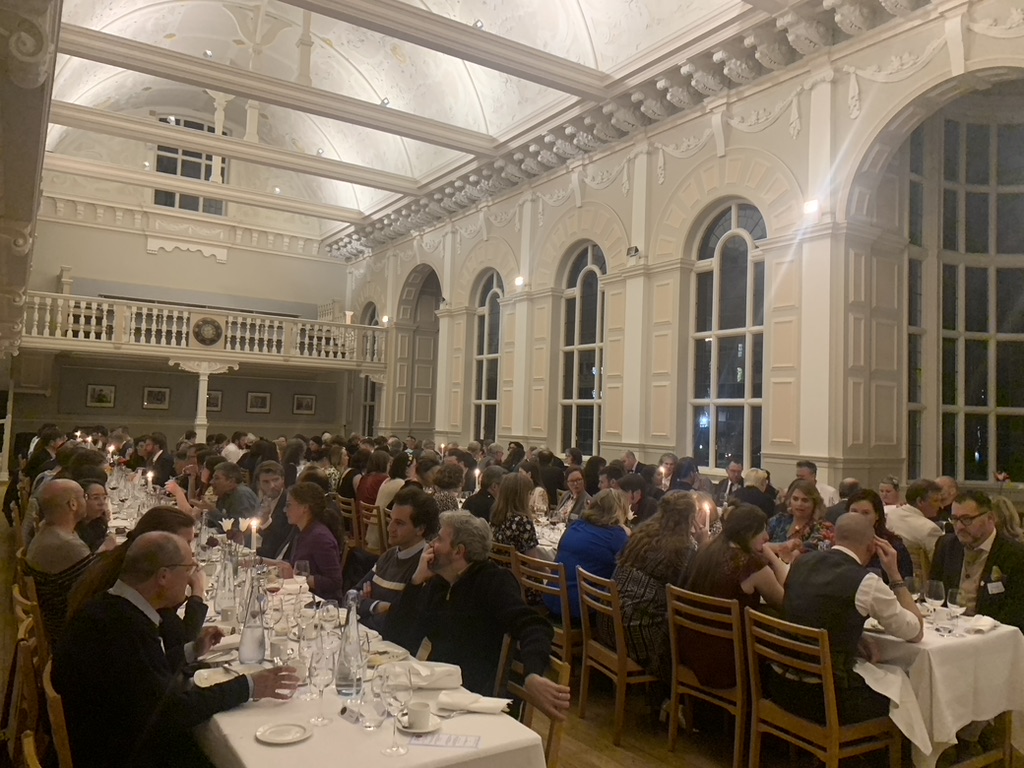
On Saturday evening, we had the highlight of our academic programme – the Presidential Address delivered by Prof. MM McCabe, who incisively explored both ancient and modern conceptions of ethical behaviour and the intrinsic difficulty in determining what ‘Being Wrong’ actually means – before 150 of us headed across the road to Newnham College for a reception and the Conference Dinner. Here we awarded the prestigious 2023 CA Prize to Prof. Edith Hall for her indefatigable commitment to outreach and inclusivity, alongside her outstanding academic portfolio, and we also thanked the CA’s outgoing Treasurer, Philip Hooker, who has calmly steered our financial ship for more than twenty years.

On Sunday, Prof. Tim Whitmarsh, the new Regius Professor of Greek at the University of Cambridge, gave the final keynote address, with a very thought-provoking take on Classics in the 2020s, and the winners of our Photography Competition were invited to the Museum of Classical Archaeology to view our special exhibition (which you can browse here) and receive their prizes from MM McCabe, whilst the final panel sessions took place.

Our thanks to all who attended the Conference and everyone whose hard work helped make the Conference happen! Special thanks to the Cambridge organising committee (especially Jess, Grant, Chris, James and Matt), student volunteers so ably led by Patrick, Domi and Cecily, photographers Zoe and Dalia, Suzanne and the MOCA team, Nigel, Tony, Kate and all facilitators as well as our hosts at the Fitzwilliam Museum and Newnham College.

We do hope you would like to come along to next year’s conference, whether to contribute to the sessions or to be an audience member and enjoy all of the other activities, keynotes, socials and interactive elements that we’re so looking forward to organising for you, with our hosts at the University of Warwick. The call for contributions is open until 31st August so do read our information here and you may like to watch this short clip which explains all of the different sessions that are on offer – from workshops to lightning talks!

The conference will take place from Friday 22-Sunday 24 March at Warwick’s central campus (Oculus and new award-winning Faculty of Arts Buildings), close to the centre of Coventry, with its excellent rail, bus, and road transport links. University accommodation will be available for booking on campus and delegates are also welcome to make their own arrangements for off campus accommodation in Coventry, Kenilworth, or Leamington Spa. More detailed information about practical issues will be distributed when the programme is finalised in September but if you have any questions, don’t hesitate to get in touch with us at engagement@classicalassociation.org.

Posted in Event Roundups

Antigone: The Musical

Antigone: The Musical

I first came across the Antigone story in a drama class in Year 9 and it stuck with me all the way to university, when I had an opportunity to study it again in my Classics degree.

When I decided I wanted to write a musical, I had a few different ideas, but none of them excited me as much as the idea of Antigone: The Musical. Antigone is such a strong, compelling character and her relationship with her sister really spoke to me. Parts of the play translated perfectly to musical theatre- the argument between Antigone and Ismene became a duet, as did the final confrontation between Antigone and Creon, whilst Haemon’s unrequited pining for Antigone seemed an obvious subject for a ballad.

That said, adapting it wasn’t the easiest. I quickly realised that I couldn’t end my first musical in a triple suicide. This was the point when I found out that Euripides had in fact written a version of Antigone in which Haemon saves the day. This version, combined with my own political leanings and experiences of protests, created a very new ending to the story featuring a people’s revolution- but you’ll have to watch the show to find out more!

Lots of people have said I’m ‘bold’ for adapting Antigone this way, but I’m not sure that’s entirely true. Classical literature has been subject to retellings and changes since its very beginning (I’m thinking of Sappho’s Homeric poems, or Vergil’s Aeneid). Antigone: The Musical is simply a successor to a long tradition of adaptation and transformation.

I’ve been so happy with the reactions to it in Edinburgh. I bumped into a group of 17 year-old girls and their teacher who had studied it recently and were very excited when I said I thought Antigone was a girlboss. The group left with a bunch of flyers, still chattering about their memories of studying the play and their opinions on the characters. I honestly don’t mind whether they actually see the show or not- I’m just glad to have prompted a conversation.

Antigone is clearly a story that resonates with many people- a young girl standing up to a tyrannical older man feels like it could have been written the 21st century AD just as much as the 5th century BC.

I’m sure I’ll get a few raised eyebrows for the changes I’ve made and it’s not going to be everyone’s cup of tea. But it’s fun, it’s a bit silly and it’s got heart. My hope with bringing this adaptation to Fringe is to reach audiences who might otherwise not want to watch a Greek tragedy, and to show that Classical stories can absolutely be enjoyable and relevant to our lives.

photo credits: Marina McCready

poster credit: Anna Piper-Thompson

Posted in Event Roundups

Springtime in Swansea …

Springtime in Swansea …

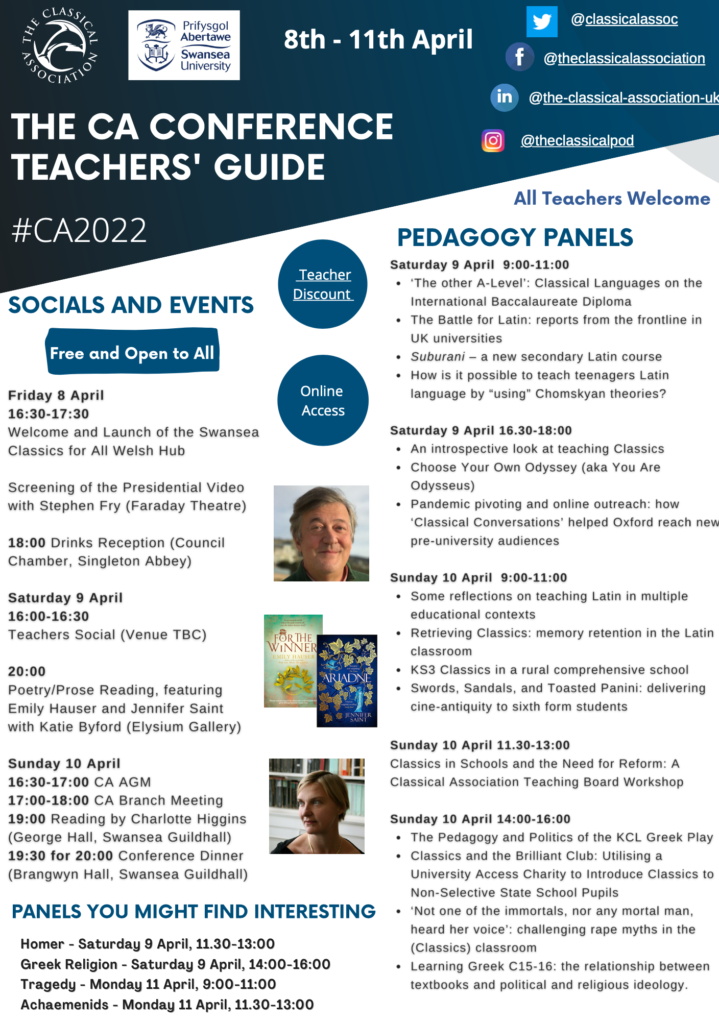
Swansea University was the wonderful host of the 2022 CA Conference when hundreds (a classis of classicists?) flocked to the seaside to enjoy a weekend of papers, panels, pop-up discussions and plenty of long-overdue catching up over Welsh cakes in the Taliesin Centre.

Thanks to the tremendous organisation of Dr Ian Goh, Dr Maria Oikonomou and their brilliant team of Swansea staff and student helpers, the four-day programme ran smoothly and online audiences joined to watch from afar (bar a few technical difficulties). There was a real sense of community and camaraderie very gladly restored after more than two years of pandemic delays. 

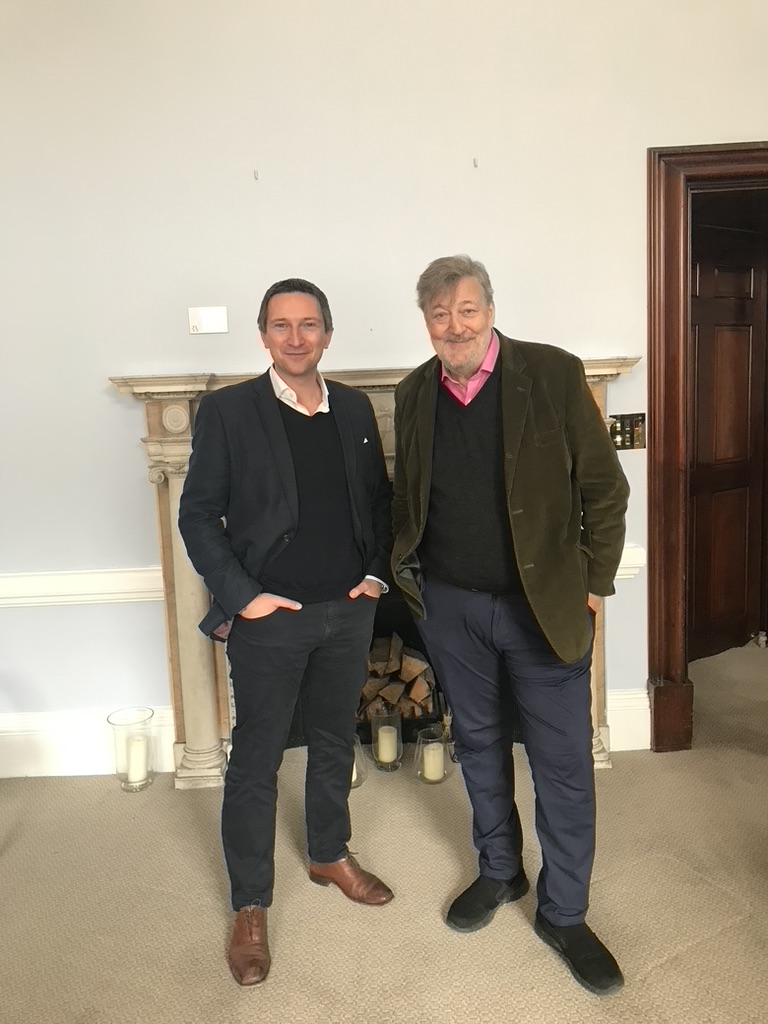
On the opening evening, after a splendidly warm welcome from Professor Elwen Evans QC, Pro-Vice-Chncellorand Executive Dean for the faculty of Humanities and Social Sciences, we were treated to the premiere of a unique CA Presidential Address – a film, produced by Morphology Media, featuring 2021-22 President Stephen Fry in conversation with former CA Prize winner Professor Michael Scott. #FryandScott discussed Stephen’s long-held love for the ancient world, explored why Greek mythology is so timelessly engaging (as he captures in his trilogy MythosHeroes and Troy) and how ‘Classics is all around us’. Conference goers were delighted to see whom he would select if faced with ‘the Judgement of Stephen’ – just one of a range of entertaining questions posed by entrants to our Creative Writing Competition – and there was lots of audience participation in the quickfire round, with much deliberation over the best ancient fancy dress costume! You can watch some short clips as well as the full video on our YouTube Channel and Instagram.   

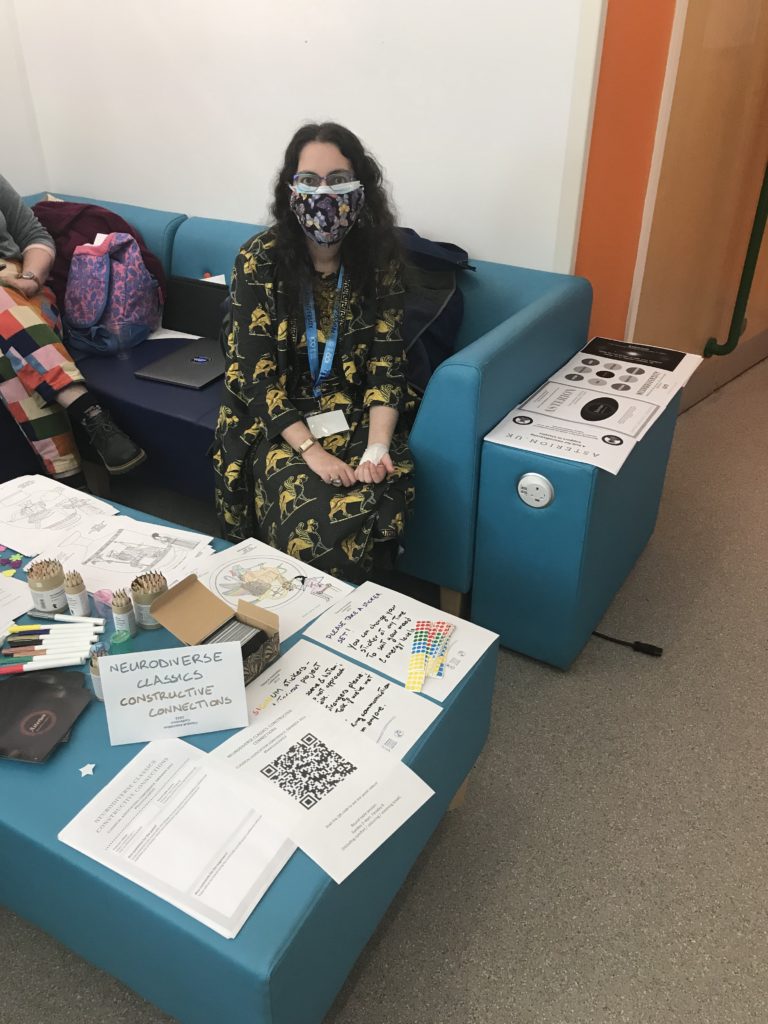
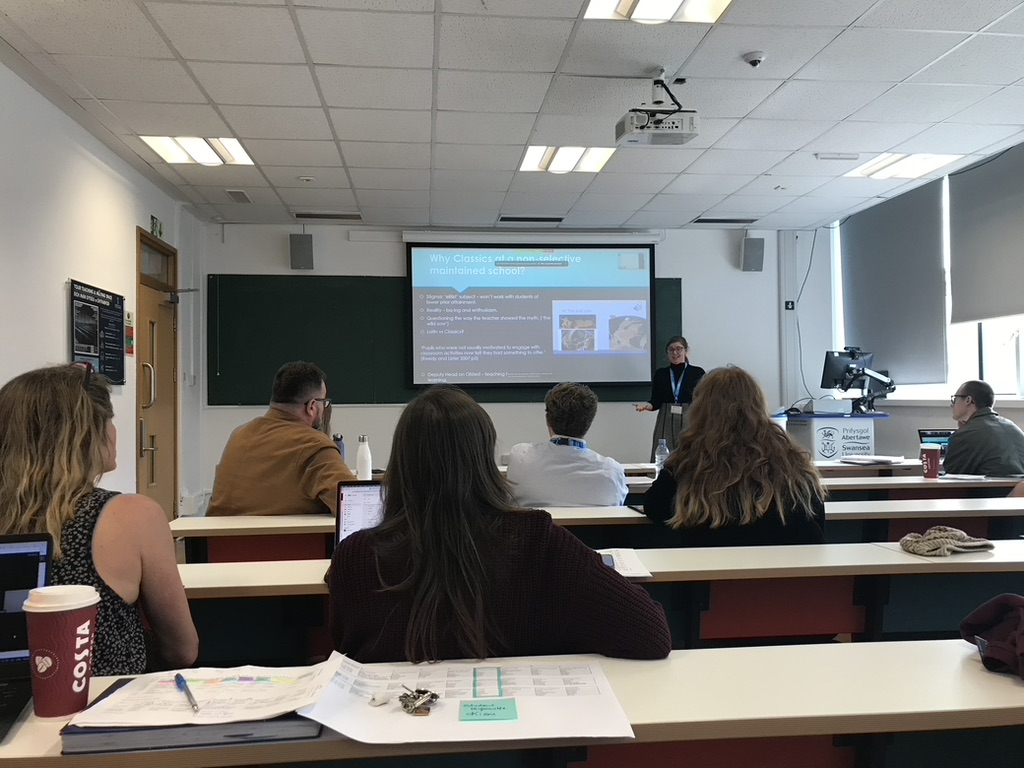
The Conference is a chance for academics, teachers and researchers, at all stages of their careers and interests, to present their latest findings about Classical topics, and to stimulate debate, discussion and knowledge exchange amongst the wider Classics community. Papers and panels ranged from the reception of Sappho to experimental archaeology, from Egypt in Latin Literature to Classics in sci-fi films, from ancient food to neurodiversity and from Aristophanes to teaching Achaemenid history. Indeed, there was a great array of pedagogy panels and teacher events across the programme and it was brilliant to also welcome colleagues from the UK’s leading Classical publishers and providers, EDI reps from across the country, handlers from The Egypt Centre, and our friends from Asterion and the new Classics For All Welsh hwb, as well as members of CA branches, CA colleagues, undergraduate students and many others to the Conference. 

The evenings, too, were filled with Classical delights – with readings from a trio of brilliant writers, Emily Hauser, Jennifer Saint and Charlotte Higgins, which were followed by the presentation of our annual Teaching Awards at the Conference Banquet and announcement of the very worthy winner of the 2022 CA Prize, Dr Cora-Beth Fraser, and of our incoming President Professor M. M. McCabe.

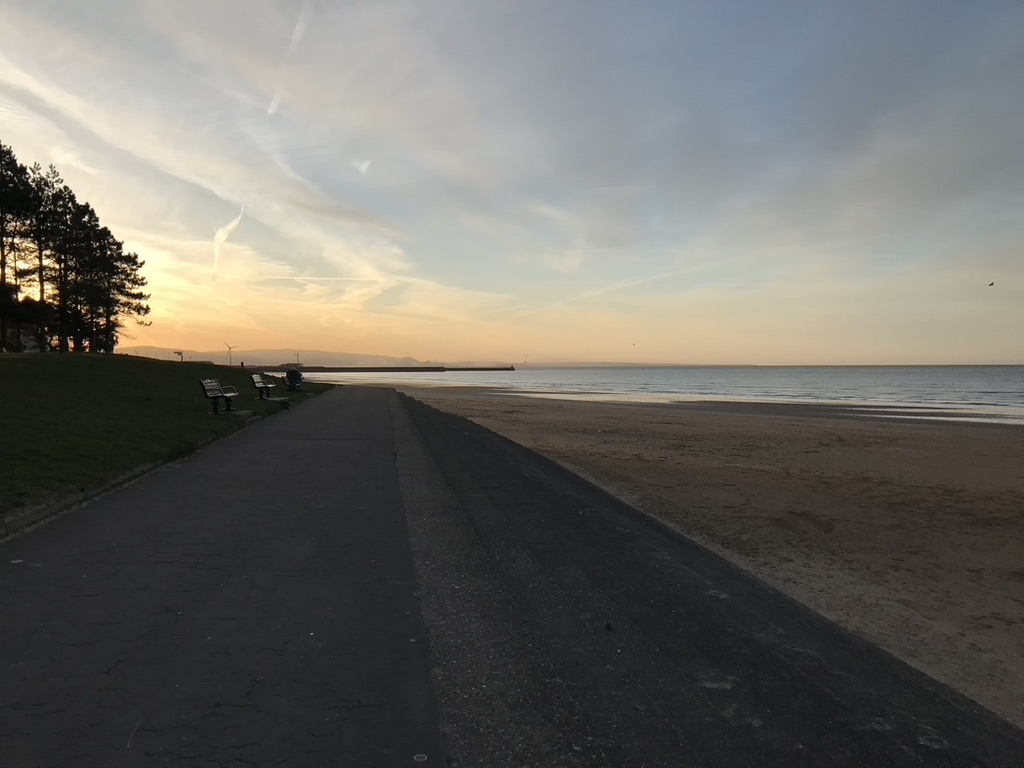
The CA Conference is a prestigious event in the UK Classics calendar but scholars wear their intellect lightly; it was lovely to soak in the friendly, welcoming atmosphere and see such warmth, collaboration and inclusive debate – and there was even time for some seafood and sand with a stroll along the beach in the Swansea sun!

We look forward to welcoming you all to Cambridge University in April 2023. If you would like to find out more about presenting a paper, please click here.

Posted in Event Roundups

The CA Returns to Swansea

The CA Returns to Swansea

In April 2022 the prestigious annual Classical Association conference took place at Swansea University. The conference was due to take place there in 2020, which would have been rather fitting as the University marked its centenary that year, but we all know what happened that year and in subsequent years.

Despite the challenges of the global pandemic, which had a significant impact on our jobs and our well-being, the conference returned in full swing in 2022. I, like many others, was looking forward to catching up with old friends and making new ones, in real life! The advantage of the conference was that it offered a hybrid option; so those who were unable to travel for various reasons, including the dangers of the lingering virus, could also participate remotely. After all, if anything the pandemic has taught us it is the flexibility of technology to access lectures, attend virtual events and workshops, and to participate in panels with colleagues from across the globe on a number of topics without leaving the comfort of your home.

A reading by Charlotte Higgins at the Guildhall complex

 For me, the location of this year’s conference had a special significance. Swansea was my adopted home; I spent a large portion of my life studying and working there. I undertook all my degrees at the University, seeing the institution go through many changes, including the Classics department which used to be called Classics, Egyptology, and Ancient History and now has a new name – History, Heritage, and Classics. This shows the changing landscape of our disciplines in the 21st Century and perhaps shows the flexibility of our subject in that it can fit in and be comfortable with the humanities brand. Two days before the conference I found out that I was successful in an interview for a job based around public engagement and heritage – guess where? Swansea! It was a very sweet moment to realise that I would be returning to the department where it all began back in 1999, it felt rather Odyssean and had a lovely circular feel to my journey after spending 10 years in Oxford.

I was delighted too that the organisers of the conference wanted to continue the inclusive nature of these annual conferences, which for me was the highlight of the last CA conference that took place before the pandemic. At the 2019 FIEC/CA conference in London, I was fortunate enough to be part of not one but two panels which were ground-breaking in terms of their set-up: the plenary panel on the first day was an all-women affair, which looked at inclusivity and Classics. The second panel on the third day involved all-women from BAME background. Not to mention the various workshops on public engagement and outreach as well as pedagogy. In Swansea this year it was encouraging to see that the organisers wanted to continue the tradition of making the conference as inclusive as possible – both in the diversity of the papers and panels as well as accessibility.

I was lucky enough to chair a panel on Meroe and Nubia, which brought together Classicists and Medievalists looking at historical, archaeological, and literary approaches to the Northeast region of Africa. The academics presented their papers in a hybrid fashion (some were based in the US and Poland) so there was a sense that nobody was missing out because of travel/financial constraints. At this point I want to thank both Dr Ian Goh and Maria Oikonomou, the Swansea CA conference organisers, for making the time difference so bearable for our speakers! The other panel I was involved in was the Persia panel. It was such pleasure to be giving a paper alongside my former external examiner Prof. Lloyd Llewellyn-Jones, but the highlight has to be the added feature of our panel which included ‘Persia on the Curriculum’ led by three fantastic school teachers – Peter Wright (Head of Classics, Blackpool Sixth Form College), James Renshaw (Classics Teacher, Godolphin and Latymer School), and Anna McOmish (Head of History, Aldridge School). The fruitful discussion that followed amongst participants and attendees is possibly the reason why the annual Classical Association is so successful – that marrying up of university and school teaching and learning, a truly collaborative affair.

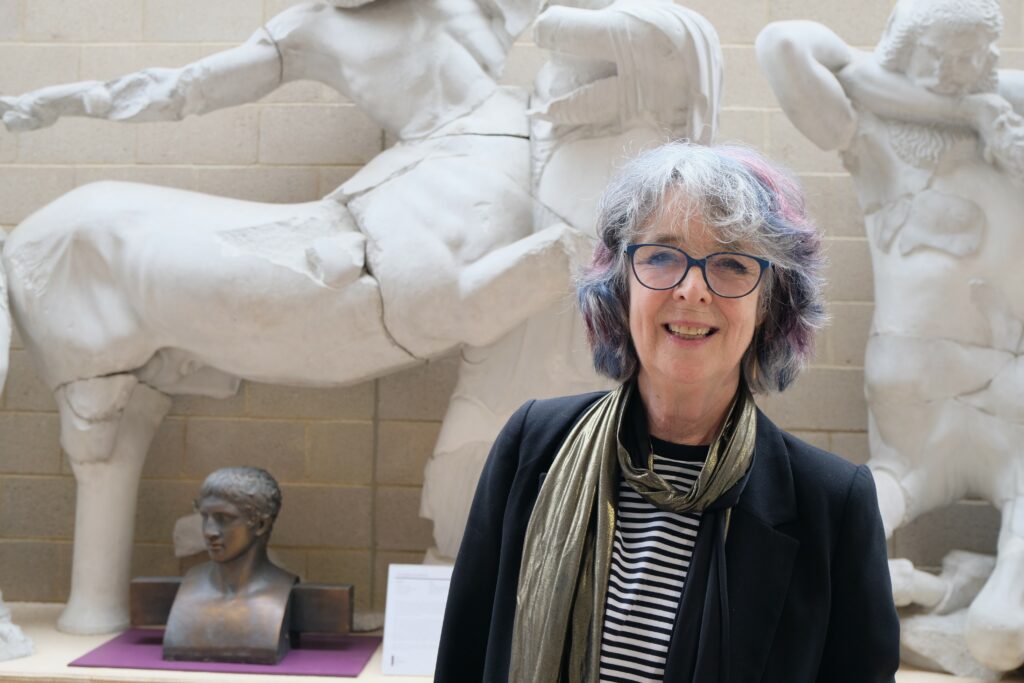
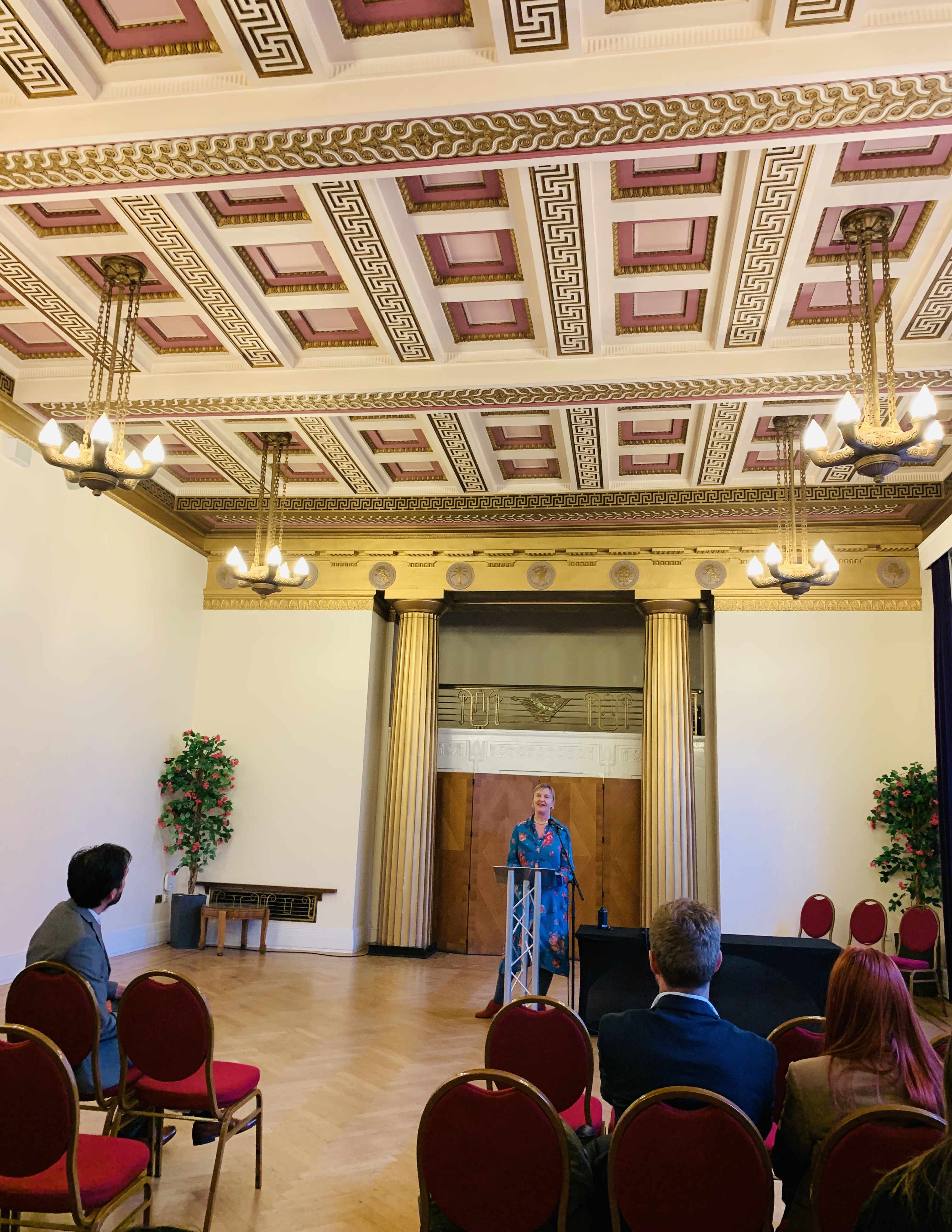
Other highlights of the conference included the inimitable Charlotte Higgins as she read an extract from her latest book ‘Greek Myths: A New Retelling’ in a rather fitting setting of the neo-classical and art-deco designed building the Guildhall complex (part of the offices of the City and County of Swansea Council). Of course, the biggest highlight of the annual conference is the conference dinner, and for obvious reasons this year had a special meaning to it. The setting – that neoclassical/art deco flair of the building, the classical music – led by Dr Ian Goh (who knew he was a professional violinist!), and of course the announcement of the CA Prizes. As the 2019 recipient of the CA Prize, I knew how special these prizes were and what it meant to the recipient. I was especially delighted to witness that this year’s winner was Dr Cora Beth Fraser who has taken Classics outreach to another level. You can find out more about Cora and her work here – you will have to agree that the CA couldn’t have found a more worthy winner!  

I wanted to conclude with a quote from another CA prize winner – this time from the Teaching category. L E Jenks-Brown’s experience of the CA conference this year, where she presented her first conference paper, really does capture the buzz and inclusive nature of the event: 

“It was a relief to be able to find quieter areas, such as the seating near the bookshops, and the Neurodiversity panel’s safe space near the main lecture theatre, to which to retreat.

The hybrid nature of the conference was also really interesting, as it enabled a lot more speakers as well as listeners to be in attendance. I found the lectures on physical objects and reception the most personally interesting. I loved the chance to handle objects from the museum, and the teaching-focussed pedagogical panels were extremely interesting and useful.

As I was staying with my husband and toddler outside of Swansea, I missed out on some of the social aspects of the conference, but the conference dinner with the presentations on the Sunday night was really exciting, and the whole conference was nice chance to catch-up with IRL (in real life) and Twitter friends.”

Dr Mai Musié is an Ancient Historian and Public Engagement Specialist, and is Public Engagement Officer for History, Heritage, and Classics at Swansea University.

Email: m.musie@swansea.ac.uk ; maimusie@outlook.com

Website: drmaimusie.com

Twitter: @Dr_MaiMusie

Posted in Event Roundups