A Celebration of Classics

Classical Association member, Margaret Thorpe, formerly Principal Examiner for Latin at WJEC, has shared why Classics is important to her, as part of our #CelebratingClassics Campaign. Now retired, Margaret enjoys reading Latin Literature with a group of adults at Shrewsbury Museum and Art gallery.

The Classics have enriched my life beyond measure. Not only have they given me a rewarding career but they have added to my appreciation of so many other aspects of my life.

If I struggled with the Latin language initially – and at the age of 13 or 14 my homework was to learn Horace’s Ode III.30 Exegi monumentum aere perennius by heart, without understanding very much of it, and to be prepared to recite it from memory in class the next day – there followed the thrill of learning Greek, a language with a different alphabet.

For me the language became a means to an end, to read the literature. I came to love those odes of Horace and their influence on poets like Housman, and to read the Iliad and the Odyssey in Greek and to learn about the tradition of composing oral poetry, which has survived down the centuries in more remote parts of the Balkans and places like the island of Crete.

But it is not just the languages and literature that continue to give pleasure and instruct. The Classics enhance so many other areas of life. For the final year of my degree I specialised in ancient history and was fortunate to have the wonderful Joyce Reynolds as my supervisor for Roman History. She taught about the empire during the reigns of Trajan and Hadrian from the surviving inscriptions, mainly those in North Africa, which she visited every year until well into her eighties. What a revelation this was after the history books we had used at school! I acquired a lifelong interest in inscriptions and what they tell us about the people they commemorate. Now I introduce visitors to the inscriptions in the Roman Gallery at Shrewsbury Museum, one of which, the Wroxeter forum inscription, is unique to the UK. It commemorates the visit by the emperor Hadrian to Shropshire and is the only inscription found to date which stood over a public building in Britain.

Photograph of Margaret at Shrewsbury Museum and Art Gallery

The areas of modern life where the Classics have made a major contribution are too many to list, as most of western culture owes a debt to the Greeks or the Romans. To the Greeks and Romans we owe the classical style of much in world architecture. You can see classical architecture in Newcastle-upon Tyne as well as Rome, and through the architect Palladio it can be seen in some of our great country houses such as Holkham Hall in Norfolk and Harewood House in Yorkshire.

Then there is the Greeks’ contribution to science and philosophy. The early Greek philosophers were also scientists and mathematicians. We all learnt Pythagoras’ theorem at school and further investigation showed us that his followers were vegetarians because of a belief in the transmigration of the soul. I remember the fascination of Thales’ calculation of the distance of ships out at sea using similar triangles. Those early Greek philosophers correctly predicted an eclipse of the sun and first described a world consisting of indivisible atoms. Later philosophers such as Plato and Aristotle have had a much greater influence on European thinkers and continue to do so right down to the present day.

We should not forget the way a study of the Classics can enhance our appreciation of archaeology.  At the start of my teaching career I attended a course run by the then Ministry of Education at the British school of Archaeology in Rome for teachers of History and Classics. For two enjoyable and instructive weeks we studied the history, art and archaeology of that city from the Etruscans to Mussolini. We were taken beneath St. Peter’s Basilica by Professor Jocelyn Toynbee to see the tomb of St. Peter himself, we watched Etruscan tomb paintings being carefully lifted for restoration and I also fulfilled a long held wish to visit Horace’s villa in the Sabine countryside. I was accompanied on this visit by a fellow member of the course, later my husband.

Subsequently we had many holidays together in Italy and Greece exploring sites of historical interest as well as the wider culture of those countries. Then in retirement came the opportunity to visit lesser known provinces of the Roman Empire, some of which sadly can no longer be visited easily today, including Tunisia, Syria, and Libya. How wonderful to see the ancient harbour at Carthage and to remember Dido and Aeneas, who according to Virgil both landed there as refugees, or in Cyrene where we gazed towards colonel Gadaffi’s summer palace and remembered the silphium-bearing Cyrene of Catullus’ poem.

In my career as a teacher I found so many interesting topics to which I was able to introduce my students. Apart from the Latin and Greek language and literature there was ancient history and the huge variety of topics included in Classical studies. Most interesting of all however were the two years when I taught Roman technology across the entire year of a comprehensive school, one group at a time, as one of five different modules for GCSE information technology. Students chose a modern building and a comparable Roman structure and then looked at the problems which engineers had to solve.in constructing each building. This was more than twenty years ago but the course did not survive governmental rules, which said that an entire GCSE could not be based on course work, even though it was supervised entirely in class.

Now however I shall return to the most important point, which concerns the language. There is a lot of discussion today about the usefulness of studying Latin, quite apart from all the accompanying pleasures. The knowledge of Latin grammar and vocabulary is a great help in writing our own language and especially in understanding the precise meaning of words. About forty per cent of the words in the English language are derived from Latin. Greek is at the root of many medical and scientific terms and will often help you understand your doctor’s notes. Latin not only gives  us access to five further European languages, French, Italian, Spanish, Portuguese and Romanian, which are all derived from Latin, but as an inflected language  it makes the learning of other inflected languages such as Greek, German and Russian very much easier. Why would you not learn Latin if you were given the chance? And this is why everyone today should have that chance.

©MargaretThorpe

Posted in Community Classics

From Aristotle’s Seminar Room to Hollywood

Our Honorary President for 2024-25, Professor Stephen Halliwell, shares his thoughts on why Classics is important and reveals his own journey to discover the ancient world, as part of our #CelebratingClassics campaignBecome a Member to listen to Stephen’s Presidential Address.

“This is the unfinished story of Classics itself, and the vital mission of the Classical Association is to enable as many people as possible to contribute to the story by making it part of their own lives.”

There is a passage in Plato’s Laches (a dialogue which develops from the idea that no subject is more important than education) where the Athenian general Nicias, now most familiar to us from Thucydides’ harrowing account of the disastrous failure of Athens’ Sicilian expedition in 413 BCE, tells one of the other characters that he clearly does not know Socrates very well: if he did, he would realise that whatever you start discussing with him, he always ends up forcing you to confront questions about yourself and your own life.

There is a sense in which that image of Socrates could be adapted to make a useful symbol for Classics itself. Anyone who becomes drawn to the world of Greco-Roman antiquity (whether its literature, politics, mythology, archaeology, philosophy, religion, visual art, social history …: Classics is not, after all, one subject but a whole ‘family’ of interlocking studies) will find themselves constantly required to move backwards and forwards, in their minds and imaginations, between the distant past and their starting-point in the present. While the study of classical reception, i.e. of all the ways in which Greek and Roman texts and ideas have been interpreted in later periods, is rightly treated as a rich area of study in its own right, we might also say that everything in Classics is a kind of ‘reception’: we ourselves, in what we make of it, are always implicated in the whole process, perhaps stimulated and challenged in equal measure, like the interlocutors of the Platonic Socrates.

And once the process is underway, the fascination of Classics is inexhaustible. The traces of Greek and Roman antiquity are ubiquitous, sometimes surprisingly so. Let me illustrate this with a somewhat quirky personal anecdote. During a bout of insomnia one night in 2011, I was switching stations on my radio when I heard a song by a Scottish rock band whose lyrics struck me as strangely familiar: they sounded, weirdly but irresistibly, like a poem of Sappho’s (about music and the pathos of old age) which had been identified on a piece of mummy cartonnage and published by two German papyrologists as recently as 2004. I was not hallucinating. The song-text, as I established the following morning, was in fact part of a translation of Sappho made by the Scottish poet Edwin Morgan, who had meanwhile died in 2010. I didn’t, as it happened, especially like the music … But I’ve always remembered the startling experience of finding echoes of Sappho in Scotland in the middle of a winter’s night.

I’m pretty sure that when I started secondary school, in 1960s Liverpool, I had never heard of Sappho. Nor, for that matter, did I know anything at all of ancient Greece or Rome. I came from a home with few if any books. Both my parents had left school – this was before World War II – without any educational qualifications; and none of my four older siblings had been to university (though one would do so later as a mature student). I was simply very lucky, at what was then a grammar school, to have teachers who slowly but surely engaged my intellect and imagination with Greek literary and philosophical texts, and with both the excitement and the difficulty of making sense of them in relation to life in the present. There was, of course, Homer – at that stage primarily the Odyssey, which immediately appealed by the intricate way in which Odysseus’s years of wanderings become a sort of journey of discovery in the mind of the poem’s audiences. There was both Greek tragedy and comedy, including some bowdlerised Aristophanes (my own later translations of the playwright would compensate for that): reading these two paradigmatic forms of theatre side by side, which is akin to how they were originally performed in the Athenian theatre, forced one to wrestle with their starkly opposed perspectives on life. There was also Thucydides, who particularly gripped me by the shocking way he chose to juxtapose Pericles’ vaunting idealisation of Athens with a remorseless account of the plague in which dead bodies were left lying even in the city’s temples. And last but not least, there was Plato, who in many respects made his philosophical writing into a sort of endless rivalry of values with Homer (‘Plato versus Homer: complete and perfect antagonism’, as the German philosopher Nietzsche put it) but in doing so made philosophy itself a form of supremely creative writing. I could never have guessed at the time that all these authors, and the fundamental questions they pose in their different forms, would obsess me for the rest of my life.

Classics – both as an academic discipline and as a larger cultural force – is the history of a perpetually evolving engagement with the Greco-Roman past. The multiple threads which connect past and present are constantly being unpicked and rewoven into new patterns. A striking illustration of this is provided by a work with which I have been much preoccupied during my career, Aristotle’s Poetics. It has undoubtedly become one of the most famous texts of Greek antiquity yet it is scrappy and incomplete, having lost its second ‘book’ on comedy (see Umberto Eco’s novel The Name of the Rose for a fictional version of this event). It also seems to have been known to only a handful of people in antiquity itself, and that paradox is the first of the numerous twists and turns of its fortunes over the centuries. Even many professional classicists are surprised to learn that the first language into which the Poetics was translated was Syriac, probably in the 9th century. In the following century it was translated from Syriac into Arabic as part of the great wave of interest in Aristotle on the part of Islamic philosophers and scholars; later still, the Arabic was translated into medieval Latin. That was all before the Renaissance made the Poetics a key reference-point, invoked both pro and contra, in debates about not only ancient poetry but also new genres of literature, including even the novel. While it remained a sort of bible for neoclassicists, the book was repudiated by those who thought modern literature should not be tied to ancient standards. Yet even in the twenty-first century the Poetics is cited with reverence on screenwriting courses in Hollywood and elsewhere for its supposedly fundamental insights into how to construct plots and tell a story to maximum effect.

From Aristotle’s ‘seminar room’ to Hollywood is quite a journey! But the point of this little fable is not to recommend you to consult the Poetics next time you watch a film, but to underline the complicated ways in which the Greco-Roman past has been repeatedly reinterpreted, and argued with, by later ages. This is the unfinished story of Classics itself, and the vital mission of the Classical Association is to enable as many people as possible to contribute to the story by making it part of their own lives.

©StephenHalliwell

Professor Stephen Halliwell, a world-leading scholar of ancient literature and thought, is an Emeritus Professor at the University of St Andrews, where he was Professor of Greek (1995-2014) and later Wardlaw Professor of Classics (2014-2020). He was elected a Fellow of the Royal Society of Edinburgh in 2011 and of the British Academy in 2014. His twelve books range widely across texts and topics in Greek literature and philosophy from Homer to late antiquity, and also include a complete translation of Aristophanes for Oxford World’s Classics, whilst his own work has been translated into nine languages. A frequent contributor to broadcast media, he is an outstanding ambassador for the study and reception of classical languages.

Posted in Community Classics

Anika’s Classical Journey

How I got into Classics (and why you should too!)

This post, posted on her Coffee & Classics blog, explores Anika Murali’s journey to discover the ancient world, as part of our #CelebratingClassics campaign.

My entry into the Classical world was pretty unconventional. It all started with a TV series: Downton Abbey. The period drama follows the lives of the aristocratic Crawley family and their servants in the early twentieth century. In the second episode of the show, the sharp and spirited Lady Mary Crawley verbally spars with Matthew Crawley, the new heir to the Downton estate and her would-be suitor, over Greek mythology. The tale of Perseus and Andromeda, to be precise. It’s a phenomenal scene where you can almost see the sparks flying between them, the chemistry bubbling underneath the half-veiled insults. They level pointed barbs at one another using the myth as an allegory, each holding their own and demonstrating to the audience that they are more than a match for each other. I was hooked by the witty dialogue and the simmering tension in their banter, which was what pulled me deeper in.

Perseus freeing Andromeda after killing Cetus, 1st century CE fresco from the Casa Dei Dioscuri, Pompeii (©Wikimedia Commons)

I didn’t know then just how far this show would carry me. As I sailed through the rest of the series, these two characters intrigued me further with each passing episode. I wanted to be clued in to the allusions they made, to be familiar with the works that they would have been. I think I’d almost forgotten they were entirely fictional! And so, I jumped into read Mythos by Stephen Fry (former CA Honorary President, who chatted all about Greek mythology in this CA Film) This was a good decision; his style is easy to read and very engaging. The book assumes you have no prior knowledge of Greek mythology and introduces it to you from scratch. Gradually, I became familiar with several myths featured in Ovid’s Metamorphoses, which made it much easier when transitioning to the primary sources. However, I think what really propelled me even further into the world of Classics was the Iliad.

Three weeks into starting university, I happened to walk past a shelf in the library (my favourite haunt). And there it was, sandwiched between The Collected Plays of Euripides and The Odyssey. I had the usual preconceptions about the Iliad – that it was long, difficult, and that my brain was in for a good hard slog. I picked it up and began reading, and I remember thinking, This isn’t as difficult as I thought it was going to be. The language didn’t seem to be too heavy, and it helped that I was familiar with the Greek gods. That said, I did find it a little challenging at first. I came very close to abandoning it after about a hundred pages. And then I arrived at one of the most famous scenes in the Iliad – Hector’s bittersweet farewell to his wife, Andromache, and and baby son Astyanax. I found myself blinking back tears. He wasn’t just a warrior leaving to protect his city, knowing he might never come back; he was a husband and father bidding his family goodbye. That was the moment they ceased to be characters; they had transformed into humans. That was when I began to grasp the emotional carnage that all wars cause, and to see the vortex of emotions in the epic – anger, love, loss, grief, rage, pain, and death. Themes that will characterise our own lives at some point. Themes that are universal and always will be. This was my turning point, the pivotal moment that set the stage for everything to come.

Hector, Andromache and Astyanax (© Wikimedia Commons)

From that time on, I could not put the book down. I winced at the gory descriptions of the battle injuries, held my breath and curled my toes at suspenseful moments, and wiped away tears at the climactic battle between Achilles and Hector. There were moments when I had to put the book down and take a deep breath to process what I’d just read. Above all, it was the astounding intricacy of the characters that reeled me in; I spent a long time working them out, and I still am. I think I was shellshocked for a day or so after reading it. It scarred me in the best possible way – it made me want to explore it further and devour more texts like it. If the Iliad hadn’t been as seductive as it is, I wouldn’t have wanted to continue down this path. I read the Odyssey and the Aeneid in quick succession, followed by Metamorphoses and a few plays by Sophocles, Euripides and Aeschylus. I intend to read Cicero, Aristotle’s Poetics and Plato’s Republic next, as well as a great many others.

Classics need not be intimidating, or only accessible to an exclusive, elite group. Trying to understand a time and place so far removed from our own can at first seem pointless and irrelevant. It isn’t, and doesn’t have to be. It feels daunting, I know, to attempt to navigate this labyrinth of interconnected families and marriages and murders. The good news is, like Theseus, we have string to help us along the way. Authors like Rick Riordan, Madeline Miller and Stephen Fry have certainly done their part in making it much more accessible to contemporary audiences.

Furthermore, classically inspired creative media are very much present in the modern world, from literature such as Shakespeare’s Romeo and Juliet (based on the Greek myth of Pyramus and Thisbe) to Harry Potter and Game of Thrones. Whilst Troy (2004) brought the Iliad to life, making for a memorable – if not completely accurate – retelling of Homer’s epic, we have both The Return and Christopher Nolan’s upcoming movie to look forward to, bringing the Odyssey on to the big screen. In the art and architecture we enjoy, the television we watch, the lyrics that resonate today, we’ve been dipping our toes into Classics all along without realising it. We’ve all engaged with it in some shape or form, which means we’re all classicists in a way. Classics is a pentimento – a masterpiece that’s been painted over, but the traces of which are discernible if you look closely enough. They aren’t mere relics whose significance began and ended thousands of years ago; they are alive and well in the media we consume today. They laid the foundation stone for modern pop culture and thereby retain their relevance, which is why they are still just as important as they were when the bards first invoked their Muses and composed their works.

Anika has also written about her first reading of Virgil’s Aeneid and particularly his treatment of female characters, which you can read here, and enjoy a brief extract below:

“As such, Lavinia’s characterisation, or lack thereof, corresponds to the values of the time period. She is the embodiment of the ideal Augustan woman – someone who’s got to be morally spotless, beyond reproach; someone worthy of the honour of giving birth to the Roman race. Lavinia is the only mortal woman in the Aeneid to survive, come to that; every one of the others die because they are impediments to Aeneas in one way or another…”

Keen to find out more about the Aeneid? Listen to our podcast series here!

Posted in Community Classics

Classics Education in Northern Ireland

Classics Education in Northern Ireland

by Helen McVeigh

Northern Ireland sits in a rather isolated position: not only geographically but also academically. It has been 23 years since I began my masters degree at Queen’s University Belfast. The 2002-03 academic year welcomed the last intake of Classics students. It has been even longer still since Ulster University closed its Classics department.

Nonetheless a small group of dedicated individuals is tireless in its efforts to keep Classics and Ancient History alive in the province. The Classical Association in Northern Ireland (CANI), chaired by Dr Katerina Kolotourou, works with schools to promote our subject as well as providing a lecture programme. We’re very grateful to Natalie Haynes for being CANI’s honorary patron.

CANI convenes an annual schools conference and work hard to keep up engagement with the schools which still teach Classics. Classical Greek in schools is rare, but there are a small number of schools which still offer Latin, Classical Civilisation and Ancient History. The challenges are many: lack of funds ensures that distance from the conference venue is an issue, both with regard to transport costs, and length of time students and teachers can be away from school. In addition, the low number of pupils likely to be interested and the willingness with which the school releases pupils to attend such an event are difficulties which we face every year. For these schools events, we are attempting to broaden appeal by providing lectures and activities relevant to politics and religious studies/theology school students and first year undergraduates.

Helen McVeigh and Sam Newington

I should at this point pause to mention Dr John Curran and Dr Peter Crawford, both founding members of the Classical Association in Northern Ireland formed in 2015. Dr Curran is both retiring from his post in Ancient History at Queen’s University Belfast and his position on the CANI board. John has been at the forefront of CANI’s success, holding the position of Chair and Treasurer. We are grateful for his leadership and for everything he has done to promote Classics and ancient History in Northern Ireland. Meanwhile Dr Peter Crawford has worked tirelessly, posting regularly on CANI’s social media accounts, writing blogs, and ensuring that the website is kept up-to-date. He leaves big boots to fill. Both John and Peter will be missed but we look forward to seeing them at CANI lectures.

In tandem with the work that CANI is doing in Northern Ireland, I continue to build a worldwide network of Classicists through my Greek, Latin and Classics online tutoring. I used to teach evening classes and provide 1:1 tuition in Belfast. But since moving online in 2020, I have discovered that interest in the ancient world and the ancient Mediterranean is global. H.M. Classics Academy is proud to have taught Classics to students in Europe, Africa, North and South America, Australia and New Zealand, and Asia. The only continent missing from my student list is Antarctica! For those students located time zones far away from GMT, we provide recordings of classes, and guidance via email.

Our Greek and Latin online classes seek to plug the gaps that exist such as insufficient provision in school and perceived lack of encouragement towards university study. Many of my students have chosen to return to the study of classics in retirement. Last year one of my students received his GCSE Greek result on his 82nd birthday!

During the next few months, my daughter Naomi will be applying to university. While I’ve tried to encourage her away from Classics so she can find her own journey, a combination of Classics, Ancient History, and Classical Archaeology is what she has set her heart on. She has particularly enjoyed tagging along at the Classical Association conferences in Warwick (2024) and more recently the conference at St Andrews.

Naomi McVeigh at St Andrews Dept. of Classics

I’ve been attending CA conferences since I was a postgraduate student. Now as a teacher and independent scholar, it is particularly important for me to attend events such as the CA conference. Especially for those based in the harder-to-reach parts of the country, it provides a wonderful opportunity to catch up with friends and make new ones, and to meet Classics colleagues whom I’ve only ever met before online. As usual, the breadth and diversity of panels was outstanding: pedagogy, classics and class, reception, literature and history. Of particular interest to us were the panels on Alexander, Homer and ancient fiction. I hadn’t visited St Andrews before, but had been told that it was rather off the beaten track. Yes, it is, but so worth the journey. What’s not to love: the striking architecture of the town and breath-taking North Sea views. We left inspired by the academic papers, and by the town of St Andrews itself.

©HelenMcVeigh

Posted in Classics in Action, Community Classics

My Life and Classics

My Life and Classics: Two Perspectives

Douglas

I am delighted to have been asked to be an advocate for The Classical Association’s #CelebratingClassics Campaign.

My love of Classics began, I think, with a birthday present when I was about eight years old: a copy of The Myths of Greece and Rome by H.A. Guerber. I was captivated by the adventures of all those immortal gods and goddesses, who seemed to reflect all the good and the bad in us mortals! I was born in the 50’s so I remember all those classically inspired films: Jason and the Argonauts, 300 Spartans, Hercules, Clash of the Titans, and many more. I began to learn Latin when I was nine, and Greek a bit later, and it was the languages that really sold me on Classics; what a wonderful window into the lives and culture of those ancient societies, at once so different and then again so like ourselves.

A study of Classics in all or in any of its disciplines will give you such a sought-after set of skills for the job market, too. Classicists have been well known to be able to turn their minds to almost anything  – need a problem solved? Get a Classicist!

The Roman advocate, Cicero, left us with a brilliant and succinct argument for the need to study the past. I will let his advocacy speak for me: ‘Not to know what happened before you were born renders you always a child.’ ( nescire autem quid, ante quam natus sis, acciderit, id est esse semper puerum. Brut, 34, 120)

So, here I am now, an actor. ‘How relevant is Classics to that?’, I hear you ask. Well, beyond the obvious, that without Greek and Roman Tragedy and Comedy, we would never have had Shakespeare, the study of it has deepened my appreciation of performance – yes, even in Downton Abbey! And if you opt for a Classical subject, you’ll get to read, either in the original or in translation, some of the greatest literature ever written.

Bex

The question “Why is Classics important?” feels almost as old to me as Classics itself.  

When I was about nine years old, my dad read bedtime stories to me from a book about Greek mythology. I still have the book today. The fly cover depicts Medusa and Perseus, it’s tattered and torn, and the binding is falling apart, but still it evokes such deep feelings of joy in me. The stories seemed so exciting and heroic to my young mind, and I firmly believe that they set the foundation for my lifelong love of Classics.  

I toyed with the idea of studying archaeology when I was 18, but eventually I went out into the world of work. Time passed and I did several different kinds of jobs. I worked as a manufacturing systems engineer, then in a range of technical and operational roles in publishing, culminating in running a customer service and despatch team. Then when I was around 30, I found myself revisiting the idea of studying for a degree. 

I knew I was going to have to study in the evenings, and that I was going to have to continue to work full time. I also knew that I needed to choose something I would really love. After all, if I was going to do this after hours, I needed to give myself the best chance of success. It took me about three minutes to settle on Classics. I finished the degree, and then I put Classics down again, whilst I had a family.  

Roll forward ten years and in the back end of last year, I had a very significant change to my personal circumstances. I was left wondering what on earth I would do with my life, and during a conversation with a close friend of mine, he, knowing about my love of Classics, suggested this might be a good time for me to reconnect with the subject.  

I found the Classical Association and took the plunge of becoming a member and booking to come to the annual conference. I was pretty anxious about it at the time. I didn’t know anyone. I wasn’t an academic. I thought there was a real chance I could show up and not understand anything I listened to, but I thought the worst that could happen was that I wouldn’t go again. So off to Warwick I went.  

I had an incredible time. Everyone there was friendly and welcoming and whilst I was there, I volunteered to help the CA’s mission. I’ve loved every minute of working with them since, and I was very moved when asked to write this piece. So, after all the above, why is Classics important?

To me, it’s important because it gives us a lens into the human condition thousands of years ago. That lens helps us understand much about the cycles we still find happening in the world today. Be they emotional, political, societal. For me, Classics is foundational. It’s a subject which comes from a time before human beings had categorised subjects into specialisms for study.  I like to view thinkers in the ancient world as the original Systems Thinkers. Systems thinking is a way of thinking about something as part of a larger whole, and it’s pretty useful if you’re a business analyst, like me, developing processes or computer systems. Ancient philosophers thought about nature, and physics and ethics and aesthetics and emotions to name but a few. This way of thinking lets us observe connections between things that we might not otherwise be aware of. It’s vital to producing effective solutions to the world’s problems and I can see it all over the ancient world. 

Classics is important to me because it reminds me that technology changes, but people remain the same. I remember studying my undergrad in the run up to 2012 when the Olympic stadium was being built in London, and reading the views of people opposed to this use of taxpayer money and then finding similar views about Herodes Atticus’ Olympic stadium in 140CE. Classics teaches us that the way that human beings respond to challenges in life, the anxieties they have, the things they worry about, remain universal and that is a source of great comfort to me.  

More recently, I have been interested in what Classics can teach us about authoritarian leaders. Given the rise of such leaders around the world in recent times, I am interested in the parallels of those kinds of personalities through time, what they sought to achieve and how they operated. It feels to me that the kind of insight Classics can provide into this continues to make it hugely important and relevant as a subject of study today.  

I’ll end by saying that Classics has helped me develop an understanding of storytelling and of critical thinking that I deploy in my job every single day. But more than that, Classics is a subject which inspires me. I use much of what I’ve learned about oracy in creating and telling stories in all sorts of formats, and often, we can see the tropes and themes of classical literature in many of our modern stories. These tropes and themes give us a common language of understanding with which we can communicate with and to each other, build communities, and bring people closer together, all of which is necessary for us to solve the problems we face in the world today. 

Posted in Community Classics

Classics Celebration Day

Classics Celebration Day

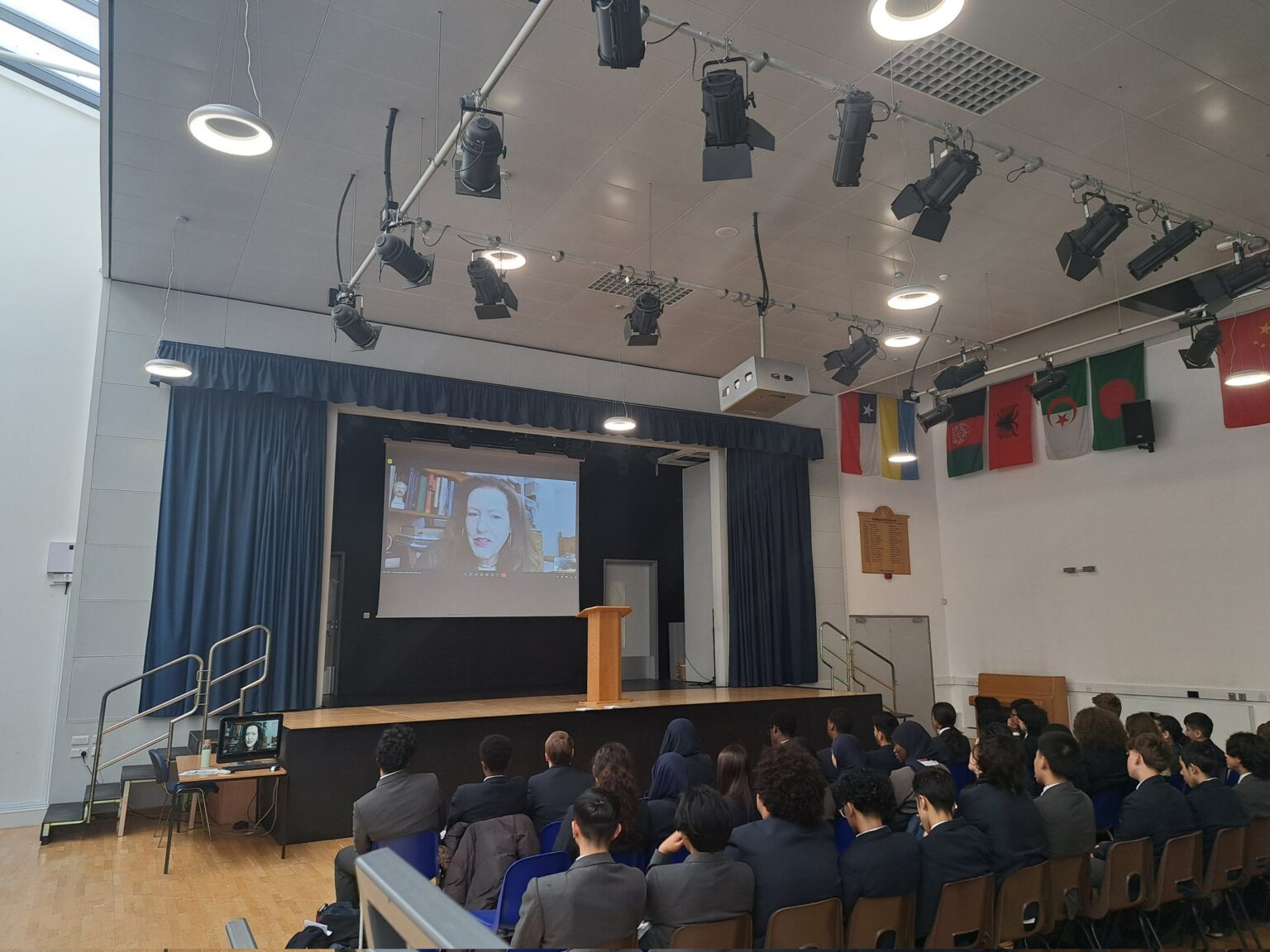
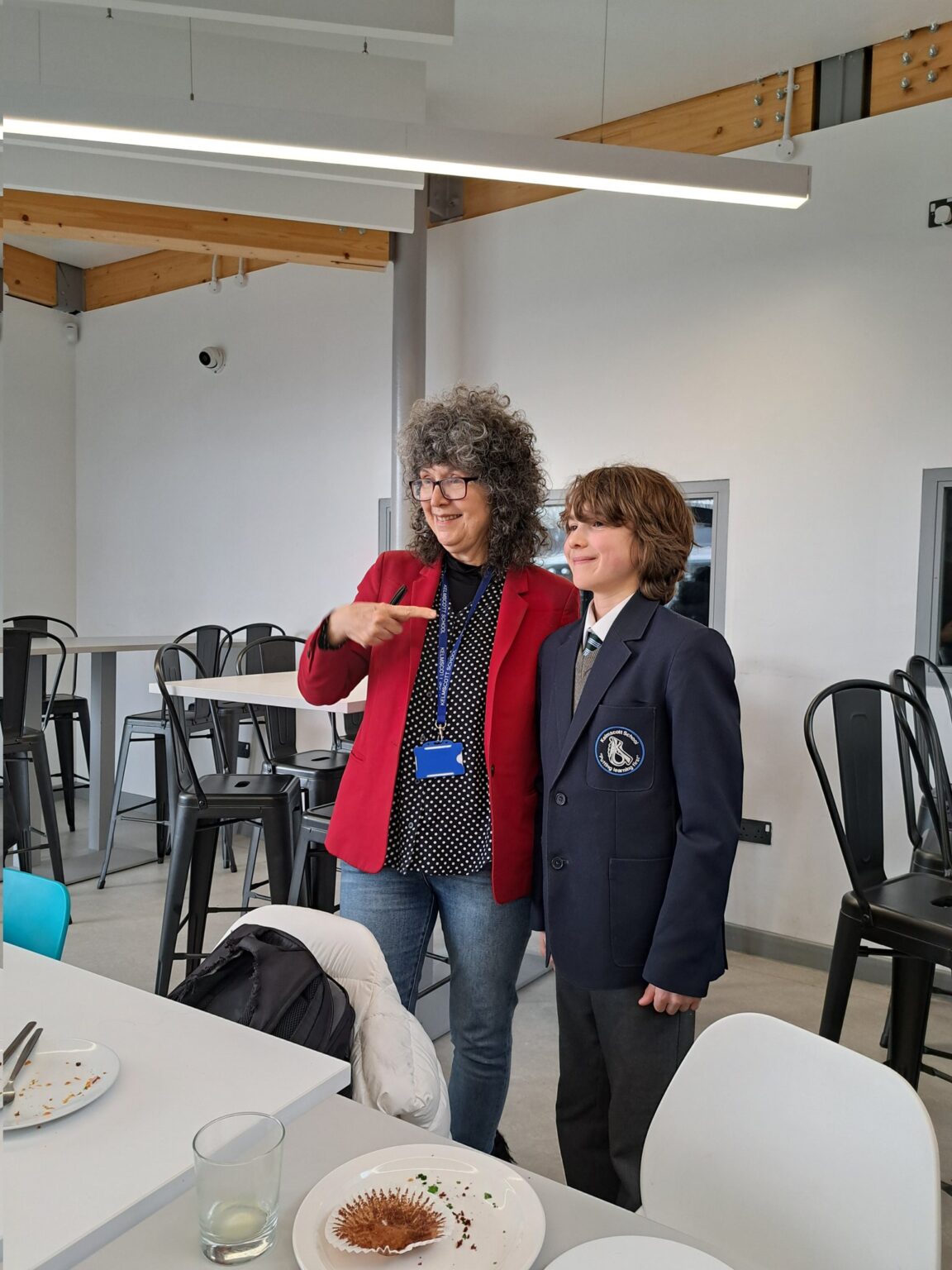
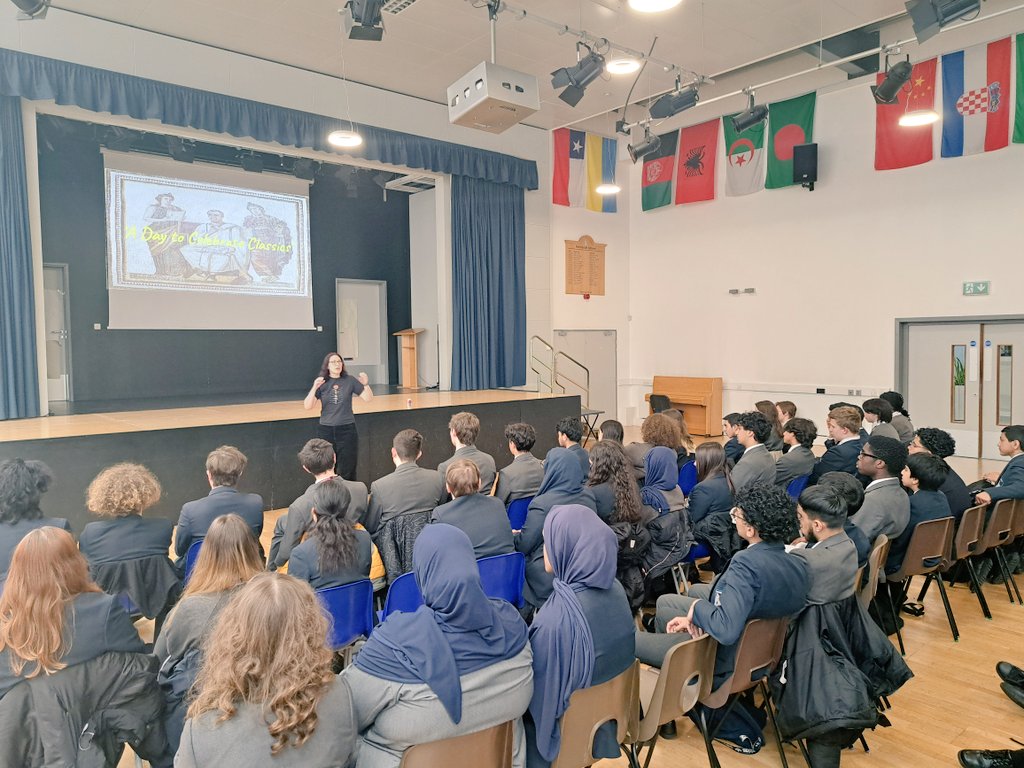
Head of Classics, Saziye Ahmet, recaps the Classics Celebration Day held at Kelmscott Secondary School, which was proudly sponsored by the CA.

The Classics Department at Kelmscott Secondary School held its first annual Classics Celebration Day on Tuesday, 27th February 2024. This state school, situated in the heart of East London, has seen exciting growth, with more students choosing to study Classics at both GCSE and A-Level. This event, supported by the generous financial backing of the Classical Association, provided a fantastic opportunity to celebrate the richness of Classics and its far-reaching benefits. The aim was to highlight the broad range of opportunities that studying Classics can offer, particularly as students considered their GCSE and A-Level options.

In addition to the talks, Saziye also hosted interactive workshops, including ‘Out of Chaos’ and ‘Gladiatrix,’ which brought the ancient Greek and Roman worlds vividly to life for selected KS3 Greek and Latin students. These hands-on sessions allowed students to immerse themselves in the historical and cultural aspects of the ancient world in an engaging and exciting way.

Posted in Community Classics

Classics Beyond Borders

Classics Beyond Borders

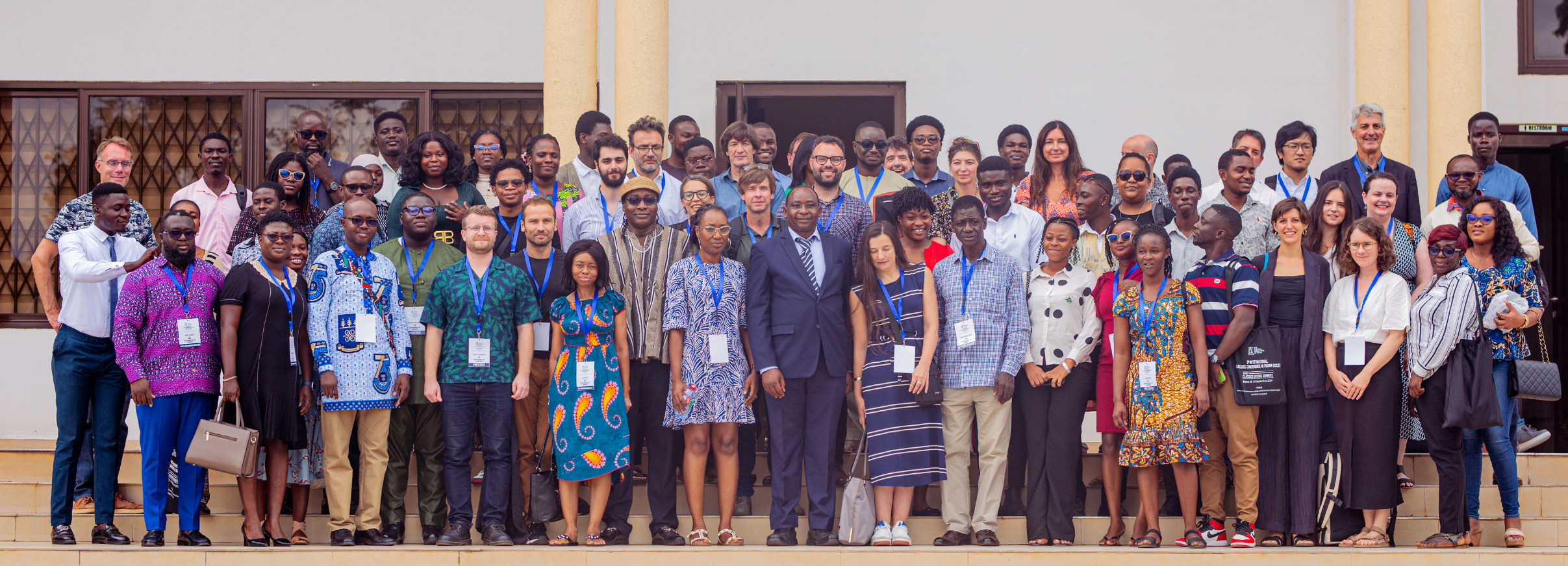
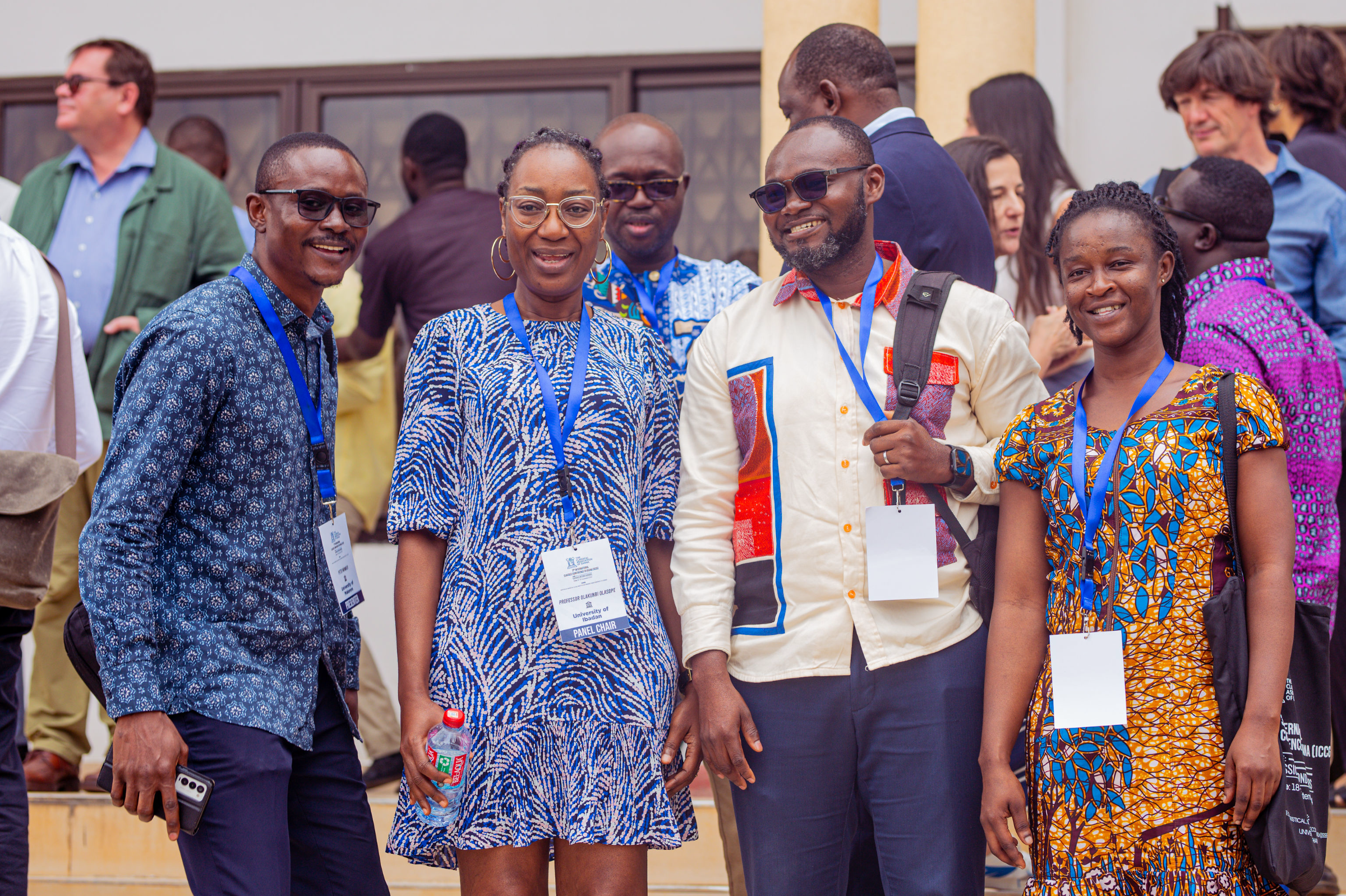
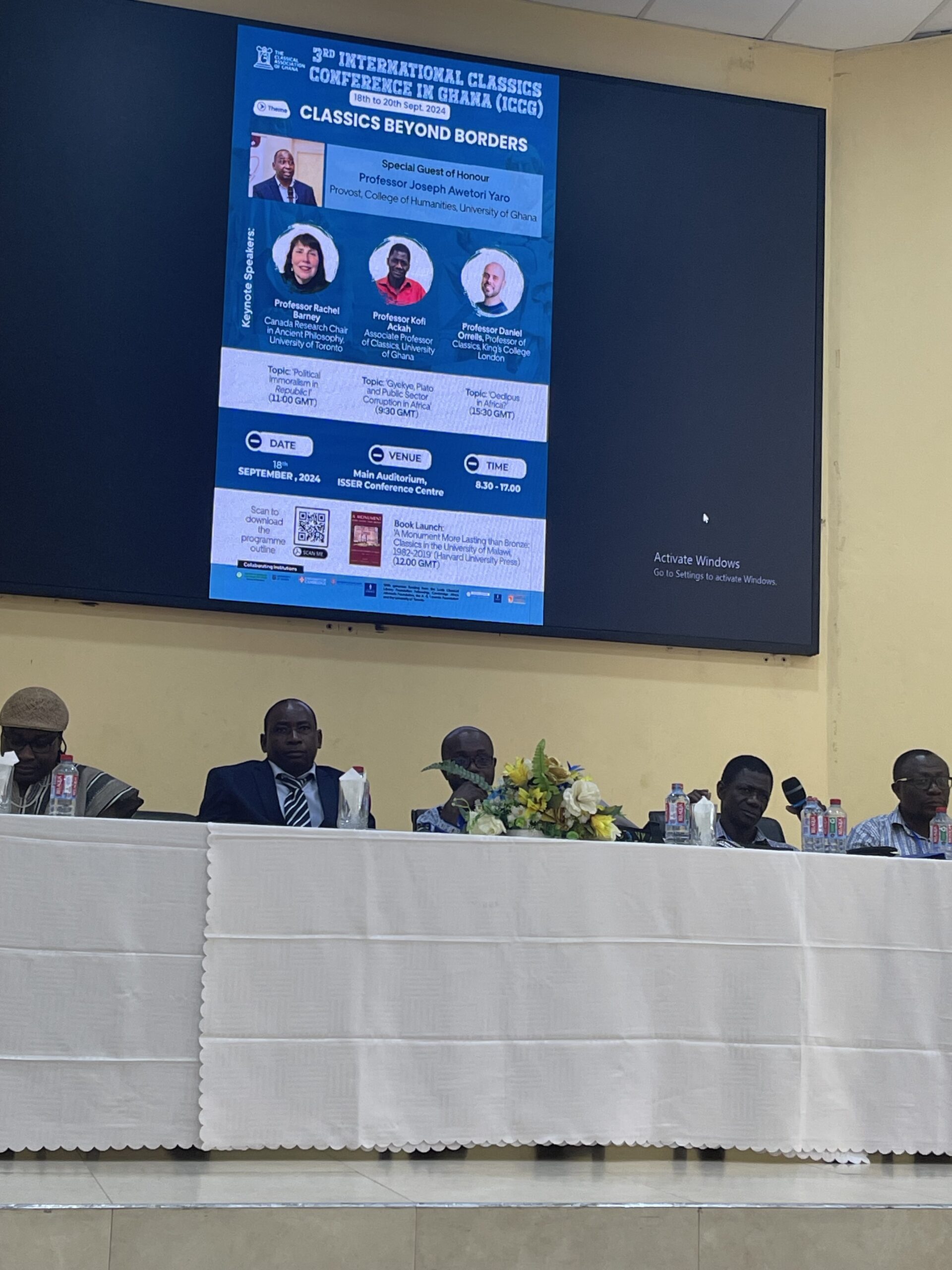
This Summer, the Classical Association of Ghana hosted the 2024 Classics Beyond Borders conference, which was supported by the Faculty of Classics at the University of Cambridge, the University of Toronto and the Loeb Foundation. Dr Frisbee Sheffield reports on the Conference’s success and wide reach:

This was the largest such conference ever held in West Africa, both in terms of numbers and diversity. It not only had the biggest participation from Africa, but it brought together scholars from five countries across Africa – many of whom had not previously met each other (East Africans attended for the first time) – with scholars from across Europe, North America, Australia and Asia. This historic conference made national television and left participants with a sense that Classics is not just surviving in Africa, but thriving.

The conference was remarkable for its collaborative vitality. Participants of all ‘ranks and levels’ engaged in an open, receptive, intellectually rigorous, and warm and supportive manner. The conference delivered a vivid sense of which classical topics are of interest currently in a range of African countries, including: Roman history, ancient Greek philosophy, Greek drama, Latin literature, Greek history, the history of Classics in Malawi, the history of Classics in Ghana, the Romans in North Africa, Africa’s Classical World and Classical Reception.

In a Question and Answer session, Pete, Gemma and Andrew then answered questions such as:

Posted in Community Classics

Croeso i Gaerdydd: Classics past, present and future

Croeso i Gaerdydd: Classics past, present and future

Thanks to the vision of Danny Pucknell (Cardiff and Vale College), Laurence Totelin and Maria Fragoulaki (both School of History, Archaeology and Religion, Cardiff University), former and current classicists came together in the lovely surroundings of Cardiff and Vale College this December.

We were warmly welcomed by Kay Martin MBE, Group Principal, who reflected on her own educational experiences and how much she would have enjoyed and benefitted from learning about the ancient world – something which, happily, pupils at the college are able to do via studying Ancient History or Classical Civilisation A Level with Danny, and many of this classics cohort joined us for an evening of celebrating what is so great about Classics (spoiler: the list is very long!).

After introductions from Kay and myself, we learned from Emeritus Professor Nick Fisher about the history of the branch, which has its beginnings in the nineteenth century, as he explains:

“The College of South Wales and Monmouthshire, and Chairs of Latin and Greek, had been founded in 1883, and a Classical Society “The Frogs” began in 1898/9; it transformed itself into the local branch of the CA in 1914, becoming the eighth CA branch. For the first 50 or so years it flourished, led by a number of impressive scholars – most worthy of mention perhaps being the Virgilian R G Austin and the formidable Irish philologist L.J.D. (Reekie) Richardson (1893-1979), whom I just was able to meet – or rather gawp in awe at – when he appeared at branch meetings in his last years.”

“In 1970 I came to University College Cardiff as it now had become, and its department of eight classicists; the first administrative job I was given was as treasurer of the local branch. The Department was then taking a major part in pioneering degree schemes in translation and its programmes in Classical Studies as well as Classics were just under way. Departmental leaders included Alfred Moritz, Peter Walcot and John Percival – all three, and above all John, were major players in the CA nationally. John was Secretary to the Council from 1979 to 1989 and Chair from 1990 to 1995, and Peter was (joint) editor of Greece & Rome for over three decades (1970-2001). Typical branch activities at the time were 5 or 6 scholars’  talks, delivered above all to devoted Latin and Classical Studies teachers in the local schools in Glamorgan and Gwent, and an annual schools day with talks aimed at those preparing for O and A levels – an intimidating gig for young lecturers as I recall, having to pretend to know something about Juvenal!”

Nick described how the revitalisation of the CA Conference came about in part thanks to the work of John Percival and Richard Seaford, and that, despite struggles during the 80-90s, with just three academics left to form the Ancient History department, staff numbers grew, the department enjoyed hosting a successful CA conference in 2010, and now looks forward to hosting the 15th Celtic Conference in July 2024, as well as the national AMPAH (Annual Meeting of Postgraduates in Ancient History) in April.

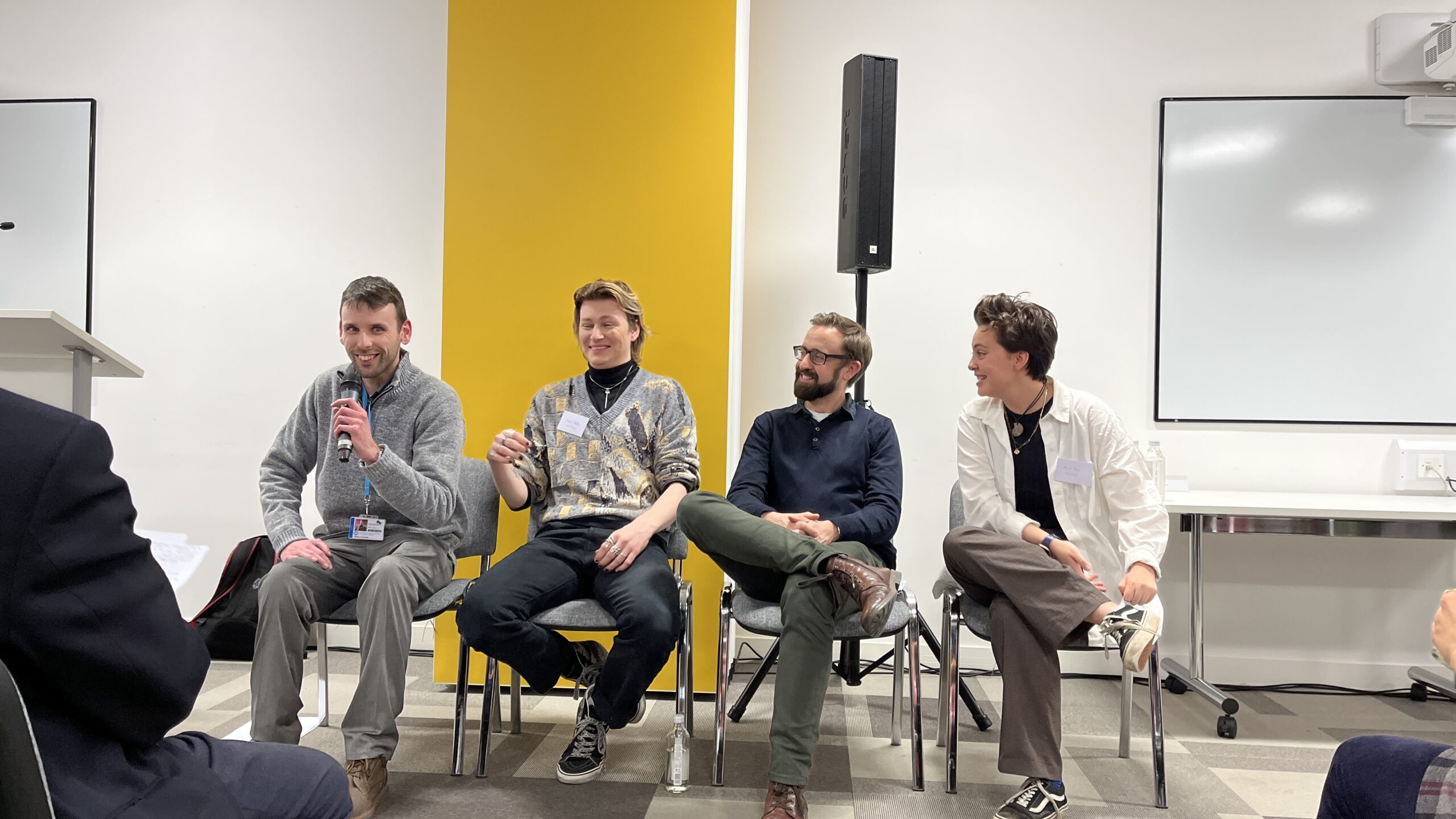
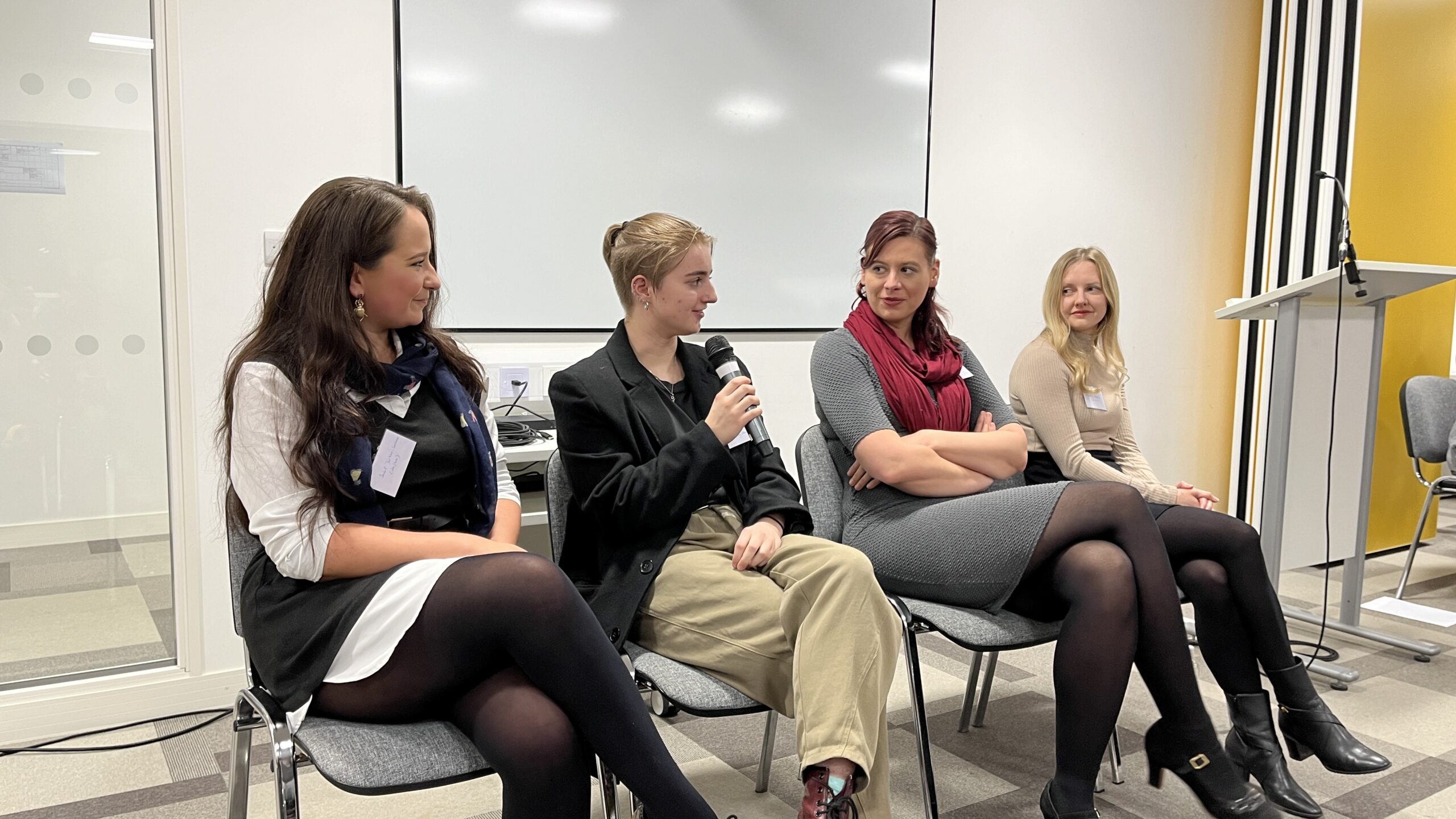
We were then treated to a panel discussion featuring local classicists with a host of different life experiences and interests: from the ‘two Carolines’ (Bristow and Musgrove), representing the Cambridge Schools Classics Project, who explored their educational backgrounds and current education and outreach work; to Cardiff University undergraduates Elijah Bees and Charlie Wallace who gave interesting insights into what drew them towards archaeology, despite not studying the subject before university; to Archaeology Professor David Roberts whose own early inspiration was Asterix! Annis Wilshire, fresh from their second Michaelmas term at Oxford University, shared their eclectic interests and newfound enthusiasm for understanding the Roman grain supply(!), whilst Isobel Jackson-Scibona talked about how her classical studies have supported her in her work now as Alumni and Events Officer at Cathedral School Llandaff.

All panellists were asked about their first experiences of Classics (do tell us yours!) – these ranged from school trips to Caerleon Fortress Baths to reading Percy Jackson or junior adaptations of Homer – as well as what makes it so engaging to them: what piques everyone’s interest is the breadth of Classics and its enduring relevance, the fact that there is something for everyone, that we can embrace the ‘weirdness’ of the ancient past, that it can feel so personal (as Elijah has found in his studies of Tunisian osteology) and that being involved in the teaching of classics can be not only life-enhancing, but sometimes even life-saving.

The final two speakers of the night were equally entertaining and left us eager for more: firstly, A. G. Leventis Professor of Greek Culture Emeritus and President of the Society for the Promotion of Hellenic Studies, Paul Cartledge, who took us on an intellectual odyssey, combining recollections with trivia, anecdote with keen insight, and encapsulating his life-long passion for understanding the past and how we should learn from, not deny, both the positive and negative impacts of classics. Finally, Mari Williams, former Classical Association President (2021) and winner of the Daniel Owen Memorial Prize in 2018 for her novel Ysbryd yr Oes (‘Spirit of the Age’), shared delightful memories (although sometimes secondary stress-inducing as she recalled sitting in examination halls!) of her classical journey, as an undergraduate at Cambridge University, then as a young teacher and her more recent teaching experiences using new textbooks like the CLC and Reading Greek. Her humour filled the room and brought the evening to a delightful close – which was then completed with proper Italian pizza from Scaramantica!

As we look forward to the Branch’s bright future, we hope that many new members will be keen to join this local community of classics enthusiasts – no prior experience needed, all welcome. To find out more, get in touch at cardiffcabranch@gmail.com.

Posted in Community Classics

A brand new branch!

A brand new branch!

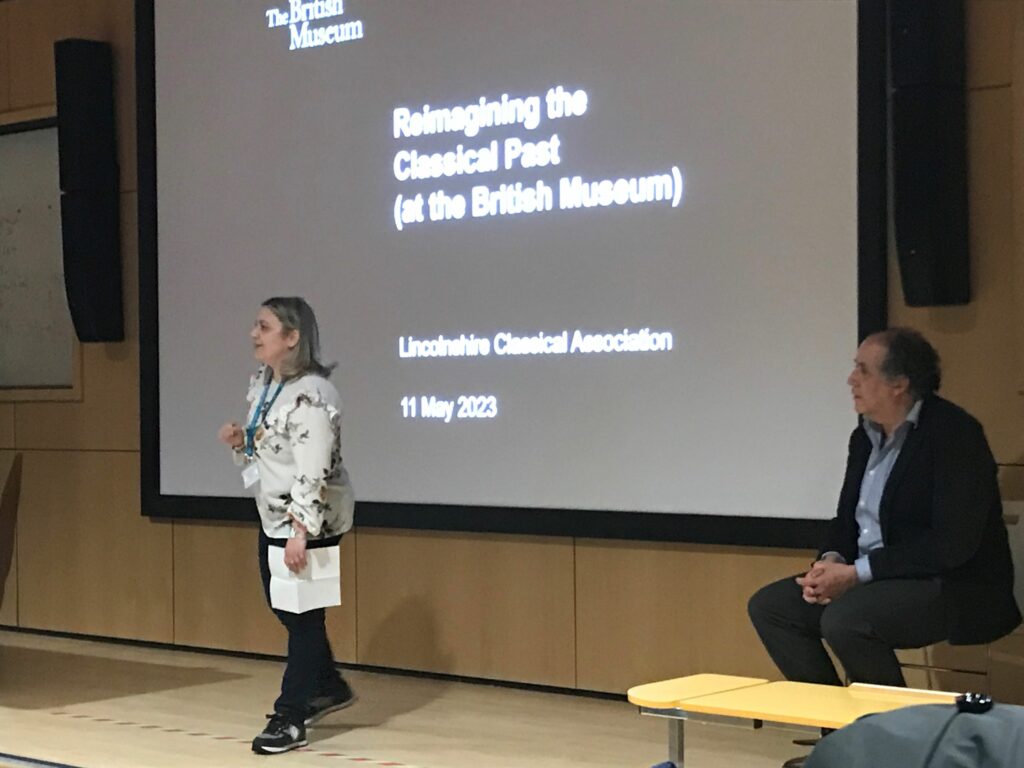
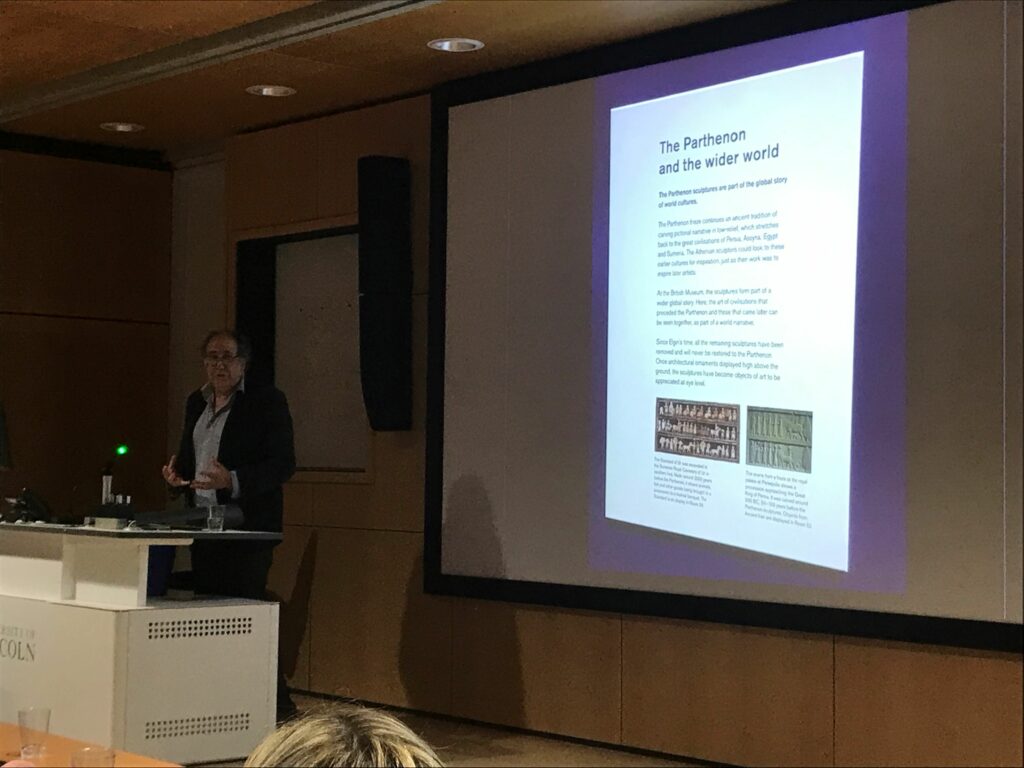
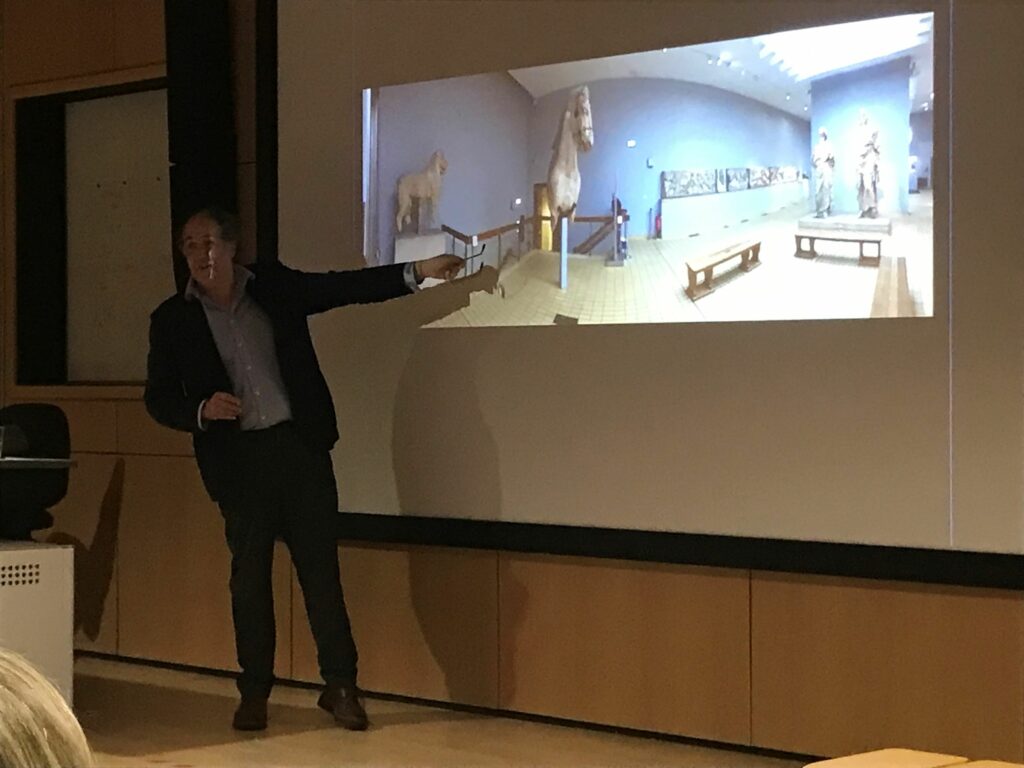
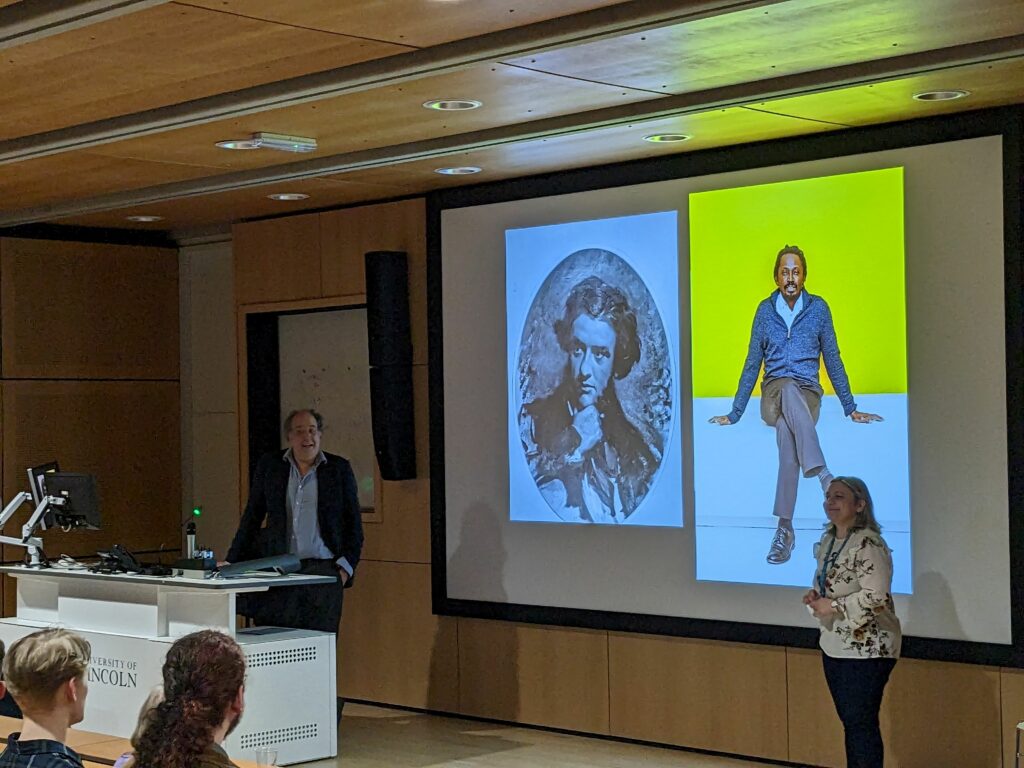
On 11 May 2023 the Classical Studies programme at the University of Lincoln was delighted to host Professor Thomas Harrison, recently appointed Keeper of the Department of Greece and Rome at the British Museum. Tom’s riveting presentation – on his vision of the past, present, and future of the nation’s premier historical institution – allowed us to launch the newly formed Lincolnshire branch of the Classical Association in style, bringing together dozens of keenly interested attendees from across the county to discuss the wonders of Antiquity in a welcoming and convivial setting. 

In his talk, Tom offered us a wealth of insights drawing on his journey from academia into the heritage sector, covering the challenges of working in an institution as large and high profile as the British Museum, and all the things he had learnt in his first few months in the job – from navigating the labyrinthine corridors to the pests that we heard infest various parts of the building and have to be kept contained! Especially interesting was Tom’s explanation of the massive reorganisation that the galleries are undergoing at the moment and the challenges he faces in dealing with issues such as restitution, making the Classical world more accessible and representative while retaining coherence and giving the public ‘what they want’, and the exciting possibilities that all of this opens up for redisplaying and reinterpreting some of the objects in the collections.

We look forward to our first full year of Lincolnshire Classical Association events in 2023-24, and we can only hope that these will live up to the high bar set by Tom in his inaugural talk! If you’re interested in joining the branch or finding more out about our work then please contact Giustina at gmonti@lincoln.ac.uk.

Posted in Community Classics

The Interwoven Roots of Plants and Greek Myths

The Interwoven Roots of Plants and Greek Myths

Like many other people, the not-too-distant lockdowns created a space and stillness in my life which nature began to fill. From starting to recognise more of the little birds that visited our garden, to taking joy out of the vibrant orange and purple colours of the wildflowers growing in the verges of the nearby road, I grew to love things I had often not noticed before. 

It was from these long days, long walks, and quiet times, that the idea for a series of books called Telling Tales in Nature grew. Some of the myths I have always found most alluring have been those about the underworld, and so I decided to set the first little book in the series, Underworld Tales, there.

Stories, and in particular, myths, are a lot like plants, I think. They spring up often unexpectedly, they self-germinate, but with interesting variations, and before you know it, they are a flourishing ecology. And like nature, they are nourishing in a very deep way, providing wider and different perspectives, and new ways of looking at things. Stepping inside a myth is a lot like stepping inside a wood. It’s different each time, and you never know what you will find!

Increasingly, I bring nature into my teaching and lessons wherever I can for this reason. I find children and adults alike have a joy in knowing the different versions of stories, of hearing them over again, and seeing them in new ways. I find they take a similar pleasure in learning about plants of all kinds, so using stories which are interwoven with nature feels fitting. More than ever before, climate change calls for us to take a different approach to our lives and the nature around us, and I think that ancient ways of viewing plants and nature can help remind us of that interdependence and reliance that modern life can make us forget.

In the book, I start by introducing the plant itself, and giving some simple details about where it grows, what it looks like, and how people have used it in daily life. I then introduce the myth which is associated with the plant, before retelling the story from the perspective of the plant itself. In accordance with ancient Greek and Roman ideas about the spirits which inhabit different aspects of the natural world, I have imagined these spirits as nymphs. I finish with a new brief notes on ancient sources for the stories for those who want to explore further.

A talented young artist, Lydia Hall, who is based in Oxford, has created botanical illustrations for each of the plants, and also drawings of the characters and places imagined in the stories. Three of the myths are re-imaginings of ancient stories but in the case of Asphodel, I invented a completely new story for the plant, since one didn’t appear to exist. Lydia has created a mysterious, wistful, gently gloomy backdrop for all the stories, and she has drawn the characters with a careful eye for their view of the stories.

The plan is to create a series of these little books which explore lots of different plants and stories in different realms, from forests to gardens, and from seas to rivers. They are aimed loosely at ages 8+ to adult. I hope that they are simple enough for quite little ones to enjoy, and detailed enough for older children and adults, but I welcome all feedback on this first book, and am looking forward to seeing where it goes.

Contact Lorna by email at lro@cheneyschool.org

“Telling Tales in Nature: Underworld Tales” can be purchased as an e-book and paperback here.

All images: © Lydia Hall

Posted in Community Classics