This report found that just 2.97 percent of A Levels taken in 2024 were for modern languages, Welsh and Irish, and classical languages, and that language learning faces huge challenges, with fewer pupils choosing the subjects, persistent difficulties in teacher recruitment, and undergraduate enrolments in ‘Language & Area Studies’ down 20 percent in five years.
The Classical Association acknowledges the findings of this report and heartily supports the recommendations it set out that could reverse this decline. However, it’s not all bad news for classical languages and there are lots of positives to celebrate:
Exam entry figures suggest that GCSE Latin is growing in the state sector, with non-independent settings now making up just shy of 45% of all entrants – and this figure has been increasing year on year.
The success of community initiatives, such as the Intermediate Certificate in Classical Greek, enable access to classical languages to those who may not have access to it in the schools. Entries for the ICCG are increasing rapidly, with nearly half of these coming from state schools.
A seven-year longitudinal study conducted by Prof Arlene Holmes-Henderson concluded that Latin acts as an English Literacy boost for disadvantaged primary school pupils. SEND, EAL and FSM pupils made significant progress in reading and writing, with demonstrable continued positive impact after 1, 2, 3+ years of Latin.
Unlike modern languages, classical languages didn’t experience a drop-off during the pandemic. The numbers of students at both GCSE and A Level have remained relatively stable over the last five years.
As acknowledged by the report, the Latin Excellence Programme made a huge impact on widening access to Latin in state schools outside London and the South East.
It is essential that classical languages maintain parity of esteem with modern languages in curriculum policy, teacher training bursaries and input in government research and missions. You can follow the links to learn more about our mission and our work.
Northern Ireland sits in a rather isolated position: not only geographically but also academically. It has been 23 years since I began my masters degree at Queen’s University Belfast. The 2002-03 academic year welcomed the last intake of Classics students. It has been even longer still since Ulster University closed its Classics department.
Nonetheless a small group of dedicated individuals is tireless in its efforts to keep Classics and Ancient History alive in the province. The Classical Association in Northern Ireland(CANI), chaired by Dr Katerina Kolotourou, works with schools to promote our subject as well as providing a lecture programme. We’re very grateful to Natalie Haynes for being CANI’s honorary patron.
CANI convenes an annual schools conference and work hard to keep up engagement with the schools which still teach Classics. Classical Greek in schools is rare, but there are a small number of schools which still offer Latin, Classical Civilisation and Ancient History. The challenges are many: lack of funds ensures that distance from the conference venue is an issue, both with regard to transport costs, and length of time students and teachers can be away from school. In addition, the low number of pupils likely to be interested and the willingness with which the school releases pupils to attend such an event are difficulties which we face every year. For these schools events, we are attempting to broaden appeal by providing lectures and activities relevant to politics and religious studies/theology school students and first year undergraduates.
Helen McVeigh and Sam Newington
I should at this point pause to mention Dr John Curran and Dr Peter Crawford, both founding members of the Classical Association in Northern Ireland formed in 2015. Dr Curran is both retiring from his post in Ancient History at Queen’s University Belfast and his position on the CANI board. John has been at the forefront of CANI’s success, holding the position of Chair and Treasurer. We are grateful for his leadership and for everything he has done to promote Classics and ancient History in Northern Ireland. Meanwhile Dr Peter Crawford has worked tirelessly, posting regularly on CANI’s social media accounts, writing blogs, and ensuring that the website is kept up-to-date. He leaves big boots to fill. Both John and Peter will be missed but we look forward to seeing them at CANI lectures.
In tandem with the work that CANI is doing in Northern Ireland, I continue to build a worldwide network of Classicists through my Greek, Latin and Classics online tutoring. I used to teach evening classes and provide 1:1 tuition in Belfast. But since moving online in 2020, I have discovered that interest in the ancient world and the ancient Mediterranean is global. H.M. Classics Academy is proud to have taught Classics to students in Europe, Africa, North and South America, Australia and New Zealand, and Asia. The only continent missing from my student list is Antarctica! For those students located time zones far away from GMT, we provide recordings of classes, and guidance via email.
Our Greek and Latin online classes seek to plug the gaps that exist such as insufficient provision in school and perceived lack of encouragement towards university study. Many of my students have chosen to return to the study of classics in retirement. Last year one of my students received his GCSE Greek result on his 82nd birthday!
During the next few months, my daughter Naomi will be applying to university. While I’ve tried to encourage her away from Classics so she can find her own journey, a combination of Classics, Ancient History, and Classical Archaeology is what she has set her heart on. She has particularly enjoyed tagging along at the Classical Association conferences in Warwick (2024) and more recently the conference at St Andrews.
Naomi McVeigh at St Andrews Dept. of Classics
I’ve been attending CA conferences since I was a postgraduate student. Now as a teacher and independent scholar, it is particularly important for me to attend events such as the CA conference. Especially for those based in the harder-to-reach parts of the country, it provides a wonderful opportunity to catch up with friends and make new ones, and to meet Classics colleagues whom I’ve only ever met before online. As usual, the breadth and diversity of panels was outstanding: pedagogy, classics and class, reception, literature and history. Of particular interest to us were the panels on Alexander, Homer and ancient fiction. I hadn’t visited St Andrews before, but had been told that it was rather off the beaten track. Yes, it is, but so worth the journey. What’s not to love: the striking architecture of the town and breath-taking North Sea views. We left inspired by the academic papers, and by the town of St Andrews itself.
Winner of our 2025 Write | Speak | Design Competition, Paige is a student from the US, who delivered the following manifesto in response to the question ‘Why is Classics important?’
Against Justification: The Unruly Necessity of Classics
The question “Why is Classics Important?” is, at first blush, an offense—a query lobbed like a molotov cocktail into the salons of those who have long been drunk on the wine of antiquity. It presumes justification, invites an embarrassed clearing of the throat, and hints at the need to defend, as though Classics were a guilty pleasure, a relic of some ancestral folly. It’s not just a question; it’s a dare, laced with the suspicion that we’re wasting our time, clinging to the intellectual equivalent of vinyl records in a Spotify world. To answer it with sincerity risks pandering; to answer it with irony risks alienation. Yet, here we are, poised on the precipice of such a provocation, daring to articulate why the foundations of Western thought should remain more than an archaeological curiosity. Why, indeed, should we care? How can we care, in times like these?
Let us dispense with the predictable litany of boilerplate defenses: that Classics teaches us critical thinking, that it’s the cornerstone of Western literature, that it grants us access to “The Great Conversation”, whatever that means. While these things are probably true, they’re also deeply boring and sound suspiciously like we’re trying to sell you a subscription to something you’re not even sure you want. It reeks of a kind of desperation, a flailing attempt to make the discipline palatable to a world hungry for “relevance”— reducing the Classics to a commodity, as though what truly matters about Homer or Cicero is how neatly they fit into a PowerPoint presentation on transferable skills. These arguments are scrubbed of texture, passion, and color—much like those alabaster statues once painted in gaudy hues but now left a pallid white by centuries of well-meaning neglect. Classics is important not because it flatters the mind or adorns the CV but because it unsettles, disrupts, and even humiliates. It makes you feel small.
Uncomfortably, thrillingly, existentially small. It is not an ornamental pedestal but a mirror, and the reflection it casts is often grotesque, sublime, and deeply human. The texts are riddled with contradictions, omissions, and unspeakable violences, and therein lies their power. The importance of Classics lies not in its completeness but in its absences, in the spaces where we are forced to imagine, to reconstruct, to mourn. They aren’t sacred relics; they’re raw materials, unfinished and unfinishable. To dismiss Classics as irrelevant—as some do, branding it the purview of crusty academics and reactionaries—is to misunderstand its radical potential. Classics is not a shrine to be venerated but an autopsy to be performed, an excavation of power in all its naked, bloody forms. The Greeks and Romans were not moral exemplars; they were imperialists, colonizers, and enslavers. To study their works without acknowledging this is to engage in a kind of intellectual tourism. But to confront these realities head-on is to wrestle with the mechanisms of domination that persist today. The rhetoric of Cicero, the politics of Augustus, the spectacle of the Colosseum—all are templates for modern machinations. To know them is to know ourselves, our complicities, our vulnerabilities.
Yet, Classics is not merely a catalog of atrocities. For amidst the violence and ambition and moral hypocrisy lies something ineffable: wonder. The geometry of Euclid, the metaphysics of Plotinus, the comedies of Aristophanes—these are gifts that defy utility, existing for the sheer joy of thought and expression. To engage with them is to affirm that human beings are not merely tools of production but creatures capable of transcendent beauty and discovery. Classics affirm that we are not merely tools of labor or cogs in an economic machine but creatures capable of astonishing leaps of thought and creativity. It is a reminder that some things—perhaps the best things—exist not because they are useful but because they are true. This, too, is why Classics matters: it insists on the value of the impractical, the ineffable, the sublime.
But let us not sentimentalize. Classics can be maddeningly obtuse, exasperatingly elitist, and, at times, staggeringly dull. There is no denying that parts of the canon are tedious, that the fetishization of Latin declensions has driven many a student to despair. Yet even these aspects serve a purpose. To grapple with the impenetrable is to cultivate humility, patience, and a tolerance for ambiguity. It is a reminder that not all knowledge comes easily and that some truths must be earned through struggle. In a culture of hot takes, of TikToks explaining Marcus Aurelius’ Meditations in 30 seconds, and of audiobooks consumed at 1.5x speed, the Classics represent an outrageous affront. They demand that you slow down, learn new grammatical cases, and parse the subjunctive moods of dead languages. But why should we care about subjunctive moods or dative absolutes when we can have answers—not mere reflections—delivered in milliseconds?
The answer lies not in what the Classics give us but in what they take away. They strip us of our modern illusions: the illusion of mastery, the illusion of immediacy, the illusion that knowledge is merely information in fancy dress. The Classics remind us that understanding is an act of patience, that wisdom is not speed but sedimentation—a slow layering of insights, accreted through effort, frustration, and even boredom.
Imagine a world without unnecessary skills. It would be, at first glance, utopian: a sleek, hyper-efficient mechanism in which every action serves a purpose, every moment yields tangible results. But examine it closer, and it reveals itself as horrifyingly hollow. What becomes of play? Of curiosity? Of the peculiar joy of doing something not because it is useful, but because it is hard, and in its difficulty lies a kind of transcendence? It is precisely this difficulty that the Classics offer—not as a burden, but as a gift. They demand that we slow down, not because slowness is inherently virtuous, but because it is in slowness that we begin to think. They frustrate us, not out of malice, but because frustration is the crucible in which clarity is forged. They are inefficient, and in their inefficiency, they mirror life itself: messy, unpredictable, and resistant to easy solutions.
And so, to read the Classics is to practice a kind of spiritual disobedience. It is to say: I will not be reduced to a consumer of content; I will not confine myself to what is easy or digestible. It is to assert that some things are worth doing precisely because they cannot be justified in terms of utility or optimization. The subjunctive moods of dead languages, the labyrinthine syntax of Cicero, the aching beauty of Homer’s hexameters—these are not relics; they are revolutions. They teach us not only how to read but how to live: slowly, thoughtfully, and with an unyielding reverence for the unnecessary. And in that toil, there’s a kind of beauty—a sacred discomfort that forces you to confront the limits of your patience, your intellect, your willingness to care.
I remember this one afternoon in my school’s Latin Club when I somehow managed to keep the room’s attention, including a few stray interlopers who’d wandered in looking for free donuts. The text we were wrestling with was Catullus 101, a poem so old and sad and stripped of pretense that it felt almost indecent, like you were eavesdropping on someone mid-sob. The task, predictably, was to break it apart: meter, scansion, translation. What wasn’t predictable was the way the room fell quiet, people leaning forward like something in the bones of the thing demanded it. We argued over the rhythm, tripped over Latin words that weren’t built for our mouths, and tried to explain how a 2,000-year-old funeral poem could still punch you in the chest. It wasn’t about cracking the code—though that was its own kind of rush—but about theway the room shifted into this weird collective focus, all of us orbiting the same point for once. It wasn’t sacred, not exactly. But it stuck, the way good discomfort does.
Of course, there are problems with Classics: that Classics is too Eurocentric, too bound up with the narratives of white supremacy, for instance. This critique is not without merit; the discipline has often been wielded as a tool of exclusion and domination. But to abandon Classics on these grounds is to cede the field to those who would weaponize it. Instead, we must reclaim it, interrogating its biases, expanding its boundaries, and situating it within a global context. The Classics are not the exclusive property of any one culture; they are part of a larger, messier human inheritance.
And what of the common charge that Classics is irrelevant in an age of climate crisis, social upheaval, and technological acceleration? This, too, is a misunderstanding. The ancient texts are, in many ways, premonitory. The ecological devastation lamented in Ovid’s Metamorphoses, the political corruption satirized by Juvenal, the existential despair of Lucretius—these are not relics of a bygone era but resonances of our own. Classics teaches us that the past is never truly past, that its ghosts linger in our language, our institutions, our imaginations. Perhaps the most compelling argument for the importance of Classics is that it resists easy answers. It is a discipline that thrives on tension, on the interplay of opposites. It is at once conservative and radical, timeless and timely, universal and particular. To study Classics is to inhabit these contradictions, to revel in their dissonances, and to emerge, if not wiser, then more attuned to the complexities of existence. And so, we return to the question: Why is Classics important? Because it is difficult, maddening, and essential. Because it confronts us with the best and worst of ourselves. Because it demands that we think, feel, and imagine beyond the narrow confines of our present moment. Because it refuses to be reduced to soundbites or bullet points. In a world increasingly obsessed with the new, the immediate, and the disposable, Classics is a reminder of the enduring, the profound, and the sublime. And that, surely, is reason enough.
In September 2024, Matthew Rawcliffe was awarded an outreach grantby the CA for a project which aimed to design and create sensory packages for use in a series of dance performances retelling ancient Greek myths for young people with profound and multiple learning disabilities (PMLD). Matthew describes the development of the project below.
I am a dance artist from Manchester specialising in creating performances for neurodivergent young people and young people with different disabilities. I love the ancient world and recently have been very excited about bringing Greek Mythology to people with profound and multiple learning disabilities (PMLD). People with PMLD experience the world in a primarily sensory way and therefore my main question has been:
How to express the Greek myths through the sensorium?(without losing their considerable emotional and dramatic content!
With the support of a grant from The Classical Association, I was able to focus on three areas of the Greek World – SMELLS, TEXTURES and SOUNDS.
This grant allowed me to collect a rich sensory world to be used in three performances over the past few months:
Hades & Persephone, which premiered in Manchester at The Yard Theatre in February. See the trailer here:
Narkissos, which premiered in Copenhagen at Dansekapellet in April.
The Garden, The Styx and The Underworld, which premiered at Now Northwich in April.
SMELLS
Our olfactory sense is extremely powerful and is processed in the same part of the brain as memory and emotion. Unlike the other senses, smell is used sparingly in my work, so it becomes even more important to be selective and purposeful with it. In Hades & Persephone, we decided to use scent within the River Styx, our transitional space between Persephone/Demeter’s Garden and The Underworld. Given its link to memory and emotion, it felt exciting to highlight the journey to the underworld by adding olfactory stimulation. We used an essential oil with a sweet honey scent to mirror the first libation Odysseus pours in his journey to the land of the dead.
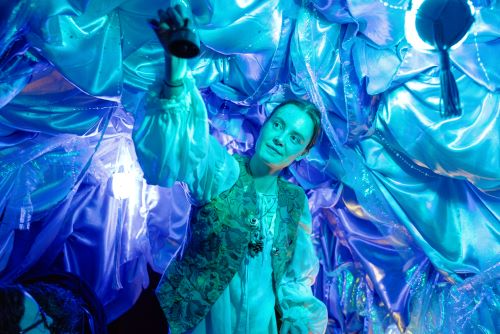
Anastasia Sheldon as Persephone in the River Styx. Photography by Elly Welford.
Sweet smells like honey often trigger a feeling of pleasure, activating dopamine in the brain. In our production, Persephone offers the audience a jar filled with the honey scent, and perhaps at a more academic level we are linking the pleasure of this journey with feminist readings of Persephone’s story – one whereby she decides to reach for the Narcissus flower and actively branches into the world of adulthood. Maybe the pleasure of the sweet-smelling honey on the way to the underworld could also be the first sweet smell of adult freedom away from her mother?
TEXTURES
The sensory world can often be perceived as ‘babyish’ and as an artist it is important for me to find sensory engagement possibilities that are age-appropriate, relevant and appropriately stimulating.
To express Demeter’s heartbreak, we used broken fragments of pottery, thereby taking something genuinely broken and fragile to emphasise the emotional turning point in our story. This was a great example of using materials from the ancient world to emphasise a crucial part of the narrative.
For some of our audiences it would be unsafe to explore objects that are easily breakable, so we instead used handmade felt hearts that were loosely stitched together. For an audience enjoying a rougher stimulation, these could safely be thrown and torn.
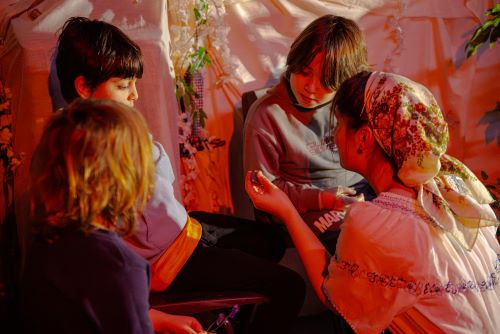
Lili Holland-Fricke as Demeter in The Garden, holding a pottery fragment. Photography by Elly Welford.
SOUNDS
Sound is very important for many of our audiences, and it has therefore become vital to understand how the sensory items we work with can inhabit the sonic world – from which leaves crinkle the best, to which metal trinkets make nice harmonies with each other.
One of the best purchases we made with this grant was a series of wind chimes tuned to an ancient Greek pentatonic scale. I really cannot recommend these enough since on a sensory level they create such a magical otherworldly atmosphere.
Wind chimes offer excellent accessibility options, they can be hung at multiple heights to account for audiences being either wheelchair users or ambulant, they can be enjoyed with or without the motor function to activate them (as the wind will do that) and they also provide a clear visual reference as to where sounds are coming from.
We liked the wind chimes so much that we structured the music for the rest of the Hades & Persephone performance around this main chord. In Narkissos we created a small maze of wind chimes outside the performance space to create stimulation for audiences that arrived early, to clearly indicate where our performance was taking place and to act as a slow transition into our sensory world.
The wind chimes from Narkissos can be seen here:
CLOSING THOUGHTS
Having these resources to emphasise the broad sensory world of ancient Greece has felt extremely important. After spending lots of time debating what sensory items to use and why they were relevant, meaningful and impactful, I feel that the worlds we have created landed in a much simpler and profound manner. When I first read these myths as a child, they were transportive little time machines that had this immense power to stimulate my imagination. I hope the success of what we have created comes from not losing sight of how magical these stories can be – and ultimately how joyous it can be to visit the stories of the past. You can listen to Matthew talking about his work and his career in dance and classics, on our podcast, The Classics Podcast.
The house is hushed. Upstairs, the children have quieted, finally relenting to sleep whilst downstairs, the chores are done, and the kitchen now darkened. It’s a precious time of day, a deep breath after the intensity of juggling full time teaching and parenting. Tiredness and easy TV beckons, but there’s a mental itch I can’t seem to ignore; once again I find myself in our spare room, hunched over a messy desk, head deep in the Classical era, and mind soaring.
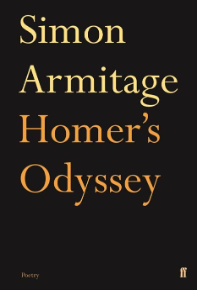
When I first came across the Classical Association tweet advertising the NEC bursary for teachers, I must admit, I had my doubts. As if I had the time to do an actual A level. Who was I kidding? And yet something about it tugged at me and wouldn’t let go. I’d always had a casual interest in the Greek myths – a leftover from a bookish childhood, perhaps – but that passing curiosity had deepened into something far more serious when we started writing our English curriculum and David Didau introduced me to Simon Armitage’s translation of the Odyssey. I’d already listened to and greatly enjoyed Stephen Fry’s Mythos and Heroes the previous year, which felt like visiting with old, beloved friends. But this, this was something different, something vast and circuitous and difficult. It got into my dreams, absorbed my thoughts, at once deeply familiar and intensely strange. Once I read Armitage’s dramatization, I picked up Emily Wilson’s translation and I was hooked. I dithered and doubted my way through an application for the bursary, convinced myself there was no way I would get it… until suddenly an email appeared in my inbox saying quite the opposite. And so began eighteen months of fascinating, challenging study.
Of all the things I’d hoped I’d get from studying an A level in Classical Civilisation, probably the least expected, the most surprising, has been the heady joy of falling back in love with academic study. 30 years since I last took A levels, and here I am, properly nerding out over Homer and Virgil and, of all things, vase paintings. I have countless tabs open all the time, all filled with little segue ways and rabbit holes in Classical Studies, whether the social purpose of Attic tragedy, or a virtual reality 3D ‘map’ of Augustan Rome, or modern performances of comedies in ancient Greek. My wall above my desk is papered with post it notes and handwritten reminders, with dates, names of battles, lists of prescribed sources, quotations – one in Latin – and more recommendations for books than I’ll ever be able to read. Immersing myself in this vast, vibrant world has brought technicolour back to my thoughts, and reinvigorated my intellectual life in ways that I honestly couldn’t have imagined. In the same way some people do crosswords, or listen to complex music, or go for a run, studying Classics has become my way to unwind, something I look forward to each day and find myself impatient to get back to when the real world inevitably intrudes. I’ve finally found ‘my thing’.
And it strikes me in teaching that we so often lose our ‘thing’. It’s hard to remember our passion for our subject, or for intellectual study itself, when Year 9 won’t stop dabbing, or Year 11 constantly shout out, or Year 8 are just being very Year 8. It gets even harder when you add the duties, the pressures, the paperwork, the data, the results, the policies. Teaching is often cognitively tiring, but it’s not always intellectually stimulating. I would finish long school days emotionally and cognitively wired and wound up, but it wasn’t until I started the Classics A level that I realised the value in doing something intellectually stimulating as a way to unwind.
Professional well-being so often focuses on our physical wellbeing, whether that’s afternoon yoga or going for a walk. And whilst those things are certainly helpful, how often do we focus on our minds, on our intellectual, interior life itself? It’s certainly been my experience after twenty odd years in the profession that my inner life, my thoughts and my mind, have all too often been squeezed by my work. Sometimes that’s been incredibly exciting and enriching, but sometimes it’s because I can’t stop worrying about whether 9×3 have made enough progress, or if a certain lesson will go better tomorrow than I fear. And that’s a quick road to burnout. Turns out, doing more with my brain, finding something stimulating and interesting and different is the best way to turn off those unhelpful worries. Despite twenty years in teaching, this has been a revelation. In the eighteen months since I started the A level, I’ve found it easier, not harder, to switch off from work. Half an hour of Greek tragedy in an evening has made a far greater difference to my mental wellbeing than scrolling on my phone ever could.
And so, as we approach the summer term, and – eventually – the summer holidays, what if you found your thing? Or focused on it more, if you’re lucky enough to have already found it. What if you found that thing that doesn’t feel like more work, that invigorates instead of diminishes, that fills your cup when school has emptied it, several times over – whether that’s pottery or South Asian novels or quantum mechanics or the life cycle of certain kinds of jellyfish? And if you think your thing might be studying Classical Civilisation (and why wouldn’t it be?!), I urge you to apply for the bursary with the Classical Association – you never know what treasures you might find, deep in this labyrinth. If we want to be the best teachers, and the best people that we can, it’s time to dare to know.
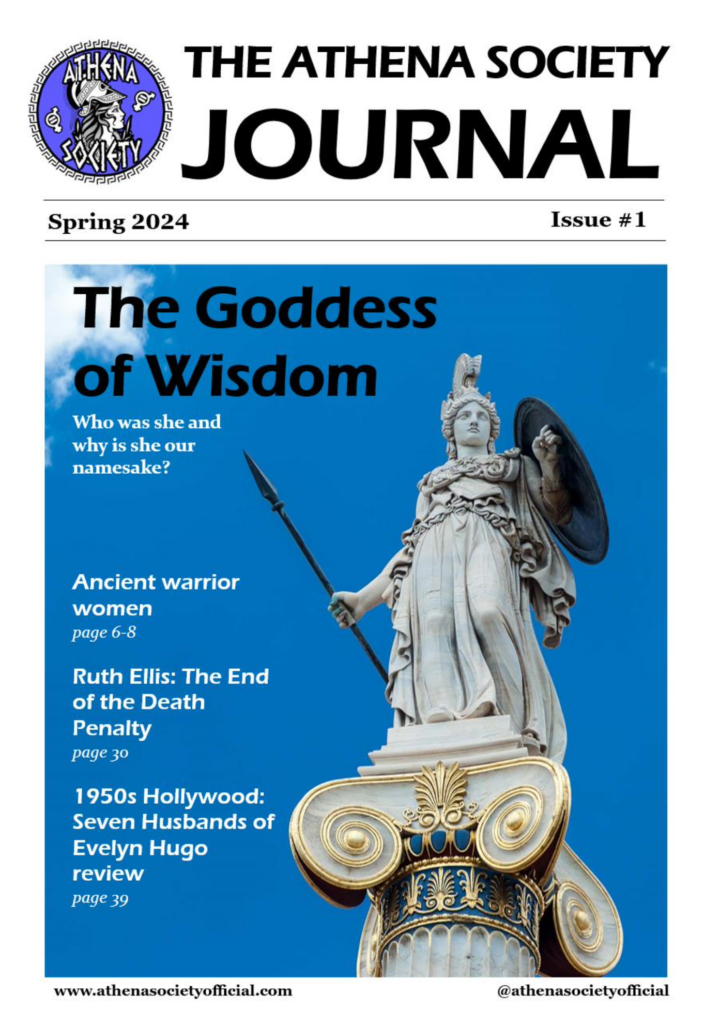
Athena Society: using history to tackle misogyny in schools
AUTHOR: Laura Aitken-Burt
On Monday 14th June 2021, the CA hosted a virtual event for schoolteachers, designed to provide information, and dispel myths, about presenting at a CA conference as a teacher.
Devised and hosted by the CA’s Outreach Officer, a former schoolteacher herself, the event was a successful example of collaboration and knowledge exchange across educational phases, with both academics and teachers presenting.
As much as we all love Classics, with all its fantastic mythology, literature and art, there is no escaping the fact that it is a subject that is infused with misogyny. It is the common thread that ties together the stories of gods and heroes, who so often use violence against women as a way to prove their strength and power.
Talking about gender equality has become an increasingly difficult topic that teachers are having to tackle head on at the front lines in our classrooms with little guidance or support. We know from platforms like Everyone’s Invited and the investigations of Rape Crisis UK that 90% of school age girls face sexual harassment by their peers which often goes unchallenged. We also know that there has been a concerning rise in misogynistic content which is being pushed towards young men online.
In this context, I have seen how students are shaken and want to try and understand the historical roots of how and why misogyny exists in the world, but don’t know where to start. Both male and female students often don’t feel empowered to talk about these issues amongst their peers for fear of being ‘cancelled’ on social media. For many young people, these issues seem so prevalent and systemic that they are starting to accept it as part of life.
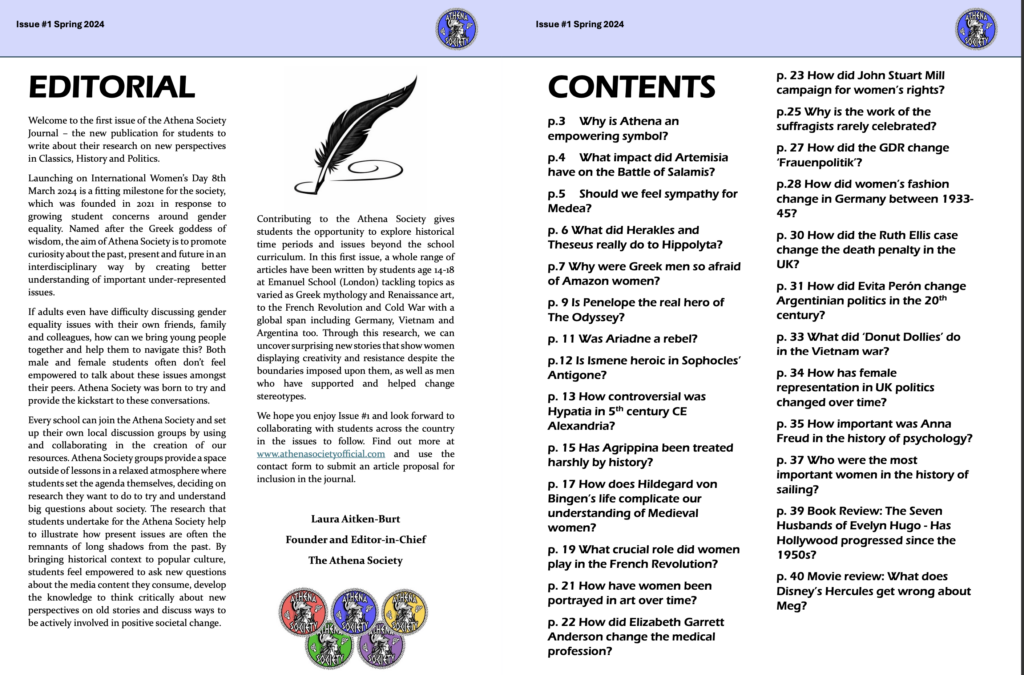
As I teach the three subjects of Classics, History and Politics, I saw an interesting opportunity to lead on showing students how present issues are often the remnants of long shadows from the past. I was keen to find a new way to help kickstart conversations on gender equality in schools, using Classics as a way to stimulate curiosity from students who don’t necessarily study the subject. And so, the Athena Society was born!
Athena Society gives the opportunity for students to explore historical time periods and issues beyond the school curriculum. We can uncover surprising new stories that show women displaying creativity and resistance despite the boundaries imposed upon them, as well as men who have supported and helped change stereotypes. It is a space outside of lessons in a relaxed atmosphere where students set the agenda themselves, deciding on research presentations they want to do, knowing that there is a trusted adult who can guide them through sometimes difficult conversations. Here young people are able to physically listen to each other and to think critically about the media content they consume, through learning new historical information that helps them to understand where modern political issues stem from.
Students who take part in Athena Society feel empowered with knowledge and skills to ask new questions about media content and build a positive ethos across the school environment. By bringing historical context to popular culture, students can get thinking about gender equality and ways they can be actively involved in positive societal change. Changing young minds and helping them to break stereotypes by seeing their unjust historical roots is, in my view, the key to continuing the cause for gender equality. Both young men and young women have to see the importance of this and with student-led projects like Athena Society we must strive to be optimistic for a better future.
Athena Society started as a simple after school conversation in a classroom with a few students after a tragic event, but I hope to build a movement that keeps the question of gender equality alive in schools by researching historical stories and interrogating popular culture. We have grown to include students from across year groups in the school and hosted our inaugural conference in February 2023 inviting local schools to collaborate and listen to guest speakers. We began creating informative Instagram posts @athenasocietyofficial to further our reach and set up a website www.athenasocietyofficial.com including merchandise with our fabulous logo designed by one of our students. We are also engaging with our local MP, taking part in focus groups in Parliament and raising matters of women’s safety in the local area.
Our latest development has been to create the Athena Society Journal, launched on International Women’s Day 8th March 2024. It contains articles submitted by students on topics they have researched on feminist themes through time. The first issue tackled topics as varied as Greek mythology and Renaissance art, to the French Revolution and Cold War with a global span including Germany, Vietnam and Argentina too.
We hope that this resource will help schools across the country to start their own gender equality conversations, using Classics as an interesting way to bring students into the discussion. To join us, use the contact form at www.athenasocietyofficial.com and encourage your students to send in their ideas for our next issue of the Journal!
Early January in a busy, urban school and I’m lucky enough to be watching lessons centred around Simon Armitage’s earthy translation of The Odyssey. Having worked closely with our trust-wide English team, this is the first time I’m seeing it in action. Sitting at home writing these units on evenings and weekends, I was hopeful that we’d hit on something special, which would enliven our Year 7 curriculum, inspire pupils and persuade teachers to take a chance on our new curriculum. I’m about to find out if I was right.
My colleague and I enter the classroom as quietly as possible. A year 7 ‘nurture’ set – a group of children who normally struggle to access mainstream lessons – are entirely focused on their teacher as she stands at the front of the classroom, arms aloft, a copy of The Odyssey clutched in her hand. As we arrive, the class are reading the play together, deciding how key lines should be delivered and changing their tone or pace or volume to match. There’s a brief discussion about Odysseus’ character and how Penelope might speak as a Queen to a beggar in the palace and then the class chorus together, bringing this oldest of stories to life again. Penelope is cautious, Odysseus charming and eloquent and we are all caught in the spell of Homer’s tale.
For anyone working in education in the past fifteen years, the slogans ‘Ambition’ and ‘Challenge’ will be all too familiar. But enacting that ambition and challenge in our day-to-day teaching and curriculum is very difficult, and it’s all too easy to fall into the mistaken belief that ‘Challenge’ means ‘boring’ or lecturing students or making it too hard for some.
We began writing our new English curriculum in 2021 under the leadership of David Didau, our senior lead for English. Our primary goal was to enable our schools – all of which are in predominantly deprived areas – to deliver a curriculum in English that truly was ambitious and challenging, but which was also interesting and exciting and alive. One of the best ways we have found to do this has been through Classical texts.
Our KS3 curriculum starts with Year 7 exploring our ‘Ancient Origins’, as we saw, taking in Gilgamesh and The Odyssey, as well as myths such as Icarus and Daedalus, Theseus and the Minotaur, and Persephone. We deliberately start students on familiar territory; with Ancient Civilisations in the KS2 History curriculum, as well as the abiding popularity of Greek myths in children’s literature, many of them have at least heard of the myths and associated worlds. From here we can explore the bigger and more abstract concepts such as heroism, story structure and imagery as very much an introduction to English at ‘big school’.
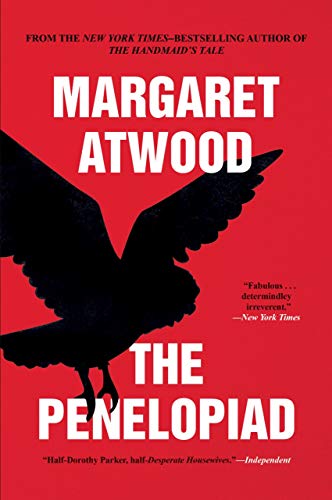
But it’s not just the heavyweight standards. We also interweave more modern, disruptive readings of Classical stories – we include extracts from Atwood’s the Penelopiad, as well as Duffy’s infamous ‘Medusa’ poem. We want students to see that these ancient texts are not just dry, dusty tomes but living, vibrant stories that writers are still rewriting and rethinking. It’s also a fantastic opportunity for students to try out their own creative writing and ability to think critically about these ‘foundational’ stories. A key aspect of our curriculum is to empower students as critics and scholars, to question and discuss how women are treated, how Penelope might have felt, whether we think Odysseus really is an admirable man. Modern discussions and reimaginings of classical stories are an excellent way to do exactly this.
Ancient stories and writers are the backbone of our curriculum: we study Cicero and Rhetoric in Year 7, Aristophanes in Year 8, Sophocles and Sappho in Year 9. If we seek to induct students into the conversation of English Literature, then we must include the texts that inform that conversation. Indeed, our feedback from teachers has been how useful and enlightening they have found it, deepening their own appreciation of Shakespeare, and illuminating references, characters, and ideas for their students.
And this isn’t just about enjoyment and engagement, although those are certainly important. A cornerstone of our approach has been disciplinary equity – giving all students the equitable opportunity to study ‘great’ literary texts, because so often so many groups of students are erased from our discipline, whether English or Classical Civilisation, before they even have the chance to get started.
Before writing this curriculum, I’d never studied classical texts in detail. I’m a medievalist by training so the stories and characters are very familiar, but it was like listening to conversations through a wall – I got the gist, but I missed the nuance. With the incredibly generous bursary from the Classical Association to study an A level in Classical Civilisation, via the National Extension College, the door to this vibrant, fascinating world has finally opened for me. For those of us who teach, it is imperative that we open that door for our students so that they too can add their voices, opinions and words to the great debate.
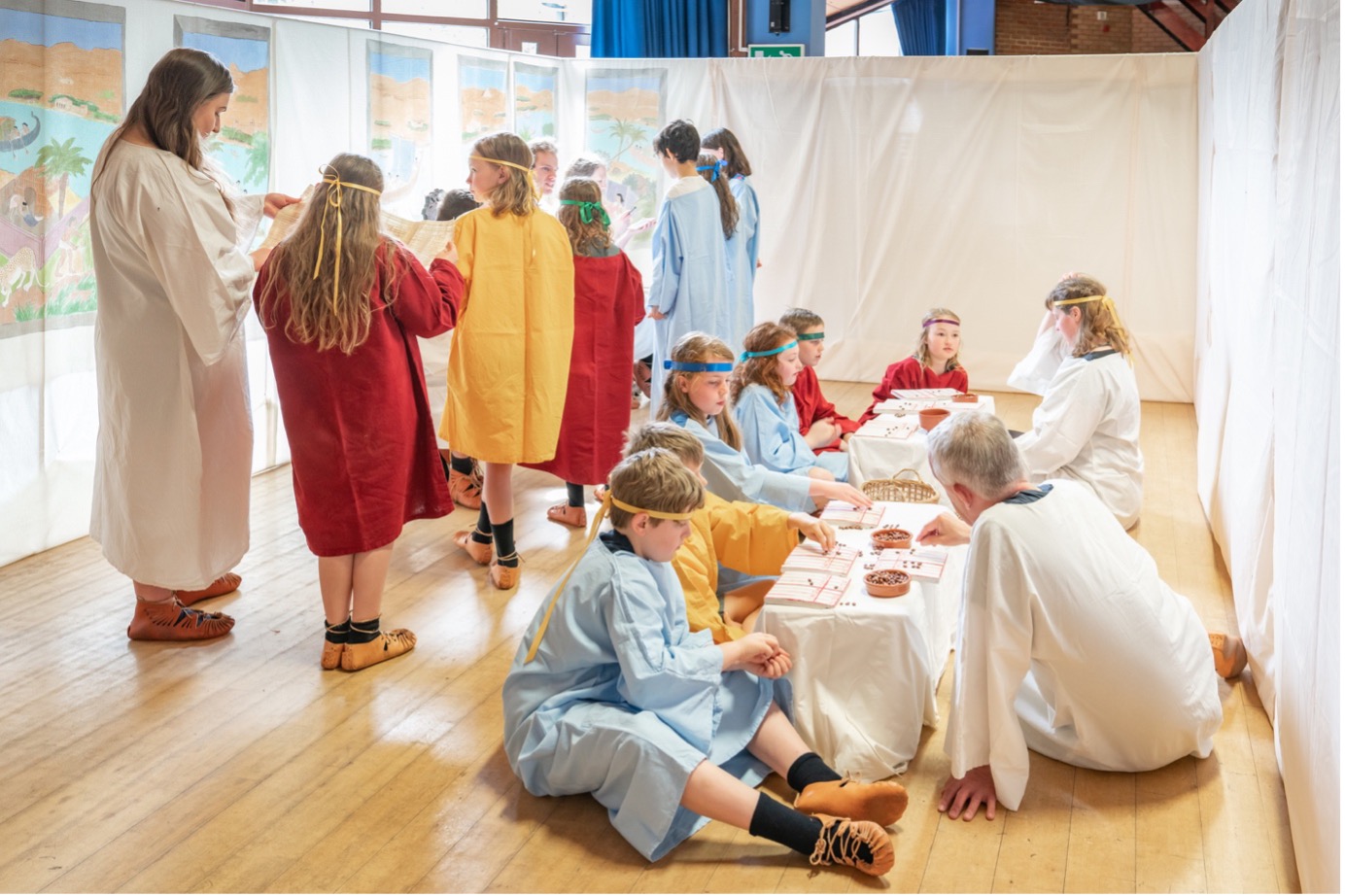
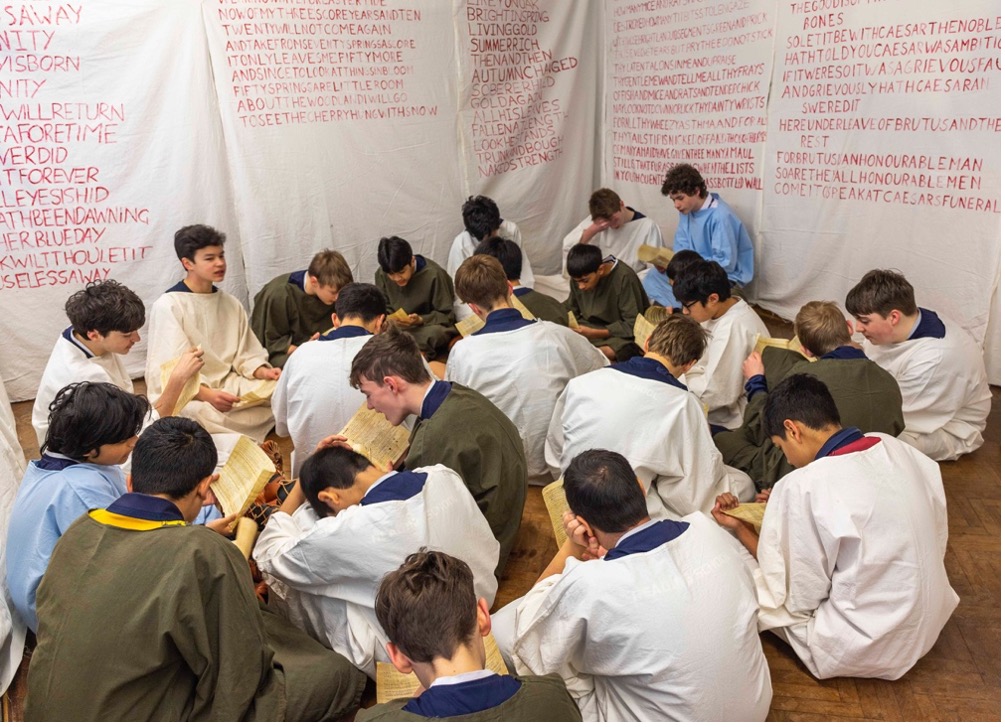
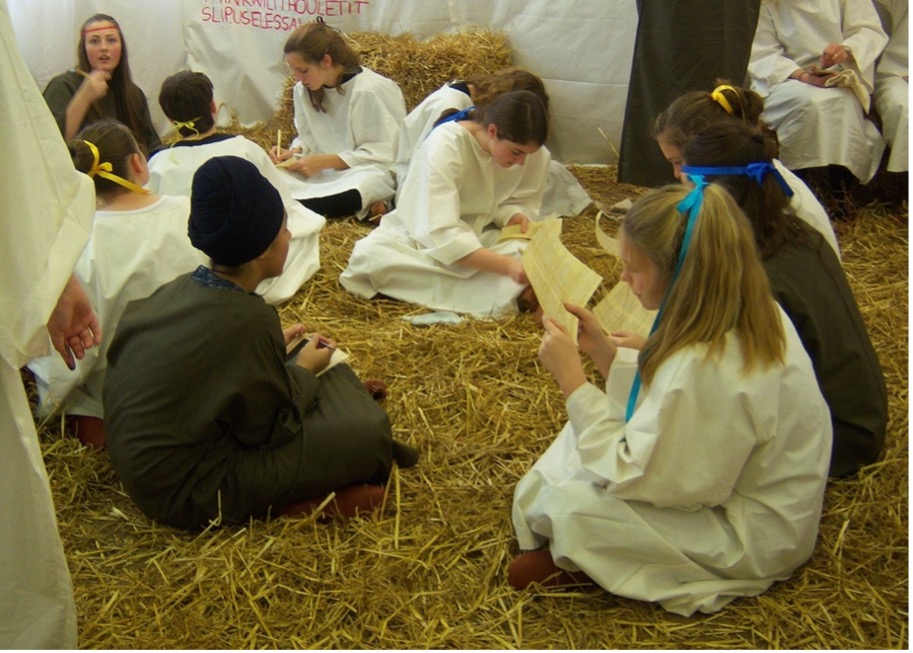
What were Roman schools really like? Of course we know a lot about them in an abstract sense: children worked individually at their own pace, they wrote on wax tablets and read from papyrus rolls, reading was hard before the invention of spaces between words, etc. But what did the overall combination feel like?
Nearly a decade ago, several of us at the University of Reading decided to find out via a re-enactment experiment: we made a replica Roman school (complete with papyri, tablets, costumes, etc.), persuaded a group of local schoolchildren to act like Roman children, and sat down to try teaching them the way Roman teachers would have done. Everyone was surprised at the result: glorious fun combined with high-quality learning.
We discovered that Roman mathematics is addictive, with some alarmingly young future bankers getting hooked on calculating compound interest in Roman numerals (maybe it’s not simply avarice, but the lure of the dried beans used as counters?). And that the beginners’ Latin exercises used by imperial-period Greek speakers can introduce modern children to a new language with laughter, fun and teamwork while still offering a serious intellectual challenge. Ostraca (a.k.a. broken flowerpots) are more useful as a writing surface than we had expected, and children learn surprisingly fast how not to get ink everywhere (though the occasional spill does happen, of course). And the ancient schoolroom setting works for a wide range of ages: a sixteen-year-old needs to be given different tasks from an eight-year-old, of course, but since everyone is taught individually that is easy to achieve even when pupils of very different ages are in the room at the same time (as was often the case in antiquity). Once we had developed a suitable range of exercises, it turned out that even adults (and at the other end of the spectrum children as young as two) could learn from and enjoy the experience of being a pupil in an ancient school.
In fact we all learned so much, and had so much fun, that what had been intended as a one-off event was repeated yearly on campus and then started branching out to local schools who wanted to involve more children than could easily be accommodated in our department. Last summer we registered the Reading Ancient Schoolroom as a charity with the goal of spreading the opportunity of experiencing Roman education to as many pupils and teachers as possible. Our transition to charitable status has been funded by the AHRC, with enough extra money that this year (until 15th May 2024) we can even offer free or reduced-cost events to a few schools that cannot afford to pay what it costs to produce an ancient schoolroom. So if your school would like to turn a classroom into ancient Rome for a day, please get in touch with us! More information is available at www.readingancientschoolroom.com.
The Reading Ancient Schoolroom is run by Eleanor Dickey (Professor of Classics at the University of Reading and author of Learning Latin the Ancient Way and Stories of Daily Life from the Roman World) and Nadin Marsovszki (Classics Research Associate at the University of Reading), who can be contacted at E.Dickey@reading.ac.uk or nadinmarsovszki76@gmail.com.
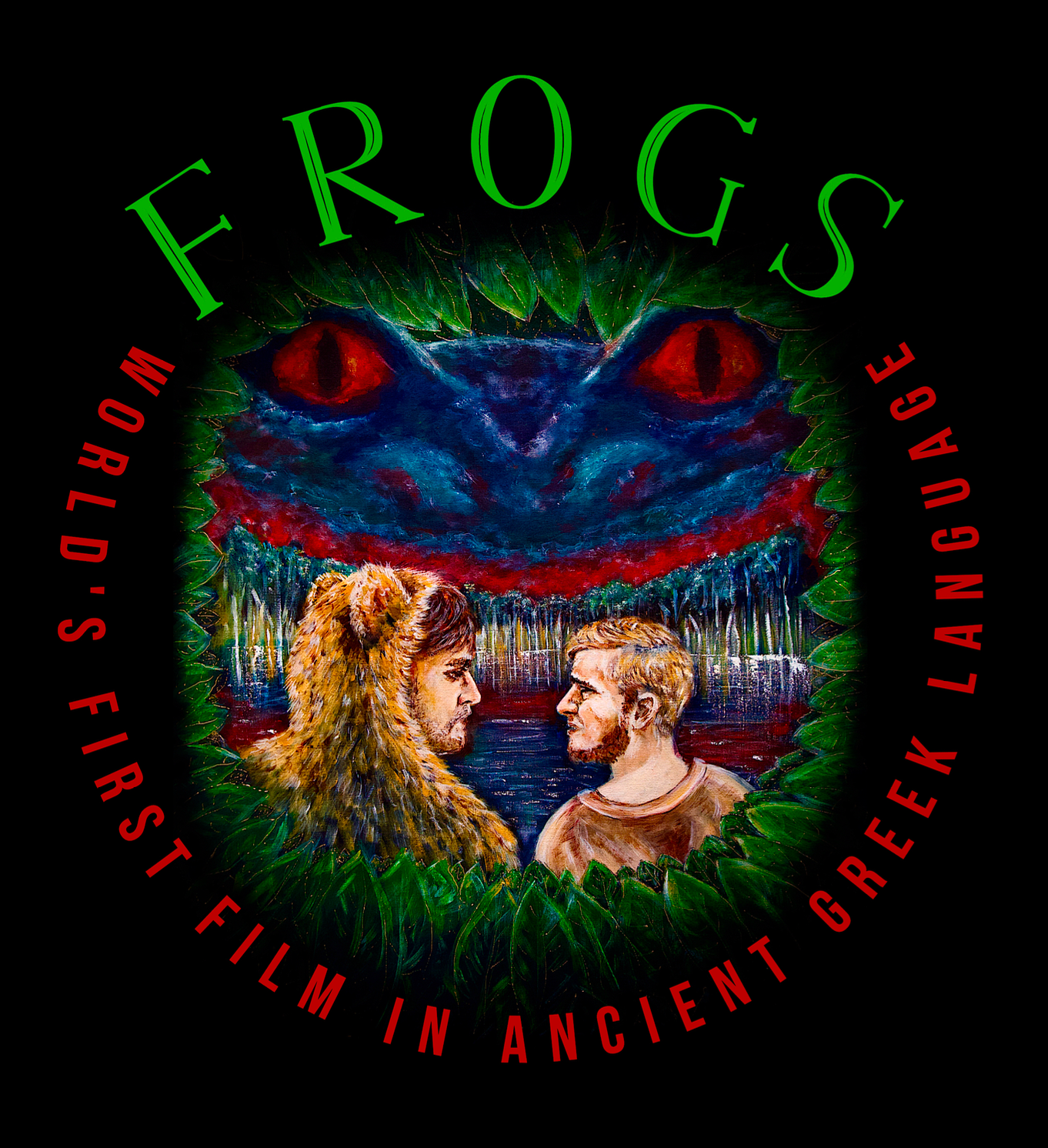
Athens, 405 B.C. The city finds itself devoid of talented poets. Consequently, the god Dionysus, accompanied by his slave Xanthias, embarks on a journey to the Underworld to retrieve the renowned tragedian Euripides and to save the city of Athens. Meanwhile, Heracles, Dionysus’ brother, receives a visit from King Admetus, who is mourning the recent loss of his wife Alcestis…
Iuvenalis Pictures, a creative body which aims to bring classical literature to a modern audience while promoting the study of Ancient Greek, has just released the world’s first feature length film entirely in spoken Ancient Greek (with the reconstructed pronunciation of 405 BCE and in multiple dialects – Attic and Doric).
The script is based on “The Frogs” by Aristophanes, “Alcestis” by Euripides, “Symposium” by Plato, and “Battle of the Frogs and Mice” and, following its premiere in Athens in September, it is now freely available to enjoy on YouTube, thanks to its sponsor, Elliniki Agogi. The entire film is provided with an original soundtrack and is embellished by some sand animations.
Embark on the un-frog-gettable journey to the Underworld here: https://www.youtube.com/watch?v=Cr9bHa3xrV8
Starring: Laurens van der Wiel, Arthur Oosthout, Wim Nijs, Maxime Maleux, Victoria Dabo, Gorik Rutten, Wouter Mercelis, Reuben Pitts, Andy Peetermans, Alexandra Vereeck, Martijn Corstjens, and Naomi Commissaris
Sand art stories: Colette Dedyn
Original music: Nick Van Elsen
Written for the screen and directed by Thibaut Lejeune
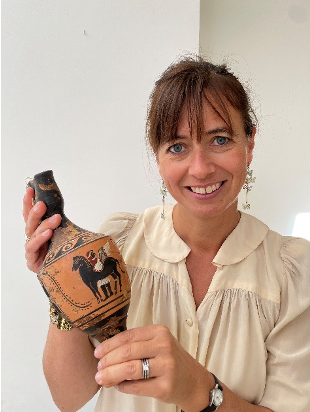
Classics teacher Chloe Lewis explains how her passion for teaching classics in interesting ways, with a focus on ancient objects, led her to start a new venture…
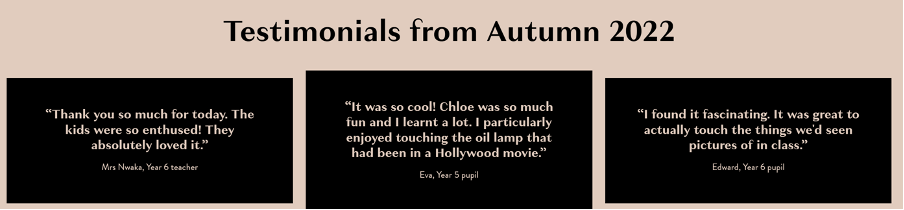
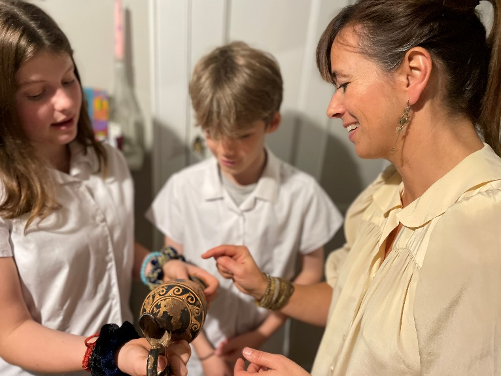
Artefacts in Action is a small business I have recently set up, offering in-house workshops to primary schools. I firmly believe in the power of objects to tell a story, and to bring alive a world that no longer exists – one without electricity and where children wrote on wax, not whiteboards. It was a lovely librarian at my sons’ school who suggested the idea to me, after she saw me in action, giving a mini handling session and presentation to the children in Years 5 and 6. The experience of enlightening a sea of faces brought me alive; it was a room full of children who had a thirst for learning, for gaining knowledge. Although I teach Classics at secondary level part-time, the workshop suddenly seemed a wonderful way to keep my passion alive on my days off, but more importantly, transmit that passion to others.
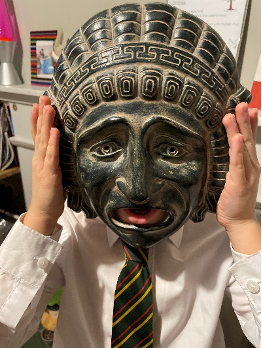
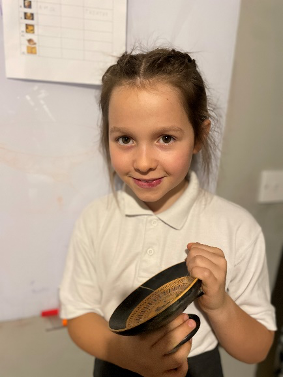
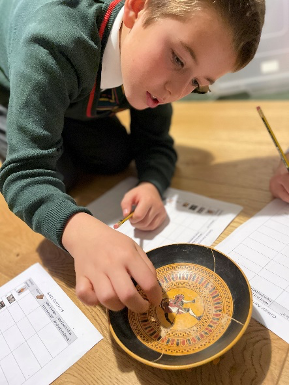
As a Classics teacher with experience in both the secondary and primary sector, I feel that I have the knowledge and enthusiasm to impart to children of all ages. I have always loved seeing pupils’ responses when they realise they are holding something that could be 2,000 years old. Encouraging pupils to look at objects and guess what they are made of, I relish hearing their findings as to what each item can tell us about the ancient world. Why did actors wear masks on stage? Did wealthy women really do the weaving? How could they make a dice out of bone? By allowing them to handle objects, I hope to transport them into another world, and to bring that world alive.
By offering the workshops to primary schools in London and the surrounding area, I hope to provide a service that can support teachers in their work. The workshops are intended to last only an hour, thus allowing pupils to continue their usual routine of timetabled lessons either side. It also means that the cost is cheaper than transporting pupils off-site to local museums, and more affordable than workshop providers who require a whole day.
I am passionate about Classics and have visited both Greece and Rome many times over the years, collecting artefacts and resources as I go. I studied Classical Civilisation as a degree at the University of Newcastle-upon-Tyne with the enigmatic Dr Peter Jones, before entering the world of publishing as an editor of illustrated non-fiction books. I quickly realised that the world of teaching was calling me, so I studied A-level Latin in the evenings while working, before embarking on my PGCE at King’s College, London. Since then, I have worked as a Classics teacher in Hertfordshire, Newcastle, London and Oxford. When my career took an unexpected turn to be a Form Tutor to Year 6 pupils, I used every opportunity to enthuse my pupils about the Classical world, running a weekly Classics hobby, ‘Groovy Greeks’, and dressing up as a goddess on regular occasions. I have run school trips to Greece and Rome, and closer to home I have taken pupils to museums, Greek tragedy performances and lectures, as well as to a pottery café to experience the world of Greek vase painting first hand. I firmly believe that getting involved in the world of the ancient Greeks and Romans in an active way is a wonderful way to enthuse, educate and instil memories.
I adored my own Classics teacher at school, and I hope that through my new venture I can hand down the knowledge and inspiration that she gave to me.
This Sunday is World Autism Awareness Day, which sounds like a magical day of celebration for autistic people like me. But like everything else in life, the reality is not that simple, and ‘awareness’ can feel more like a threat than a promise.
If there happened to be a magical Autism Fairy, who flew around the world granting wishes and avoiding eye contact, most of us probably wouldn’t have ‘awareness’ on our wish-list. Instead we’d be wishing for something much more practical and less dangerous. ‘Awareness’, for autistic people, would be just the sort of double-edged wish that tripped up Phaethon and Midas.
Most autistic people – myself included – have spent their lives ‘masking’, or trying to pass as non-autistic. We have elaborate strategies, developed over decades, which are designed to deflect awareness – that’s one reason why so many autistic people are accomplished actors and performers.
Let me offer you a window into some of my own everyday strategies, so that you can see how hard I work to avoid awareness.
If, Dear Reader, we were to meet in real life – perhaps at a conference, over coffee – I would be trying very hard to control your awareness of me, while at the same time being hyper-aware of you. First I would be aware of your mannerisms, and within a few seconds of meeting you I’d start mimicking them. Do you blink several times a minute? I’d do that. Do you jiggle your leg when you start talking? I’d start doing that too. Do you raise an eyebrow to indicate that you’re being sarcastic? Me too. Transformation can be a defence, as Ovid knew better than most. If I act just like you, it will take you longer to notice that I’m really quite different.
At the same time I’d be working on my facial expressions. My expression is naturally quite blank, but people find that disconcerting, so I have to arrange my face into the correct expression for the circumstances. That’s tougher than you might think, because it requires me to keep up with the content and tone of the conversation and react accordingly. I’m always just a beat behind, no matter how much I practise. Disguises aren’t easy to maintain – except maybe for Zeus…
I’d also be struggling to remember the small-talk rules. Don’t be too honest; don’t be too personal; don’t be too serious; don’t be too arrogant. If you mention the weather to me, you won’t be expecting me to look up the forecast on my phone, and you’ll probably feel awkward if I do so. If you ask me how my day is going, you’re anticipating a light and maybe flippant answer, not an itemised list. If you praise my work, you’ll expect me to say something humble or compliment you in return, instead of agreeing with you that I’m brilliant. I’ve always felt a lot of sympathy for poor Arachne – if I was good enough at something to rival the gods, I would have fallen into exactly the same mythical trap.
I do know how to say all the right things, but I live in fear that I’ll miss a social cue and something will slip past me. So throughout our conversation I’d be very tense, and I’d be concentrating very hard.
The last thing I would want is for that Autism Fairy to wave a magic wand over our table and cancel out all my hard work. My mask is how I function in a hostile world, and I’m not ready to lose it. Yes, it would be nice if the world were a less hostile place: but until that happens, ‘awareness’ is firmly off my wish-list.
If I did have access to a bit of magic, I’d have a few ideas on how to use it, and they would involve the very opposite of awareness. In fact, my problem during our hypothetical conference meet-up is too much awareness. I’m constantly aware of you being aware of me, and it’s exhausting. What I need, at that moment and in that place, is a quiet space where I can be unobserved for a while, to recharge my social batteries before taking on the world again.
Sadly I don’t have a magic wand – but I have discovered lately that some people and organisations are willing to listen to what autistic people in Classics want and need, and that’s pretty close to magic.
Last year I joined forces with other neurodivergent classicists – students, academics, school teachers and museum professionals – to put together a panel on Neurodiverse Classics at the Classical Association Conference in Swansea, with the objective of raising the profile of neurodivergent people in Classics. Our theme was ‘Constructive Connections’, and the connections we made there were very constructive indeed.
An important outcome of our activities was the opportunity to have some involvement in the organisation of future Classical Association Conferences, through Asterion, an organisation representing neurodiversity in Classics.
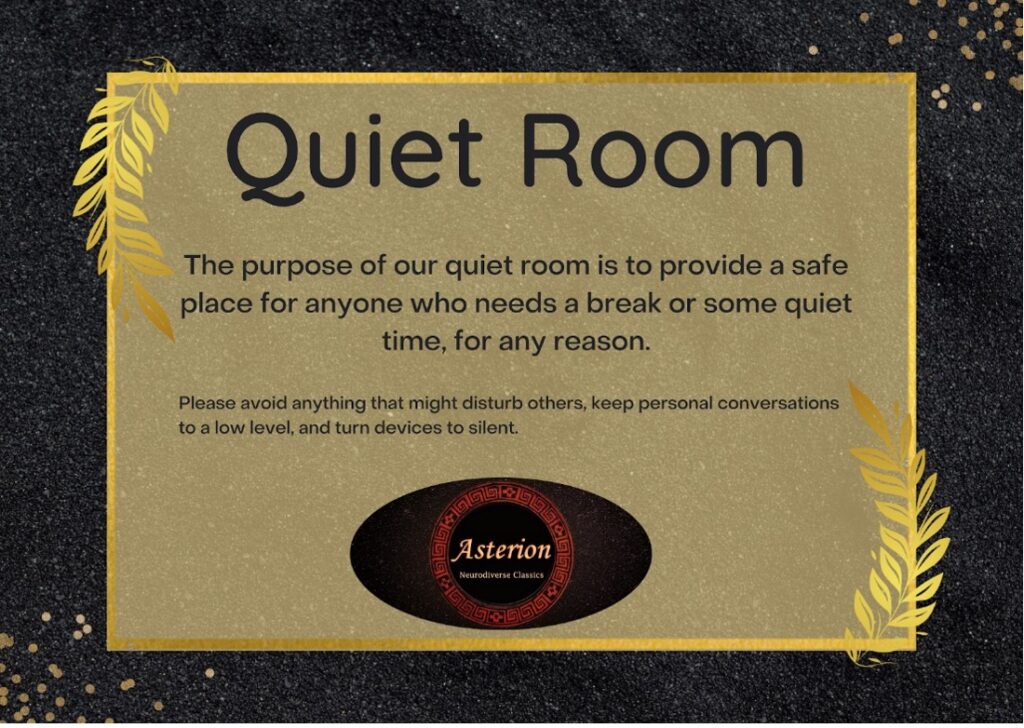
One of the accessibility adjustments which has been agreed upon for the in-person 2023 CA Conference is the provision of a Quiet Room.
Quiet Rooms are already standard at some conferences – although they haven’t found their way into accepted practice at UK Classics conferences yet – because like many other autism adjustments, they benefit plenty of non-autistic people too. A Quiet Room is simply a place to go when you need some time away from the social pressures of the event. There are many reasons why non-autistic people at a conference might need that too – anxiety, stress, migraines, even a simple aversion to chit-chat – but for autistic people in particular, a safe and quiet space can make all the difference to their conference experience.
This year I’ll be attending the Classical Association Conference in Cambridge. If you’re going too, I’ll be happy to say hello and chat, and maybe even grab that coffee with you. And when it all gets too difficult and I can’t function any more, I’ll disappear for a while. You’ll find me comfortably ensconced in the Quiet Room, shutting out the world for a bit, in the company of a good book and anyone else who might be hiding from too much awareness.
So on this World Autism Awareness Day, I feel like I do have something to celebrate. I won’t be celebrating all of my wishes being granted, or the appearance of some sort of magical acceptance; it’s always dangerous to take myths too literally. Instead I’ll be celebrating something small but very real: a safe space in a scary world.
AUTHOR: Charlie Andrew, Director, Maximum Classics CIC
READ TIME: 10 MINS
Latin and Greek for English vocabulary – an inclusive approach for all students and teachers
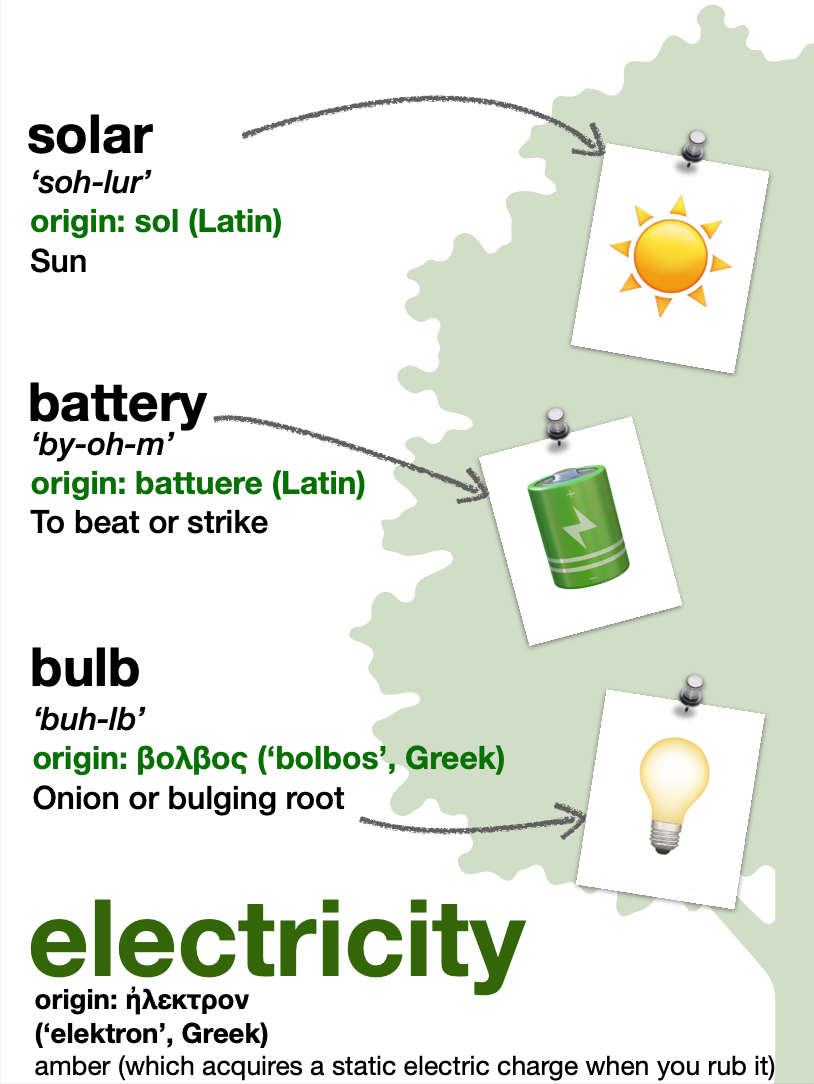
Based on my experience of teaching Classical languages, one of the most wonderful ancillary benefits of learning Latin or Greek is how students can make associations with English vocabulary, and, indeed, use etymological detective skills to decode unfamiliar English words. Having spoken to many other teachers, I know I’m not alone in this observation.
However, there are many schools in the UK that don’t have the time or opportunity to study Latin or Greek as discrete subjects. I started thinking about students at these schools and how could they access this fascinating and useful approach to understanding English. Could there be some way to engage them in a ‘light-touch’ way without the formal study Latin or Greek, and in a way that would benefit their English vocabulary and wider literacy?
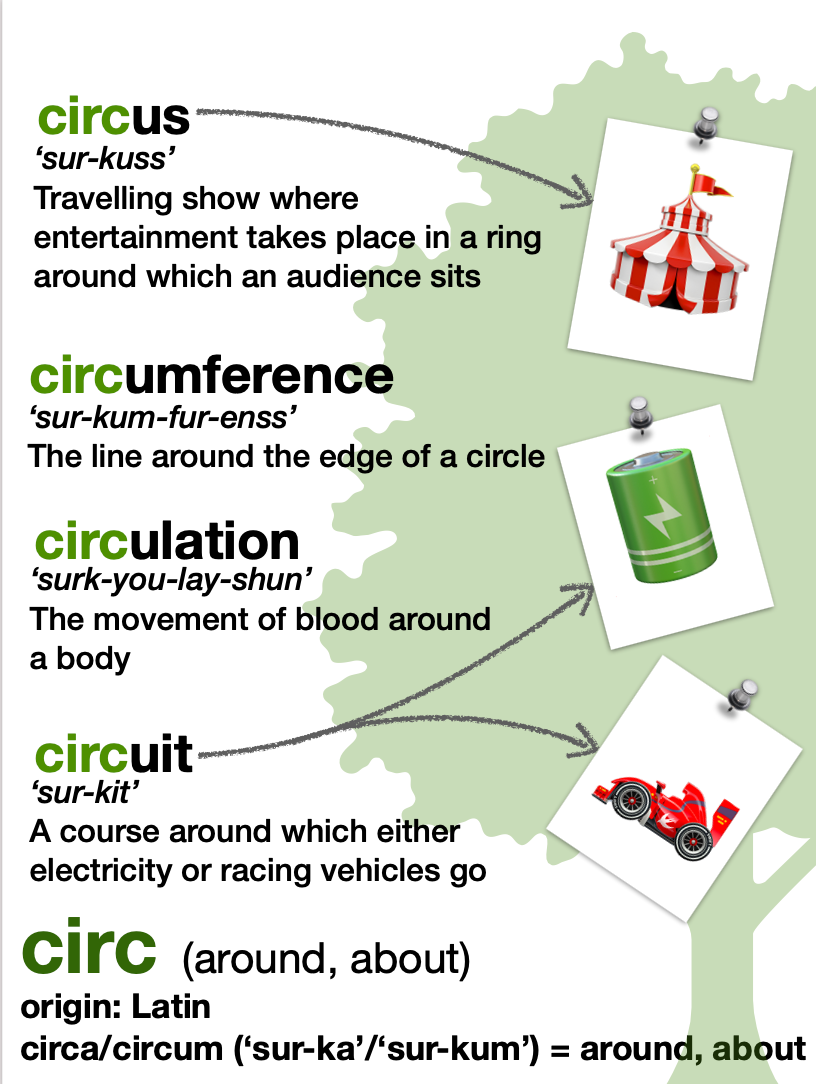
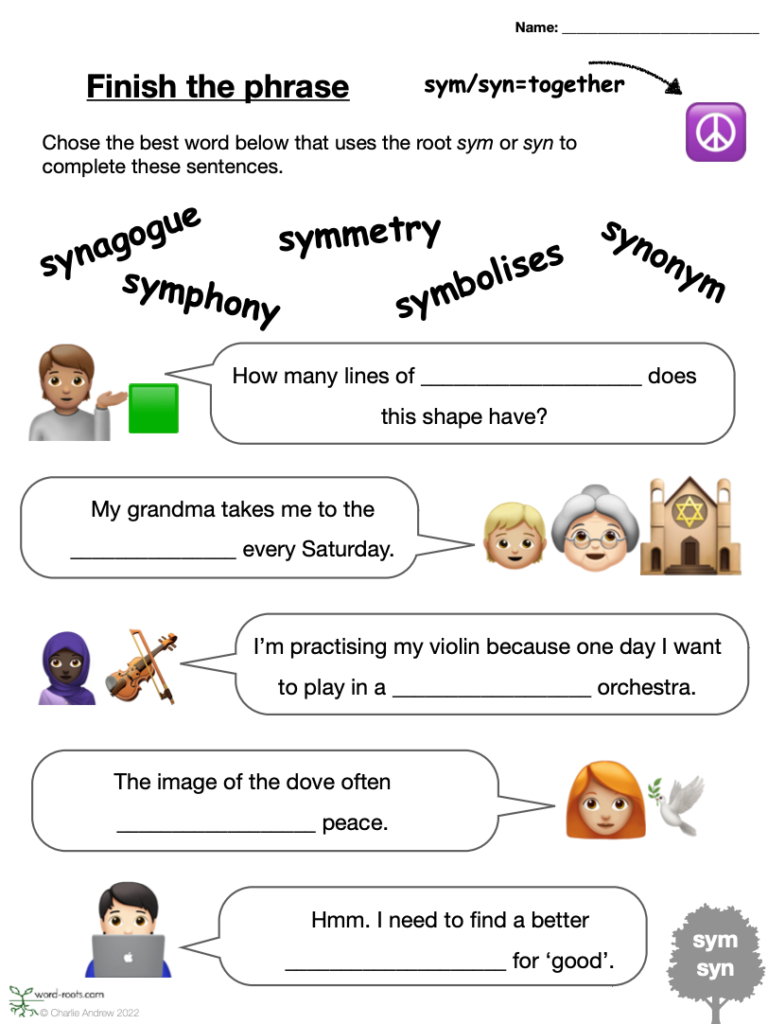
In response, in 2019 I put together some trial classroom resources that drew on the Latin and Greek etymology of English vocabulary. These resources were designed for students aged from age 8 upwards, with each set of resources focussing on one Latin or Greek root. Sets contained a colourful poster that could be displayed digitally or printed out, plus five student worksheets that progressively introduced ambitious English vocabulary through the framework of the target root.
I quietly published these resources under a new section of maximumclassics.com and, to be honest, pretty much forgot about them for a while. Or at least, until I next checked my site’s statistics. Word Roots quickly became one of MC’s most visited pages, and some of the most downloaded resources. Feedback from teachers testified to the usefulness of the worksheets and of the systematic approach in general. So, I kept on making more and then, finally, moved all of the resources to their own site at word-roots.com.
As you’ll see if you visit the site, some of the resources are free to download and others have a £1 tag. Since Maximum Classics is run as a community interest company (CIC), any profits made on content sales are ploughed back into developing more free resources. More kids get access to the joy and usefulness of Latin and Greek, and the virtuous circle continues.
Vocabulous is an exciting new resource that aims to improve students’ English vocabulary by teaching Latin and Greek root word patterns in KS2/KS3 English lessons.
Moreover, there is a significant “word gap” at transition from primary to secondary school; the Oxford Language Report estimates that 43% of Year 7 students don’t have the vocabulary they need to access their learning. Vocabulous aims to use Latin and Greek root word patterns to help tackle this “word gap”.
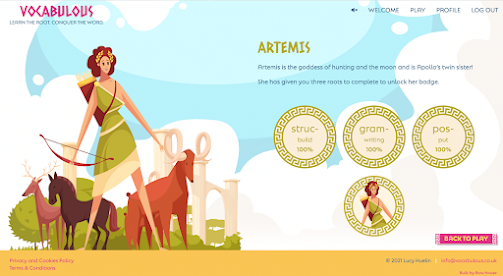
Vocabulous teaches students 35 root word patterns and over 1,000 English words, using a series of videos and quizzes. The first root students are taught is “port-”, which means “carry”. By making this root explicit and teaching its meaning, students are then able to understand words such as “portable”, “imported” and “deportation”, so learning the root pattern increases their vocabulary more quickly than if they were to just learn individual words.
Vocabulous is a website for 11-year-olds, which teaches the Latin and Greek root word patterns that are the foundation of much of our English vocabulary, especially Tier 2 vocabulary that students use in all subject areas. The website is designed to be used in English lessons, so is suitable for all schools, and does not require teachers to have any knowledge of Latin or Greek!
There are ten levels, each set by an Olympic God or Goddess, and students can win badges and earn stars to climb their class’ leader board.
When Year 7 students were asked what they like about the website, responses included:
“I like that you earn the Greek God badges when you complete levels.”
“I like how clear the videos are.”
“I think it is a fun way to learn the root words.”
“I like how you can see how your class is doing.”
“I like the pictures, especially Hades!”
“Everything. It’s in a simple and easy to understand format.”
Vocabulous has received funding from The SHINE Trust and is currently in the first year of a two-year trial programme. We are looking for schools to participate in the second year of the trial, with either Year 6 or Year 7 students. We would especially like to hear from schools with an above-average proportion of students receiving Pupil Premium. Please email info@vocabulous.co.uk if your school would like to take part.