This report found that just 2.97 percent of A Levels taken in 2024 were for modern languages, Welsh and Irish, and classical languages, and that language learning faces huge challenges, with fewer pupils choosing the subjects, persistent difficulties in teacher recruitment, and undergraduate enrolments in ‘Language & Area Studies’ down 20 percent in five years.
The Classical Association acknowledges the findings of this report and heartily supports the recommendations it set out that could reverse this decline. However, it’s not all bad news for classical languages and there are lots of positives to celebrate:
Exam entry figures suggest that GCSE Latin is growing in the state sector, with non-independent settings now making up just shy of 45% of all entrants – and this figure has been increasing year on year.
The success of community initiatives, such as the Intermediate Certificate in Classical Greek, enable access to classical languages to those who may not have access to it in the schools. Entries for the ICCG are increasing rapidly, with nearly half of these coming from state schools.
A seven-year longitudinal study conducted by Prof Arlene Holmes-Henderson concluded that Latin acts as an English Literacy boost for disadvantaged primary school pupils. SEND, EAL and FSM pupils made significant progress in reading and writing, with demonstrable continued positive impact after 1, 2, 3+ years of Latin.
Unlike modern languages, classical languages didn’t experience a drop-off during the pandemic. The numbers of students at both GCSE and A Level have remained relatively stable over the last five years.
As acknowledged by the report, the Latin Excellence Programme made a huge impact on widening access to Latin in state schools outside London and the South East.
It is essential that classical languages maintain parity of esteem with modern languages in curriculum policy, teacher training bursaries and input in government research and missions. You can follow the links to learn more about our mission and our work.
Sophie Johns, CA intern, describes attending the CA’s #CelebratingClassics reception at the Houses of Parliament this September.
For a recent graduate juggling job applications and the prospect of living with her parents again after four years of university, the invitation to ‘A Celebration of Classics’, a parliamentary reception hosted by Dr Peter Swallow MP earlier this month, was an exciting opportunity to come to London and meet some new and inspiring classics enthusiasts. The Reception marked the sixtieth anniversary of Classical Civilisation as a qualification subject in England, a milestone recognised by Prof. Arlene Holmes-Henderson and Prof. Edith Hall in their seminal 2025 publication, Classical Civilisation and Ancient History in British Secondary Education, which we also celebrated. It was brilliant to come together to celebrate the study of the entirety of the classical world, not just ancient languages, and the ongoing work of the All-Party Parliamentary Group for Classics, chaired by Peter and administered by Gráinne here at the CA.
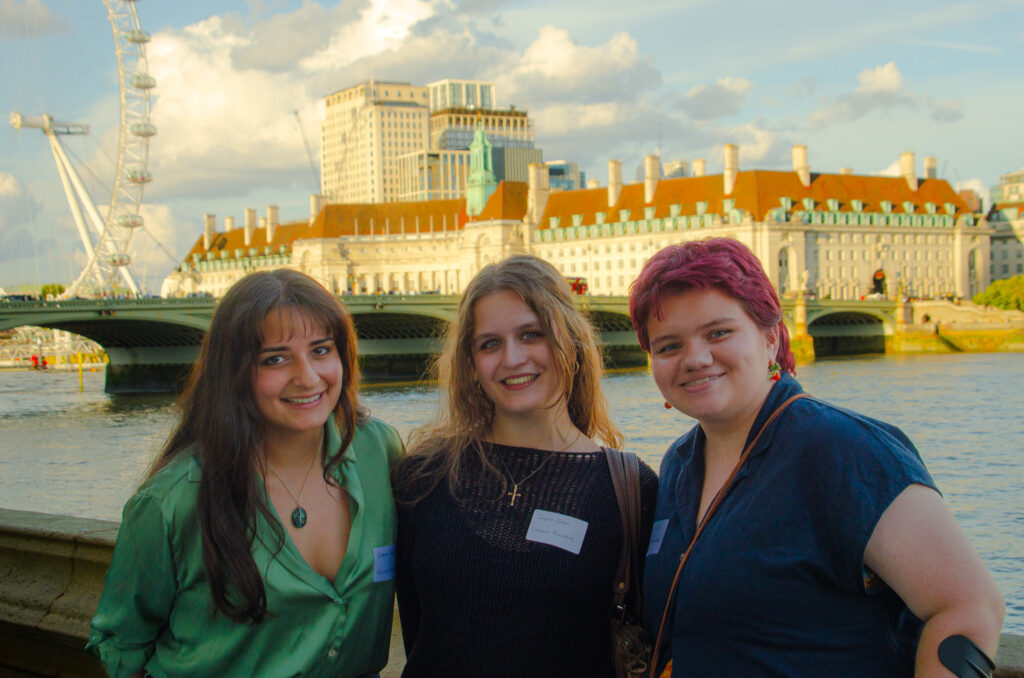
Embarrassingly early due to Tube strike anxiety, I waited in Parliament Square and watched pigeons fly between the stone heads of various parliamentarians until it seemed appropriate to start queuing at the visitors’ entrance. Some initial networking came from an unexpected source in the queue (at 22, usually I am the enthusiastic instigator) – a friendly Welsh engineer thought I was also attending the twentieth anniversary celebration of the Nuclear Disarmament Agreement; instead, we chatted about his teenage daughter and parted ways at security. Heading through the cavernous Westminster Hall to the picturesque Thames Pavilion, with its views of Westminster Bridge and the London Eye, I was greeted, in what I can only describe as the fanciest and warmest marquee I’ve ever been in, byKatrina, the CA’s Engagement Co-ordinator and my manager during my time as an intern this summer, as well as my fellow interns Jasmine and Claud.
Having previously only seen each other in tiny boxes on a screen, we were delighted to discover that we were all almost exactly the same height, and we soon become firm friends. Canapés were handed around, and there is a wonderful photo of the CA’s Honorary Secretary, Prof. Sharon Marshall, and myself laughing as we realise that Jasmine is snapping pictures of us as we shove bits of fish on crackers into our mouths. The highlight of the event for me was meeting so many inspirational and fascinating people, like Sharon, who have succeeded in making their passion for Classics their career. As a woman in her early twenties trying to do the same, it was encouraging to feel the support and understanding of those who, in my mind, have ‘made it’, including academic editors and museum professionals.
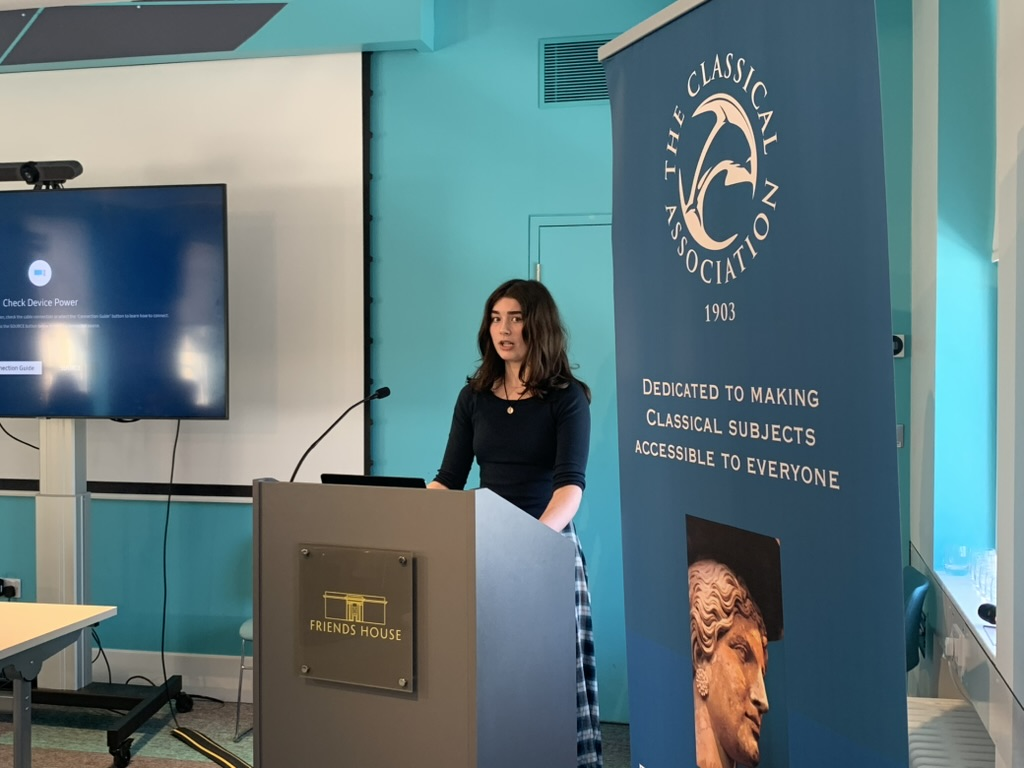
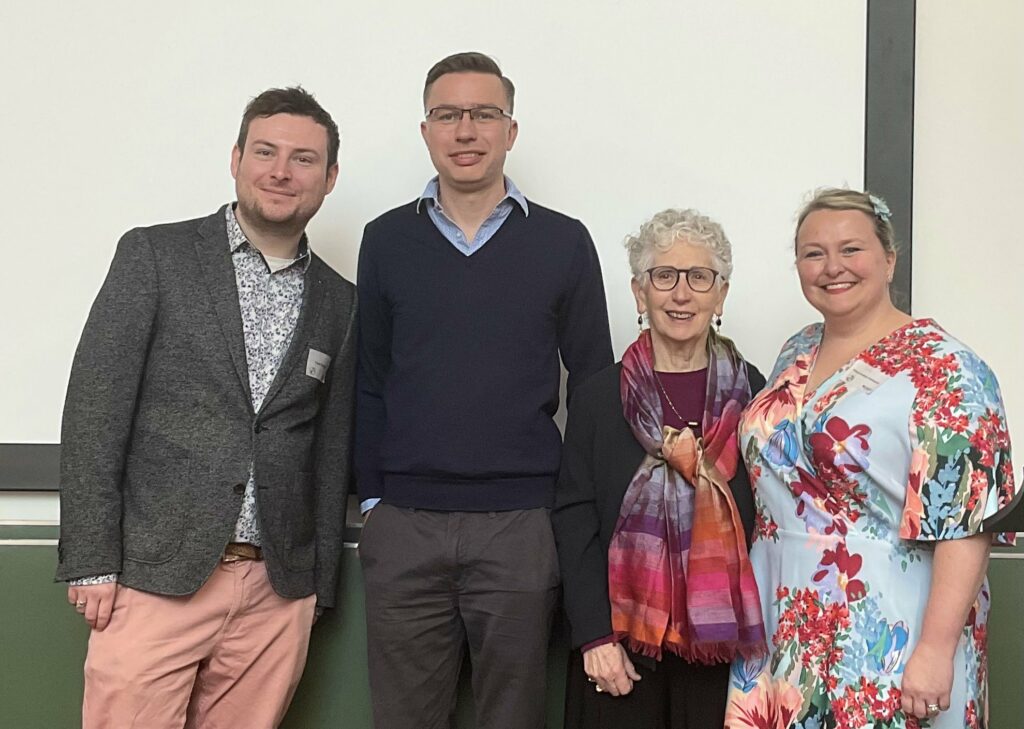
It was great to meet Prof. Katherine Harloe and Dr Kathryn Tempest from theInstitute of Classical Studies (pictured here with Prof. Claire Gorrara, Pro Vice-Chancellor (Research and Public Engagement) and Dean of the School of Advanced Study) and other members of the Classics Development Group, and find out more about their joint work to advocate for classical subjectsI was particularly excited to meet my academic hero, Prof. Edith Hall, whom I shocked into silence by talking incessantly about how much I liked her translation of line 742 of Aeschylus’ Agamemnon. You can enjoy Edith’s ‘Life in Classics’video as part of the CA’s Campaign.
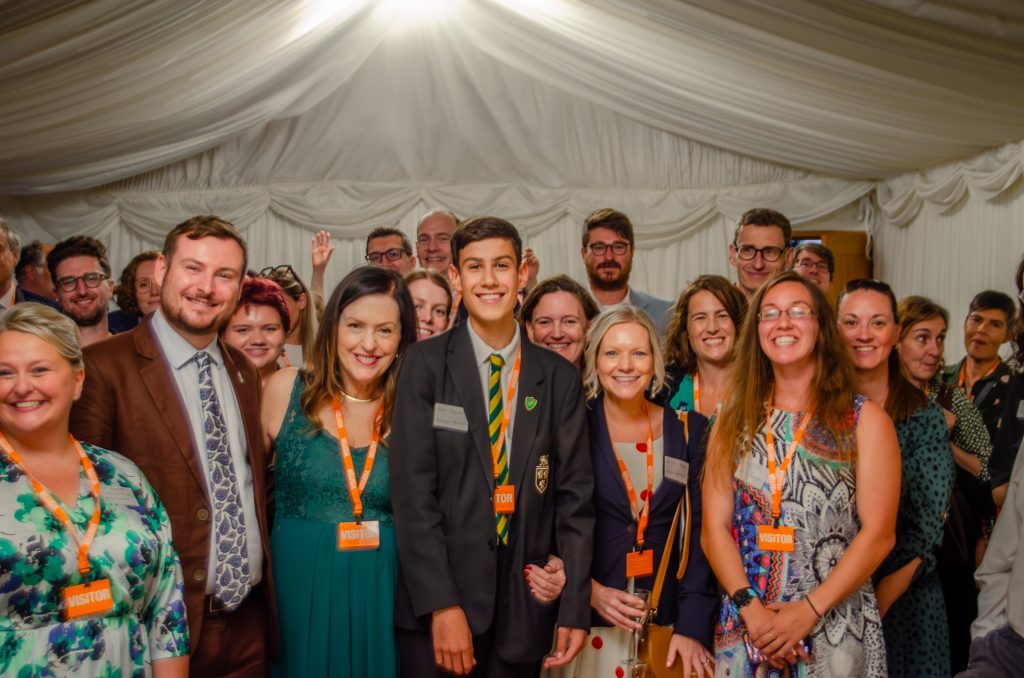
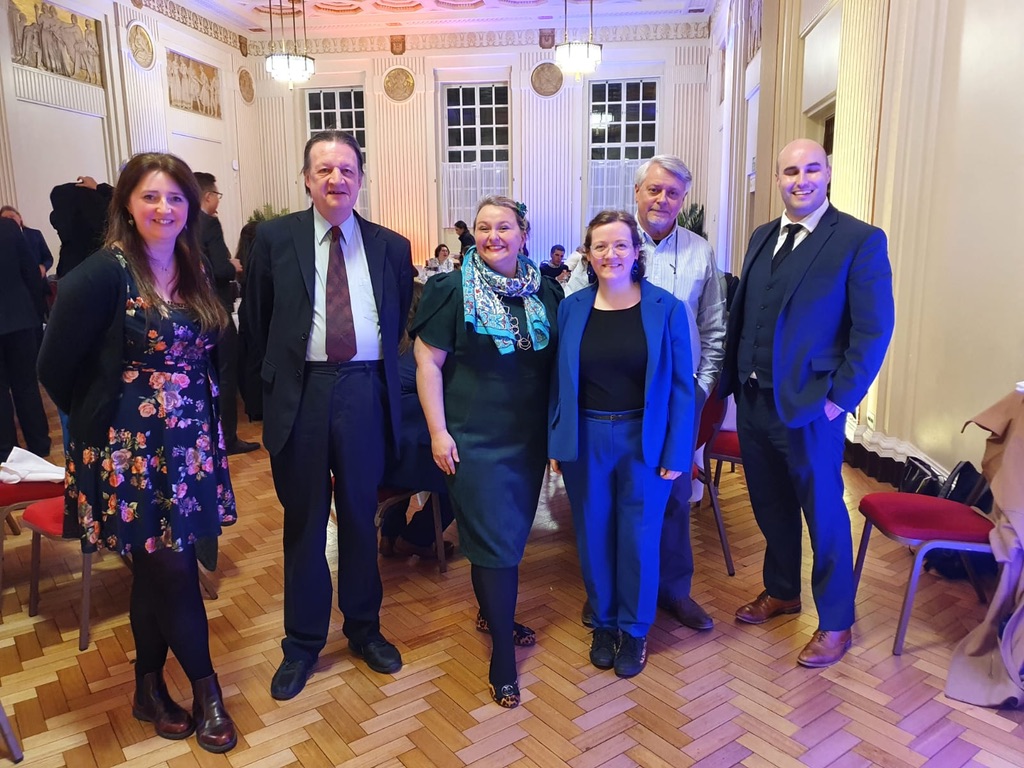
After speeches from Peter and Katrina, we all posed for a group photo (see above!). Although I was lucky enough to study Latin in secondary school, I am certain that I would not have chosen to study Classics at university had I not taken Classical Civilisation A Level at college. Declensions and ablative absolutes are important, yes, but they do not solely a classicist make. More often than not, young classicists are inspired by myth, religion and culture, not just the complexities of ancient grammar, and an engaging, well-rounded classical education necessitates that we interact with material culture and literature (in translation too!) as well as language.
Prospective young classicists are devouring Natalie Haynes, Emily Hauser, Madeleine Miller and other authors who write about ancient cultures in all their complexity. If we want to produce classicists who are both excited by their discipline and are thoughtful, open-minded and productive members of their community, Classical Civilisation is undoubtedly an essential part of the curriculum.
We received so many wonderful entries in our 2025 Mythology Competition. Previously known as the Minimus Mythology Competition run by the Primary Latin Project, this year, it was brought under the aegis of the Classical Association. Catherine Tildesley has been instrumental in the smooth running of the competition and has written the following report – scroll down to enjoy some of the winning entries and find out more about next year’s competition here!
Huge thanks to all the schools and individuals who took part in this year’s Mythology Competition; to the Jowett Trust for their generous funding and to the judges for their time and expertise, especially to Jayne Treasure, without whose tireless efforts the competition would not be running, and to Katrina Kelly for her support during the competition’s first year with the Classical Association. There has been a tremendous response, which illustrates the timeless quality of story and its ability to inspire young minds – helped along no doubt by some equally inspirational teachers!
There were over 400 entries altogether, almost double our usual number, which has certainly made the judging far tougher. KS3 Creative Writing was the most popular medium overall followed by Art, at both KS3 and KS2 levels. We welcomed many new schools to the competition this year, but it was also lovely to see so many schools, and students, returning again after our absence. It has been a truly international competition, with entries from Malawi, China, India, New Zealand, Denmark, America and Italy as well as the UK.
Art entries were a fabulous mix of media this year, from embroidery to life-size shields and horses; from 3D models to oil paintings. Creative Writing had talented contenders for retellings, raps, poems and playscripts. The most successful took a particular moment from the myth and imagined a narrative from a different point of view. There were parents’ evenings with a slightly nonplussed teacher attempting to explain the rather aggressive behaviour of Romulus and Remus to their ‘wolf-mother’, and a particularly delightful lentil-munching vegan priestess! Animation entries were a complete delight to watch; the variety of props and toys used showed such imagination and engagement with the myth.
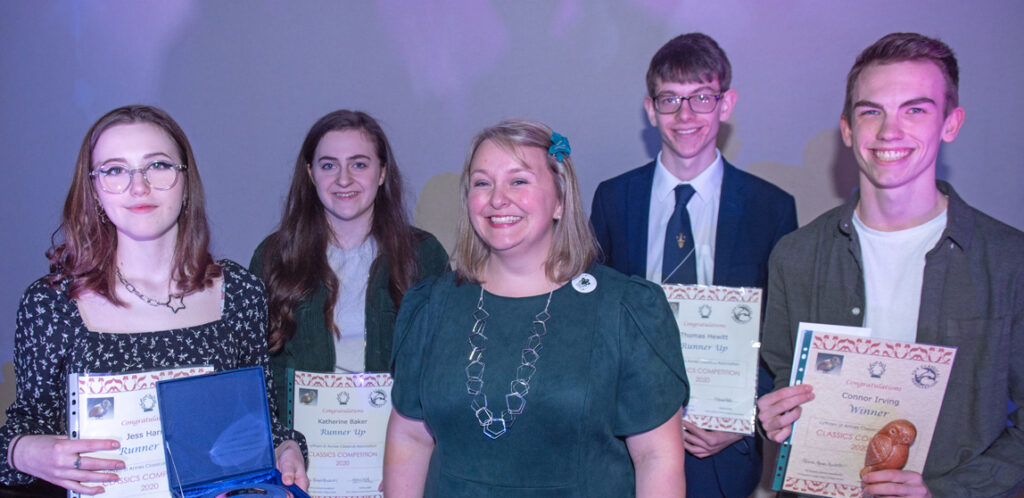
Congratulations to all prizewinners. Some of this year’s winning work has been reproduced below, where possible due to formatting and space, so please enjoy browsing through them. There is enormous creative talent on display in these, and also in the other entries, which, sadly, cannot be included, and which made the judges’ job, as ever, an extremely difficult one. Due to the large number of entries this year, we will be making some changes to the categories next year, and we would encourage teachers to read the guidelines carefully to avoid disappointment. We will also be making a stipulation that no AI is to be used in the creation of entries; they must be original work only.
Myths for 2026 are…
KS2 – The Monster in the Maze: Theseus and the Minotaur
Winner of our 2025 Write | Speak | Design Competition, Paige is a student from the US, who delivered the following manifesto in response to the question ‘Why is Classics important?’
Against Justification: The Unruly Necessity of Classics
The question “Why is Classics Important?” is, at first blush, an offense—a query lobbed like a molotov cocktail into the salons of those who have long been drunk on the wine of antiquity. It presumes justification, invites an embarrassed clearing of the throat, and hints at the need to defend, as though Classics were a guilty pleasure, a relic of some ancestral folly. It’s not just a question; it’s a dare, laced with the suspicion that we’re wasting our time, clinging to the intellectual equivalent of vinyl records in a Spotify world. To answer it with sincerity risks pandering; to answer it with irony risks alienation. Yet, here we are, poised on the precipice of such a provocation, daring to articulate why the foundations of Western thought should remain more than an archaeological curiosity. Why, indeed, should we care? How can we care, in times like these?
Let us dispense with the predictable litany of boilerplate defenses: that Classics teaches us critical thinking, that it’s the cornerstone of Western literature, that it grants us access to “The Great Conversation”, whatever that means. While these things are probably true, they’re also deeply boring and sound suspiciously like we’re trying to sell you a subscription to something you’re not even sure you want. It reeks of a kind of desperation, a flailing attempt to make the discipline palatable to a world hungry for “relevance”— reducing the Classics to a commodity, as though what truly matters about Homer or Cicero is how neatly they fit into a PowerPoint presentation on transferable skills. These arguments are scrubbed of texture, passion, and color—much like those alabaster statues once painted in gaudy hues but now left a pallid white by centuries of well-meaning neglect. Classics is important not because it flatters the mind or adorns the CV but because it unsettles, disrupts, and even humiliates. It makes you feel small.
Uncomfortably, thrillingly, existentially small. It is not an ornamental pedestal but a mirror, and the reflection it casts is often grotesque, sublime, and deeply human. The texts are riddled with contradictions, omissions, and unspeakable violences, and therein lies their power. The importance of Classics lies not in its completeness but in its absences, in the spaces where we are forced to imagine, to reconstruct, to mourn. They aren’t sacred relics; they’re raw materials, unfinished and unfinishable. To dismiss Classics as irrelevant—as some do, branding it the purview of crusty academics and reactionaries—is to misunderstand its radical potential. Classics is not a shrine to be venerated but an autopsy to be performed, an excavation of power in all its naked, bloody forms. The Greeks and Romans were not moral exemplars; they were imperialists, colonizers, and enslavers. To study their works without acknowledging this is to engage in a kind of intellectual tourism. But to confront these realities head-on is to wrestle with the mechanisms of domination that persist today. The rhetoric of Cicero, the politics of Augustus, the spectacle of the Colosseum—all are templates for modern machinations. To know them is to know ourselves, our complicities, our vulnerabilities.
Yet, Classics is not merely a catalog of atrocities. For amidst the violence and ambition and moral hypocrisy lies something ineffable: wonder. The geometry of Euclid, the metaphysics of Plotinus, the comedies of Aristophanes—these are gifts that defy utility, existing for the sheer joy of thought and expression. To engage with them is to affirm that human beings are not merely tools of production but creatures capable of transcendent beauty and discovery. Classics affirm that we are not merely tools of labor or cogs in an economic machine but creatures capable of astonishing leaps of thought and creativity. It is a reminder that some things—perhaps the best things—exist not because they are useful but because they are true. This, too, is why Classics matters: it insists on the value of the impractical, the ineffable, the sublime.
But let us not sentimentalize. Classics can be maddeningly obtuse, exasperatingly elitist, and, at times, staggeringly dull. There is no denying that parts of the canon are tedious, that the fetishization of Latin declensions has driven many a student to despair. Yet even these aspects serve a purpose. To grapple with the impenetrable is to cultivate humility, patience, and a tolerance for ambiguity. It is a reminder that not all knowledge comes easily and that some truths must be earned through struggle. In a culture of hot takes, of TikToks explaining Marcus Aurelius’ Meditations in 30 seconds, and of audiobooks consumed at 1.5x speed, the Classics represent an outrageous affront. They demand that you slow down, learn new grammatical cases, and parse the subjunctive moods of dead languages. But why should we care about subjunctive moods or dative absolutes when we can have answers—not mere reflections—delivered in milliseconds?
The answer lies not in what the Classics give us but in what they take away. They strip us of our modern illusions: the illusion of mastery, the illusion of immediacy, the illusion that knowledge is merely information in fancy dress. The Classics remind us that understanding is an act of patience, that wisdom is not speed but sedimentation—a slow layering of insights, accreted through effort, frustration, and even boredom.
Imagine a world without unnecessary skills. It would be, at first glance, utopian: a sleek, hyper-efficient mechanism in which every action serves a purpose, every moment yields tangible results. But examine it closer, and it reveals itself as horrifyingly hollow. What becomes of play? Of curiosity? Of the peculiar joy of doing something not because it is useful, but because it is hard, and in its difficulty lies a kind of transcendence? It is precisely this difficulty that the Classics offer—not as a burden, but as a gift. They demand that we slow down, not because slowness is inherently virtuous, but because it is in slowness that we begin to think. They frustrate us, not out of malice, but because frustration is the crucible in which clarity is forged. They are inefficient, and in their inefficiency, they mirror life itself: messy, unpredictable, and resistant to easy solutions.
And so, to read the Classics is to practice a kind of spiritual disobedience. It is to say: I will not be reduced to a consumer of content; I will not confine myself to what is easy or digestible. It is to assert that some things are worth doing precisely because they cannot be justified in terms of utility or optimization. The subjunctive moods of dead languages, the labyrinthine syntax of Cicero, the aching beauty of Homer’s hexameters—these are not relics; they are revolutions. They teach us not only how to read but how to live: slowly, thoughtfully, and with an unyielding reverence for the unnecessary. And in that toil, there’s a kind of beauty—a sacred discomfort that forces you to confront the limits of your patience, your intellect, your willingness to care.
I remember this one afternoon in my school’s Latin Club when I somehow managed to keep the room’s attention, including a few stray interlopers who’d wandered in looking for free donuts. The text we were wrestling with was Catullus 101, a poem so old and sad and stripped of pretense that it felt almost indecent, like you were eavesdropping on someone mid-sob. The task, predictably, was to break it apart: meter, scansion, translation. What wasn’t predictable was the way the room fell quiet, people leaning forward like something in the bones of the thing demanded it. We argued over the rhythm, tripped over Latin words that weren’t built for our mouths, and tried to explain how a 2,000-year-old funeral poem could still punch you in the chest. It wasn’t about cracking the code—though that was its own kind of rush—but about theway the room shifted into this weird collective focus, all of us orbiting the same point for once. It wasn’t sacred, not exactly. But it stuck, the way good discomfort does.
Of course, there are problems with Classics: that Classics is too Eurocentric, too bound up with the narratives of white supremacy, for instance. This critique is not without merit; the discipline has often been wielded as a tool of exclusion and domination. But to abandon Classics on these grounds is to cede the field to those who would weaponize it. Instead, we must reclaim it, interrogating its biases, expanding its boundaries, and situating it within a global context. The Classics are not the exclusive property of any one culture; they are part of a larger, messier human inheritance.
And what of the common charge that Classics is irrelevant in an age of climate crisis, social upheaval, and technological acceleration? This, too, is a misunderstanding. The ancient texts are, in many ways, premonitory. The ecological devastation lamented in Ovid’s Metamorphoses, the political corruption satirized by Juvenal, the existential despair of Lucretius—these are not relics of a bygone era but resonances of our own. Classics teaches us that the past is never truly past, that its ghosts linger in our language, our institutions, our imaginations. Perhaps the most compelling argument for the importance of Classics is that it resists easy answers. It is a discipline that thrives on tension, on the interplay of opposites. It is at once conservative and radical, timeless and timely, universal and particular. To study Classics is to inhabit these contradictions, to revel in their dissonances, and to emerge, if not wiser, then more attuned to the complexities of existence. And so, we return to the question: Why is Classics important? Because it is difficult, maddening, and essential. Because it confronts us with the best and worst of ourselves. Because it demands that we think, feel, and imagine beyond the narrow confines of our present moment. Because it refuses to be reduced to soundbites or bullet points. In a world increasingly obsessed with the new, the immediate, and the disposable, Classics is a reminder of the enduring, the profound, and the sublime. And that, surely, is reason enough.
We are saddened to report the death of Barbara Finney (1941-2024), former Vice President and Officer of the Classical Association. Barbara was a secondary school teacher, an examiner and a stalwart supporter of Classics in the UK; her enthusiasm and dedication to our subject will be much missed.
She was appointed Joint Honorary Secretary for Branches in 1997, a role in which she championed local classics communities across England and Wales, sourcing grants and support, and helping branches to flourish. She contributed a chapter to the volume of the CA’s history in 2003 on the Branches and remained in her role until 2019, continuing as a trustee of the Association until March this year.
Her funeral will take place at 13:00 on Friday 27 September at St Katharine’s Church, Blackrod, Bolton. There will then be a private family service at the crematorium. We are honoured that, in lieu of flowers, mourners are welcomed to donate to the CA.
In 2023, Barbara was appointed a Vice President of the Association as a distinguished member.
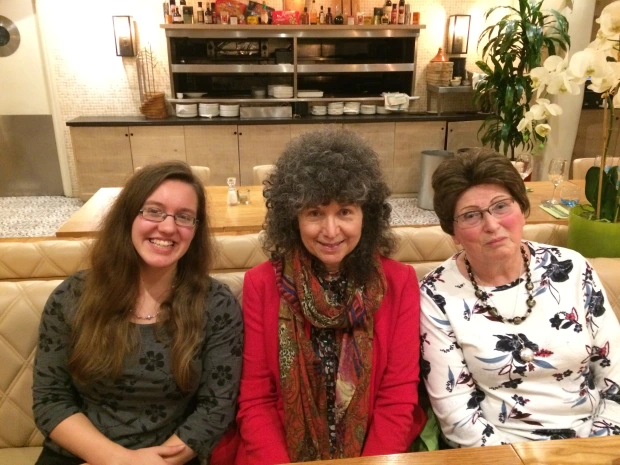
Barbara (r) with LSA Branch Chair Katrina Kelly and writer Caroline Lawrence, celebrating a Branch Competition in 2018
Barbara’s close friend, the author Lindsey Davis, has written a fuller celebration of Barbara’s life and work here:
It’s a really great sorrow to be remembering Barbara after she has passed away. Amazingly, I have known her for sixty-five years. We went to the same school, King Edwards High School in Birmingham; she may have been Head Girl and certainly she won the Creak Memorial Prize which is awarded to the student who “by their character and general worth has best served the school”. I would never have spoken to her then; there was too great a gulf between shy first-years fresh from infant school and those majestic near-women who were on the verge of university. It’s telling that I have retained a mental image of her all this time: the faintly formal style alongside the sense of a keen intelligence always taking an interest. When I grew up I realised there was, too, that twinkle in the eye, as a rueful Brummie was privately deploring some daft aspect of the world, while considering ways to sort it out.
I would meet her again during my stint as President of the CA, when she became one of my personal friends, friendships being a reason to keep coming back even for people like me who are not classicists. The gulf had gone. Barbara’s welcome drew me in. We were to spend many a morning at conferences, arriving at coffee break, looking out the most offbeat panels, gossiping, and picking over the faults of any plenary speaker who had not met our standards. (Quite a few of those!) We had a little group of cronies, now sadly depleted but including my old KE Latin teacher Elys Varney. It became traditional that at conference dinners while Barbara was doing duty on top table, we would have her dear sweet husband Jack with us until Barbara came to claim him – at which point we would ply her with drink.
It was always well earned. Just as we can imagine that in her role as a vicar’s wife she did not simply ‘do the flowers’, I saw on CA Council both her love of her subject and her determination to further it. She was sane; she was practical; this was a no-nonsense woman who pulled her weight. Barbara knew that organisations need to be run, and run well, by people with energy and sense, people who don’t just accept suggestions but who follow them up, and indeed, people who remember that the same thing under discussion has happened before… This kind of recall is useful not just to avoid repeating disasters but it gives cohesion, which is especially useful in something like the CA where members will naturally come and go frequently as their courses or jobs in classics come and go. Her chief contribution was trying to bring people in through local branches. We need to gather up the classics community and also to attract the wider public. I am now working with my local branch and know how well her stable of branches are established and, crucially, funded. I had been looking forwards to telling her how it feels from the other side, and to congratulate her on her own achievement. It wouldn’t have been solemn; we’d have been sharing jokes and practical wisdom, because that was Barbara.
She will be missed. This is so often said of people, but in her case it’s the simple truth.
The winners in our2024 Poetry Competition certainly brought their A game in translation and delighted us with their creative flair for original compositions. Writers took us on an emotional rollercoaster from the torment of some of mythology’s most famous victims, such as Atlas, Cassandra and Pentheus; to garland-makers, joyful lovers and Olympic victors; via last moments in Pompeii and Troy, peril in Circe’s lair, magic in Phrygian fields and triumph in Rome. You can peruse the full list of winners and commended writers on our Competition page and enjoy reading their winning original and translated poems.
We are thrilled that you can also listen to two of the first placed translations by Hannah Gilmore and C. Luke Soucy, read by poet, academic and musician Professor Armand D’Angour:
The standard amongst the hundreds of writers was exceptionally high, from the youngest entrants aged under 11 (!) such as winners Augusta and Zara, all the way to adults of all ages and from across the world with commended entries from Bangalore to Auckland, Essex to California!
Prof. Judith Mossman, Chair of CA Council, remarked on the top ranked Senior category original compositions: ‘Persephone‘ by Maya Le Her, placing first, was ‘beautifully expressed and made excellent use of the neat idea of Hades as a night club. It was a really memorable use of the myth’; second placed poet Elise Withey created a ‘very entertaining and really well expressed’ piece in ‘Gilgamesh tries anti aging mousse‘; whilst third place ‘Eating Prometheus‘ by Cherie Wong was ‘an impressive attempt at a sustained rhyme and rhythmic scheme, which worked very well indeed’. You can listen to Judith narrate Maya’s winning poem below:
There were exceptional pieces in the Open category by runners-up Sieve Bonaiuti, Karan Chambers, Alexis Deese-Smith, Freya Jackson and Sihle Ntuli. The former NZ Poet Laureate Selina Tusitala Marsh has shared with us some comments on the top three placed poems in this Original category:
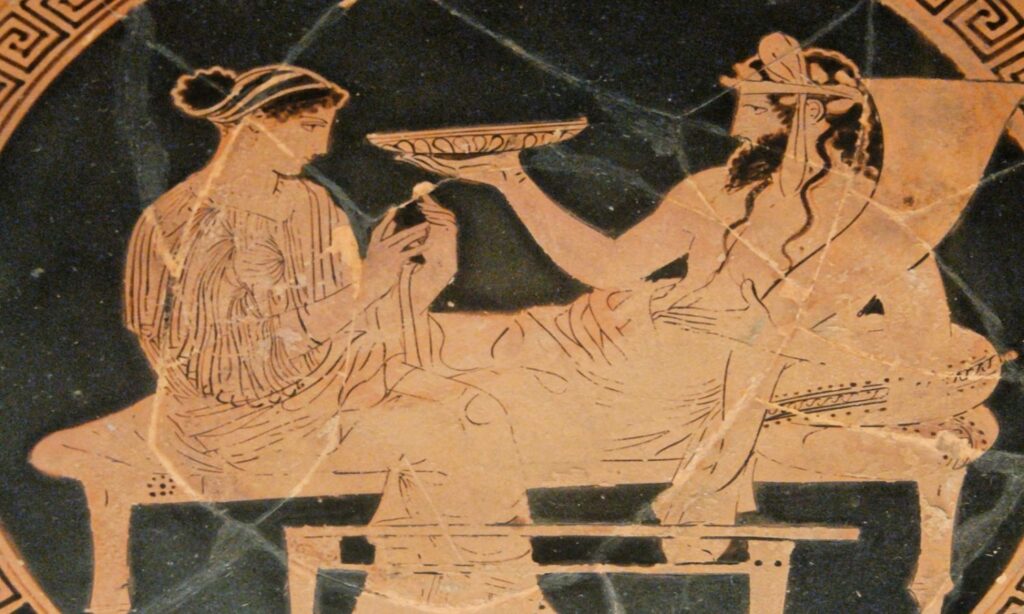
Persephone and Hades Kylix, ca. 430 BC, Attributed to the Codrus Painter, The British Museum, London
First Place – Emily Lord-Kambitsch
Pluto’s Wife in Transit is a powerful and haunting retelling of the Greek myth of Persephone and Hades that deserved to win the competition. Emily employs a range of poetic techniques to bring Persephone’s story to life in a fresh and compelling way. The use of first-person narration gives the poem an intimate, confessional tone, allowing readers to connect deeply with Persephone’s experiences and emotions. The language is vivid and sensory, from the “wet blanket gardenias” and “stinking goats” of the underworld to the “glittering frost” and “fragrant bed” of the world above.
Throughout the poem, Emily uses striking imagery and metaphor to explore themes of power, abuse, and the cyclical nature of trauma. Hades is depicted as a sinister, shadowy figure, taking on various guises – the “lone wolf in aviator shades,” the “peace officer without a badge,” the “chief executive” – that speak to the insidious and pervasive nature of abuse. The image of Persephone carving “channels in the cave walls” is a powerful symbol of her struggle to assert her agency and identity in the face of oppression.
Listen here to Pluto’s Wife in Transit, read by Professor Sharon Marshall:
The poem also grapples with the complex relationship between Persephone and her mother Demeter, capturing the pain and ambivalence of a bond strained by trauma and separation. The poet’s use of repetition, particularly in the refrain “I always come back,” underscores the cyclical nature of Persephone’s journey and the inescapable pull of her fate. One of the most striking aspects of the poem is the way it connects the myth of Persephone to contemporary experiences of gendered violence and abuse. The references to “X-ray vision of a woman’s viscera” and the various manifestations of Hades in modern life serve to highlight the ongoing relevance of the myth and the urgent need to confront and challenge these patterns of harm.
Overall, Pluto’s Wife in Transit is a tour-de-force of mythic reimagining, one that combines masterful poetic craft with unflinching insight into the depths of human experience. Through its vivid language, intimate voice, and thought-provoking engagement with contemporary issues, the poem invites readers to see the story of Persephone in a new and profoundly resonant light. It is a truly deserving winner of the competition.
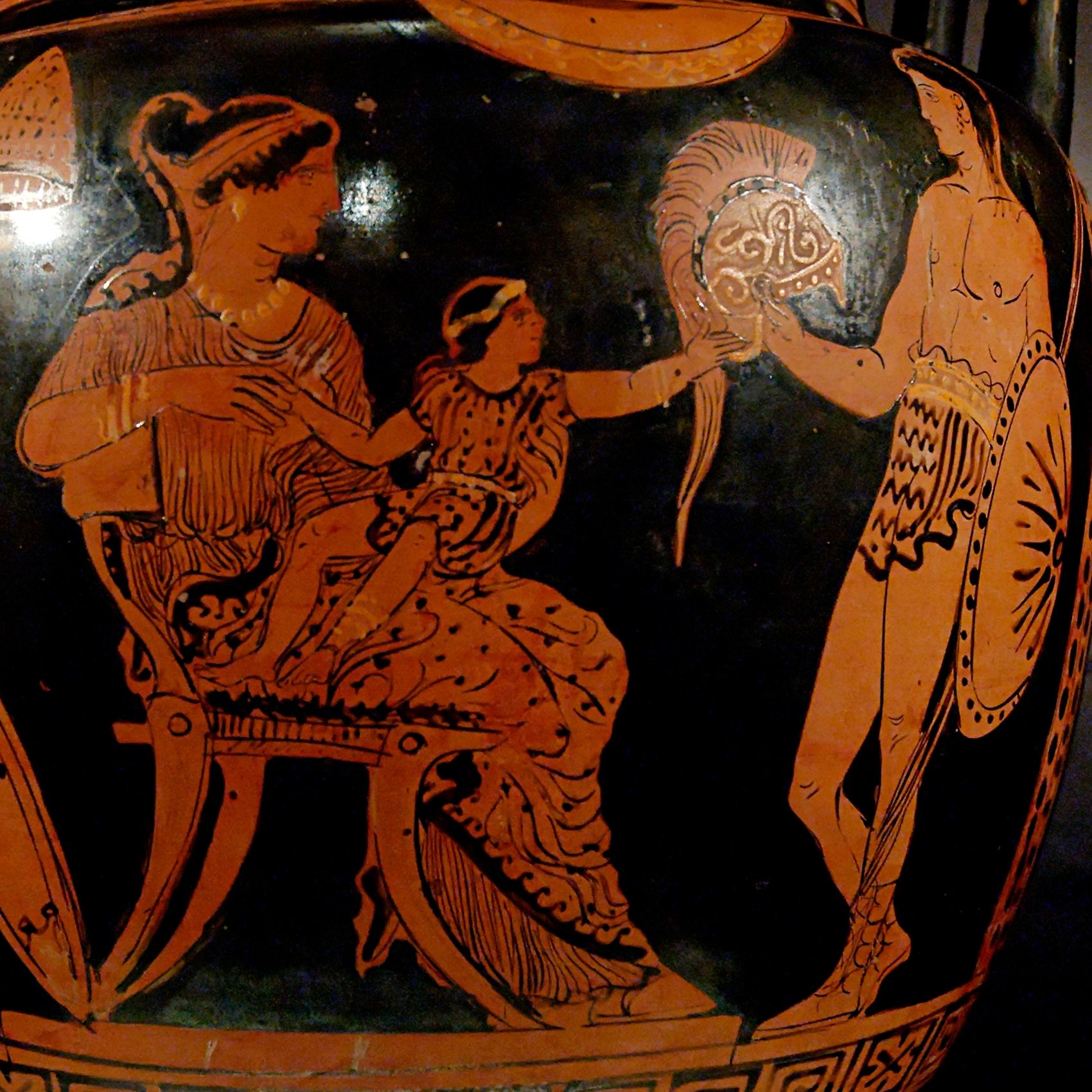
Apulian red-figure column-crater, ca. 370–360 BC. From Ruvo. Stored in the Museo Nazionale of the Palazzo Jatta in Ruvo di Puglia (Bari)
Second Place – Rachel Burns
Hector of County Durham is a deceptively simple yet remarkably effective poem that reimagines the Greek mythological figure of Hector in a modern setting. Its apparent simplicity belies a deep and nuanced engagement with the source material. The poem’s language is straightforward and unadorned, eschewing elaborate metaphors or complex syntax in favor of clear, concrete imagery. This simplicity, however, is precisely what gives the poem its power. By grounding the story in a specific, recognizable world – the “Dun Cow,” the “corner shop,” the “milk float” – the poet makes the myth feel immediate and relevant, inviting readers to see echoes of these ancient archetypes in their own lives and communities. The narrative of the poem unfolds through a series of tightly focused, almost cinematic scenes. Rachel’s use of enjambment and varied line lengths creates a sense of momentum and tension, drawing the reader into the story and heightening the emotional impact of each moment. The spare, economical language heightens this effect, allowing the reader’s imagination to fill in the gaps and invest the story with their own experiences and associations.
Throughout the poem, Rachel employs subtle but effective poetic techniques to create a sense of atmosphere and suggest deeper themes. The image of the “blood moon” and the “starlings, peck[ing] holes in the silver tops” of the milk bottles, for example, creates an eerie, unsettling tone that hints at the darker aspects of the story. The use of alliteration, as in “bottles clinking on white-bleached steps,” adds to the poem’s aural richness and sense of musicality, making the language itself a source of pleasure and engagement. Perhaps the most impressive aspect of the poem, however, is the way it engages with and subverts the conventions of the Hector myth. By casting Hector as a kind of video game hero, “satisfied he is still top of the leaderboard,” Rachel suggests the ways in which these ancient archetypes continue to shape our cultural narratives and ideals of masculinity. At the same time, the poem does not shy away from the darker aspects of the myth, hinting at the ways in which women’s bodies and agency are often violated and denied.
The apparent simplicity of the poem, then, is not a weakness but a strength. By stripping the language and narrative down to their essentials, the poet allows the underlying themes and emotions to shine through more clearly. The result is a poem that feels both timeless and urgently contemporary, a powerful reminder of the enduring relevance of these ancient stories.
In the end, it is this combination of simplicity and depth, of clarity and complexity, that makes Hector of County Durham such a remarkable poem. Through its vivid language, skillful use of poetic techniques, and thoughtful engagement with the source material, the poem invites readers to consider the ways in which myth and reality intersect, and to find new meaning and resonance in these timeless tales.
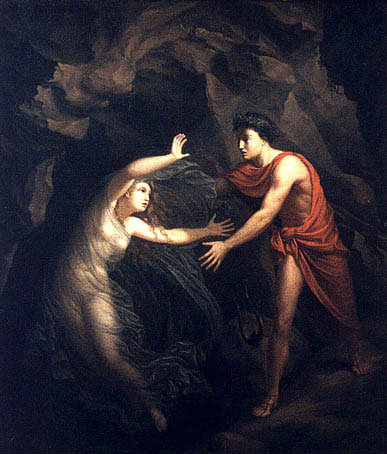
Orpheus glances back at Eurydice, 1806 oil painting by Christian Gottlieb Kratzenstein Stub
Third Place – Jessa Brown
Heurodis Began to Wakeis a captivating and experimental retelling of the Greek myth of Orpheus and Eurydice. The poet takes an innovative approach to the classic tale, weaving together elements of language, mythology, and personal identity. One of the most striking features of this poem is its unique use of language. Jessa employs a mix of English, Greek, and Proto-Indo-European words, creating a linguistic tapestry that reflects the ancient origins of the myth while also making it feel fresh and contemporary. The fragmented lines and unconventional punctuation add to the sense of disorientation and transformation that Eurydice experiences in the underworld.
The poem is rich in allusions and references, from the “Otherworld” and “Hades” to “Philomel” and “Pandora.” These mythological touchstones serve to situate the poem firmly within the realm of Greek mythology, while also allowing the poet to explore broader themes of love, loss, and identity. Throughout the poem, the voice shifts between first and third person, blurring the boundaries between Eurydice and the narrator. This creates a sense of fluidity and interconnectedness, as if Eurydice’s story is part of a larger tapestry of women’s experiences. The tone is by turns haunting, defiant, and mournful, capturing the complex emotions of a woman caught between life and death, love and betrayal. Jessa employs a range of poetic techniques to convey these themes, from the use of alliteration and assonance to create a sense of musicality, to the repetition of key words and phrases to emphasize Eurydice’s struggle for autonomy and voice. The final stanzas, in particular, are a powerful declaration of independence, as Eurydice asserts her own identity apart from Orpheus and the myth that has defined her.
Overall, Heurodis Began to Wake is a stunning and original take on the Orpheus and Eurydice myth, one that challenges our assumptions about language, gender, and the enduring power of storytelling. Through its inventive use of form and language, the poem invites us to consider the ways in which we are all shaped by the stories we inherit, and the ways in which we might reimagine them for ourselves.
If you’ve been inspired by the writing and analysis of these poems, you might want to enter one of our future competitions – there are more launching soon! Every year our Omnibus magazine runs the Sam Hood Translation Prize (as well as an essay prize), which you can read more about here.
It was with great sadness that the Association learned of the death of Richard Seaford, Professor Emeritus of Classics and Ancient History at the University of Exeter. Richard was President of the Association in 2008-9, in recognition not only of his enormous contribution to classical scholarship, but also of his pivotal role in the restructuring of the Association itself in the early 1990s.
This brought, among other things, a wholesale transformation of the annual CA conference, vastly increasing the number of participants, making it infinitely more attractive to students and early-career scholars, and generally ‘intellectualising and democratising’ an event which has become the highlight of the UK Classics calendar (Malcolm Schofield in The Classical Association: The First Century 1903–2003, p.76).
“Richard’s presidential address, ‘The Ancient Greeks and Global Warming’, delivered at the joint CA/CAS conference in Glasgow in April 2009, was a characteristic example of his approach to scholarship: utterly original, deeply thought-provoking and inspiring, personally and politically engaged, and delivered with the absolute clarity and precision that was typical of his style as a lecturer. He will be remembered as one of the most consistently original and intellectually ambitious Classicists of the last 50 years, his reputation established in a stunning set of 1980s articles on the ways in which ancient Greek myth and ritual shaped the culture’s literature and thought and further enhanced by a series of ground-breaking monographs, including Reciprocity and Ritual (1994), Money and the Ancient Greek Mind (2004), Cosmology and the Polis (2012), and The Origins of Philosophy in Ancient Greece and Ancient India (2019).”
~ Prof. Douglas L. Cairns (Chair of Council)
There will be a memorial service for Richard at St Michael’s Mt Dinham, Exeter, at 11 am on 24th February, with a buffet lunch to follow (details of buffet lunch to be confirmed; please contact l.g.mitchell@ex.ac.uk for those interested for numbers). It is also expected that the service will be live-streamed.
We are delighted that our very own Outreach Officer and Chair of the Classics Development Group, Dr Arlene Holmes-Henderson, has been made an MBE by King Charles III for Services to Education in the 2023 King’s Birthday Honours.
Arlene is an Associate Professor of Classics and Ancient History at Durham University and she has been at the forefront of Classics Education for many years, co-leading Classics in Communities and the Advocating Classics Education (ACE) project, and since 2020 she has been the CA’s Outreach Officer, a role in which she raises of awareness of the ancient world and classical subjects across all sectors.
Born and raised in Glasgow, Scotland, Arlene graduated with a BA (Hons) in Classics from St Hilda’s College, the University of Oxford, then received a scholarship to Harvard University for graduate study. Arlene later received her Doctorate in Education from the University of Glasgow and was a practising secondary school teacher before moving into research and policy making, where she has published reports into the teaching and learning of Classics in partnership with the Department for Education and the CUCD.
Her books ‘Forward with Classics‘ and ‘Expanding Classics‘ showcase the positive impact that learning classical subjects can have upon people of all ages and backgrounds and it is wonderful to see that her determination to make Classics more widely available in schools and communities has been recognised with this honour.
With her commitment to bringing classical subjects to greater prominence and policy priority, Arlene sits on the Executive Committee of the University Council of Modern Languages (UCML) as their first ever representative for Classical Studies and she is also Vice-Chair of the Universities Policy Engagement Network (UPEN).
An expert in classical rhetoric, she currently holds a British Academy Innovation Fellowship (2022-2024) entitled ‘Levelling-up through talk’, which investigates how speech, communication and active listening contribute to young people’s social mobility and employability, and she is also leading a major new multi-disciplinary project ‘Shy bairns get nowt’ to help teachers improve the teaching of oracy skills in North East England schools.
She has judged the Cambridge and District Classical Association competition, the Lytham St Annes Classical Association Ancient Worlds Competition and delivered talks and workshops to many of our local branches, communities, schools and groups across the UK and beyond. She also features on our Speaker List and if you’d like to access outreach support she can be contacted at arlene.v.holmes-henderson@durham.ac.uk or on Twitter at @DrArleneHH
2023 marks 120 years of the Classical Association and we’re taking this opportunity to reflect upon some of our work to widen access to classical subjects over the past century: we created an anniversary film and celebrated with many of our members in person at the Fitzwilliam Museum back in April, and we also have an upcoming celebratory event in October (members – you’ll receive an invite via email/post). This anniversary year, we asked CA members – what has Classics and the CA meant to you?
Julie Mills
I have had a passion for ancient history all my life, but my career took me into the army and police and when I retired from the police in 2017 I was finally able to indulge my passion. I successfully studied for and passed an A Level in Classical Art and Architecture and put this to good use when I attended a summer school and archaeological dig at Thouria in the Greek Peloponnese. I followed this up by visits to Delphi, Thermopylae, Mycenae, Olympia and Athens, and, subsequently, Santorini, Rome, Pompeii and Herculaneum. I am passionate about everything concerned with Greece and Rome of the Classical Period and have been amember of the Classical Association for 5 years.
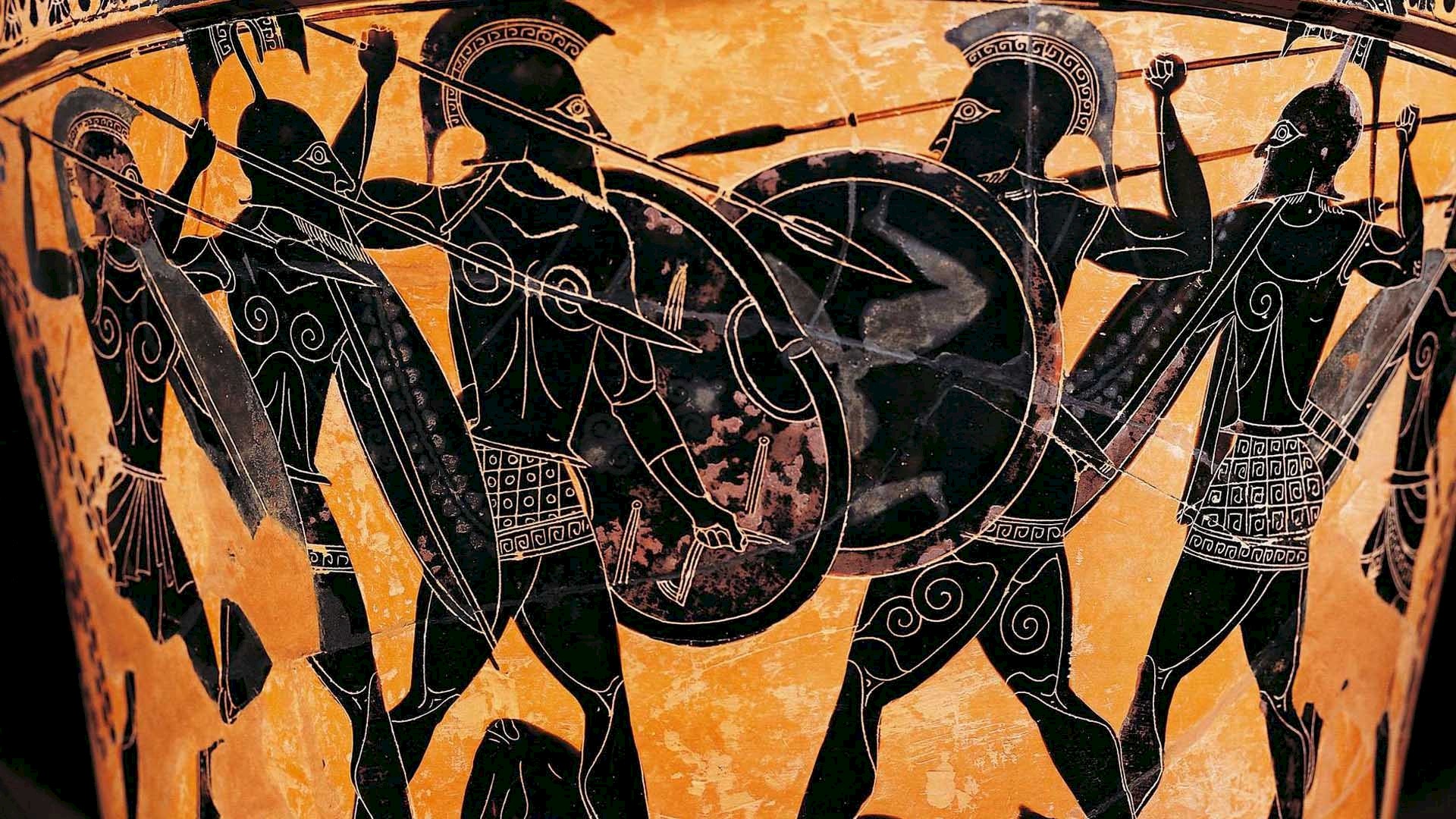
I am particularly interested in hoplite warfare, weapons and tactics, as I was intrigued and rather amused to discover that, in my past life as a Public Order officer in the police, I had used tactics and equipment that had really changed very little in 2,500 years! I am currently (sporadically!) attempting to teach myself ancient Greek, having been inspired by inscriptions seen on my travels, and an excellent epigraphy lesson during the 2019 Summer School.
Mireya González Rodriguez
Classics, and the humanities in general, placed in opposition to the sciences, continue to be relegated for their alleged lack of use or value compared to other knowledge, the ‘useful’ knowledge, of higher social esteem. As a Classics teacher I often have to engage with the ‘why study Classics’ question, a recurring one during Open Days and Parents’ Evenings. Follow-up questions usually lead to conversations aboutcareersand financial gain. As soon as we begin to shine a light into how this multifaceted discipline covers linguistics, literature, art, philosophy, history, archaeology, and politics, we see how Classics instantly catches the imagination of students, parents, and colleagues.
The Classical Association enables my students to embrace the opportunity they have been given to enter the 2000-year-old conversation with the Greeks, the Romans and their scholarship. My Sixth Form students are avid readers of the Omnibusmagazine and keen participants in the Association’s annual student competitions, such as the Gladstone Memorial Prize and Sam Hood Translation Prize, marked in their calendars as opportunities to explore ideas, topics and translations beyond the curriculum. My students also benefit from the Association’s annual conference as it sparks my own imagination and curiosity and then becomes the topic of conversations about everything there is still to learn, know, and understand about the ancient world.
The Classical Association is pivotal in widening participation and outreach by fundingsummer schools, workshops, and outreach events. Its consistently reassuring support to the numerous regional branchesallows for engagement with historical and archaeological societies and local communities. It thus enables regional branches to reach out to those who might not have had access to Classics in school and are notwithstanding curious about the discipline’s capacity to reignite interest in the ancient past to safeguard a better future.
One of the challenges of Classics education today is to overcome the reductionist view of education as mere training, a transmission of data or techniques, and promote, instead, wisdom and critical thinking.
Advocating for the study of Classics and how it can teach us to understand the essence of our shared humanity encourage a broader perspective on human diversity, promoting tolerance and empathy. The community of academics, teachers, and students that is the Classical Association shines a light on the value and use of Classics against all odds.
Paul Andrews
I am 75. I‘ve studied Latin since the age of 9 and did Greek for O level, but only really began to appreciate Classical literature after I left school and found Classics a welcome relief from my dry law degree course.
I love the history, the stories, the philosophy and the drama. Aristophanes and Virgil are my favourites. Since retiring, I’ve made a point of watching the Cambridge Greek plays. My latest project is to read the four Plautus plays with published Cambridge university commentaries.
Classics are an inspiration, an escape and a relaxation. I relax when I have to concentrate, and reading classical texts usually wipes away anything I’m worrying about at the time and helps me to address them in a relaxed and calm way. When the world seems to be collapsing about my ears, and it seems to be futile to do anything about it, I think of Virgil’s Aeneas and the Greeks at Salamis. Then I feel much better about addressing the seeming impossible and finding a solution. Reading classical authors also helps one to appreciate traditional and conventional values and their use as criteria for evaluating modern progressive ideas.
Professionally, as a lawyer and public official (and later an elected councillor), Classics has helped with written work, particularly with writing letters and memos and newspaper articles, where a little bit of Classical-type rhetoric often helps to grab the readers’ attention. One problem with modern public administration is an obsession with big and bold ideas without evaluating details, which often leads to entirely predictable unintentional consequences. I’ve found the discipline of translating difficult texts has given me the skill both to look behind the “big picture” and to see the wood for the trees. This is also very important when considering legal contentious matters.
The CA has been a huge part of my journey studying classics remotely. I’m not able to engage with the subjects I love in person; so having access to the LSA branch’s amazing lectures online, posting mini summaries of these on Instagram, discussing the ancient world and its reception at the virtual book club, and being able to tune into the CA Conferenceopens up my world and (together with my Instagram account and Open University degree) expands the possibilities for what I can achieve bedbound with a chronic illness.
David Scourfield
If memories could be turned into film clips, my set of images from more than a quarter of a century of attending CA conferences could easily generate a three-minute promo, a two-hour video, and a shelf-full of outtakes best left suppressed! Friendships made in the bar, stimulating panels (including the best presented paper I have ever heard anywhere—by a PhD student—and no, I’m not going to disclose), receptions and dinners, Presidential addresses witty or provocative, would all be there, typically rooted in a strong sense of place as the conference moved through splendid venues in England, Scotland, and Wales.
But Classics these days is naturally a global affair, and one major theme of theCA Council’swork during the six years when I had the privilege of being its Chair was furthering internationalisation. In line with this focus we were able to offer significant charitable supportto projects outside as well as within the UK, in particular to the University of Canterbury, New Zealand, following the damage done to its wonderful Logie Collection of ancient artefacts by the earthquake of 2010, and to our sister association in the US, the Society of Classical Studies, in connection with its Gateway Campaign, which sought, among other aims, to put the funding of the American Office of L’Année philologique (on which we all rely so heavily) on a surer footing.
In that context I found myself in January 2008 in an assembly room in a large hotel in Chicago, making an announcement at a plenary session of what was then still the APA. Conticuere omnes … I began to read the text of the formal CA statement. And then, on reaching the words ‘two hundred thousand US dollars’—an enormous cheer. It felt a bit like the announcement of the result of the first sub-four-minute mile—a luminous CA moment, preserved not only in my memory but in the name ‘The Classical Association Fund for Bibliography’ bestowed by the SCS in a warm gesture of appreciation.
My involvement with the CA began in earnest in 2012 when I was charged with co-organising the CA conference in Exeter. There’s no getting away from the fact that organising the conference involved an awful lot of hard work and I remain full of admiration for those who take on the task. In those days, we handled all the bookings ourselves rather than through a conference services team, and processing each one gave me such a clear sense of the CA’s reach and the breadth of its membership, from PhD students to established academics and members of the general public. It was my first real glimpse of the value of the CA’s work in bringing these constituents together.
The programme reflected Exeter’s research strengths and specialisms, with panels on the Impact of Greek Culture and Roman Ethics and Exemplarity, and a fitting keynote by Chris Carey on athletic success in classical Greece as we eagerly looked ahead to the London Olympics. We were keen for the conference to reflect the best of everything that Devon has to offer, so we kicked things off with a cream team (cream first, of course), included optional excursions to Castle Drogo and Knightshayes Court, and held the conference dinner in the University’s Great Hall where the Exeter University Jazz Orchestra kept us dancing until the small hours. My only regret, perhaps, was the decision to extend the run of our student Classics Society’s production of Euripides’ Bacchae especially for conference delegates. I say regret because a colleague and I had been cajoled into joining the chorus of maenads and waiting for the curtain to go up to perform in front of the great and good of Classics was an experience I won’t forget in a hurry, however hard I might try!
When we welcomed delegates to Exeter it was a time of real transition for the department as many of our most senior colleagues were nearing retirement. Our own Peter Wiseman opened the conference with an address on the history of the department that ended with him quoting the closing words of Rosemary Sutcliff’s novel The Eagle of the Ninth: “They are rebuilding Isca Dumnoniorum.” The success of the conference played a large part, I think, in that rebuilding of Classics and Ancient History at Exeter, encouraging us to embrace our future with confidence and pride.
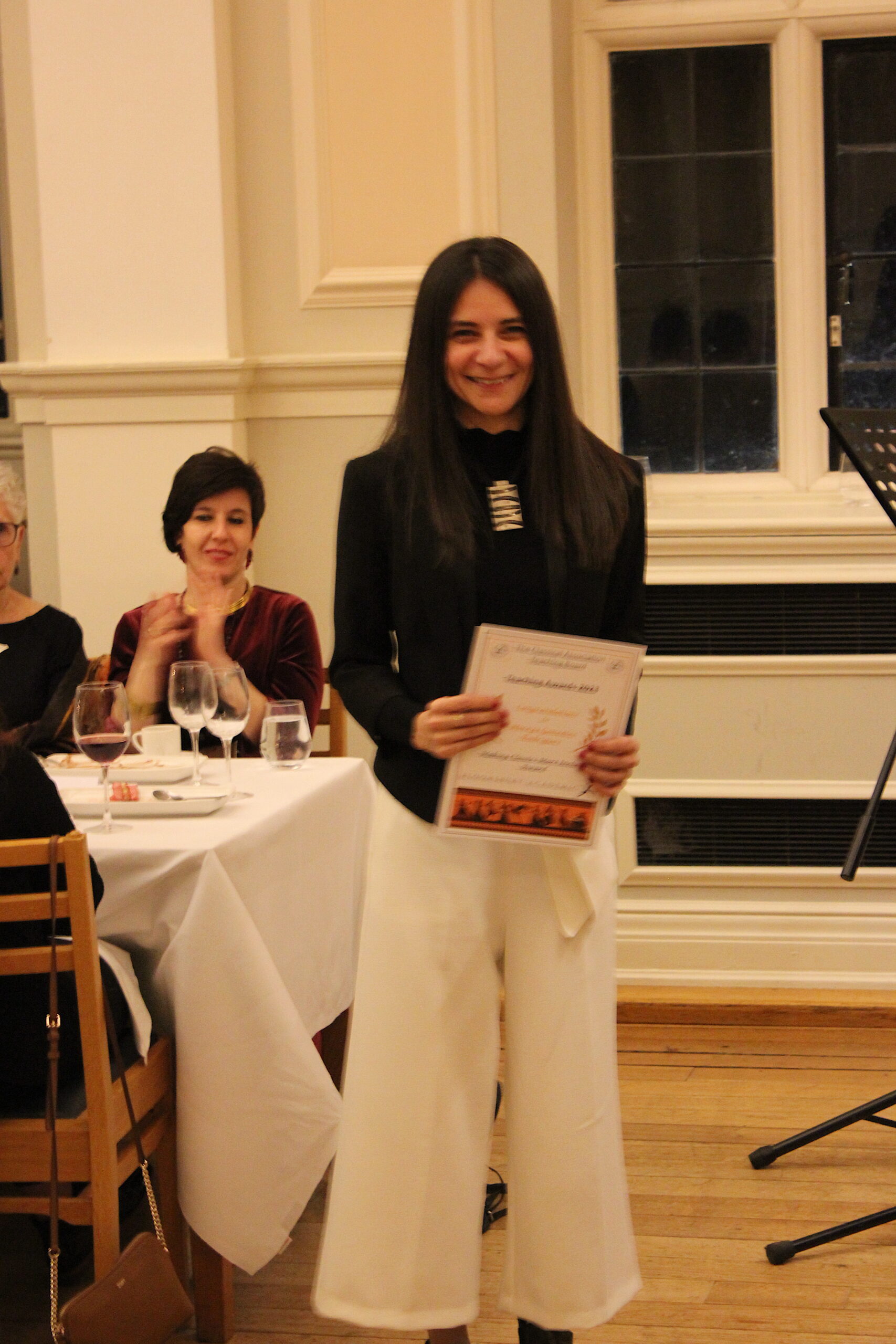
The conference remains a highlight of my calendar and, as Chair of CATB, it’s been a source of pride to see the CA’s commitment to education reflected in the strong pedagogical thread running through each conference and the ever-increasing number of teacher attendees. I’m a firm believer that teachers are heroic, and it was a delight to be able to inaugurate the annual CA Teaching Awards in 2021 to recognise the exceptional dedication and ingenuity of the Classics teaching community. Playing this small role in the CA’s 120-year history has been a real privilege and I look forward to seeing the CA’s support for the teaching of Classics flourish when I hand on to my successor.
What does Classics and/or the CA mean to you? Tell us on social media, or submit your story in written (or voice note) form to Katrina at engagement@classicalassociation.org
It’s been a busy start to the new academic year as CA branches across England and Wales have welcomed audiences to a variety of events this autumn – from podcaster Tristan Hughes’ visit to the Lancashire coast, to Lampeter and West Wales’ online talks and Guildford CA’s Pizza Night! There have been many causes for celebration, with special anniversaries for both the youngest and oldest branches – the official launch of the Hadrian’s Wall branch in Durham and the first event of the Southport and Birkdale branch, were followed by celebrating not one but two centuries as both Southampton CA and the South West CA commemorated their 100 year anniversaries, just days apart from each other.
Our Branches Coordinator, Katrina Kelly, reports from Durham and Southampton and South West Treasurer Professor Sharon Marshall recounts recent events in Exeter…
Hadrian’s Wall Launch
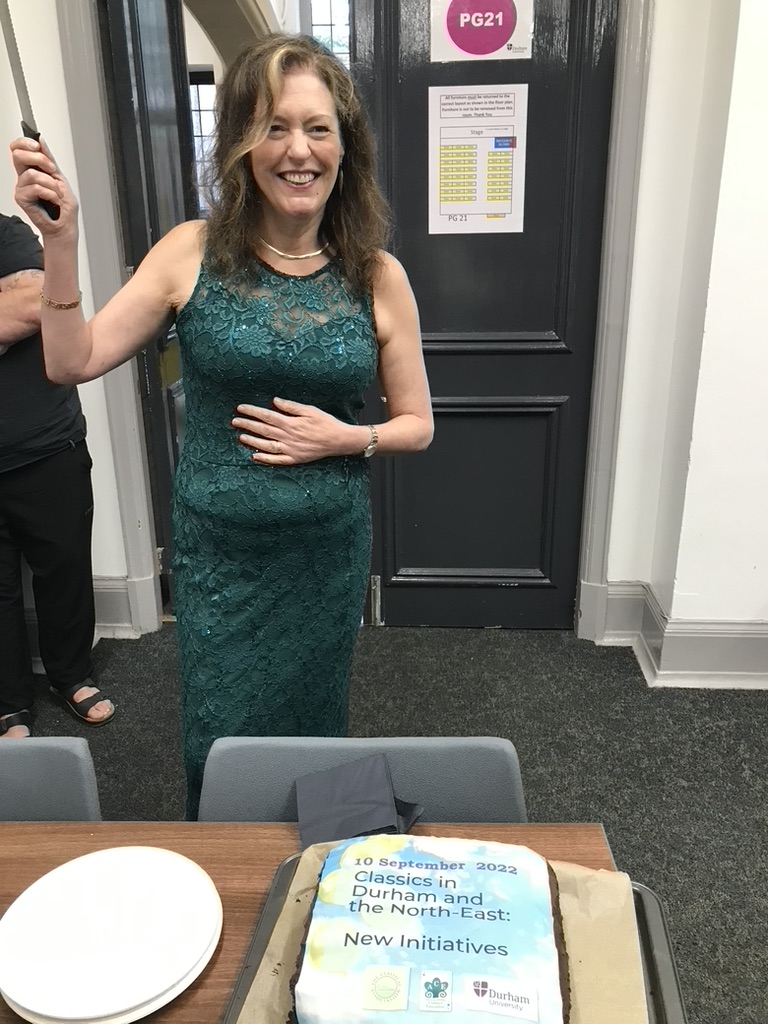
In early September, as part of a wider celebration of exciting things happening on the Durham Classics scene and across the North East (you can read more about it on Professor Edith Hall’sexcellent blog) it was a privilege to join branch Chair Justine T. Wolfenden and Treasurer Dr Cora Beth Fraser to mark the launch of the Hadrian’s Wall CA in a special session at Durham University.
Supporters of Classics, academics, students, teachers and volunteers came together to learn more about the new branch (and eat cake!) – and the very first members were signed up on the spot. The branch welcomes any and all folk to join so if you’d like to find out more, you can do so here.
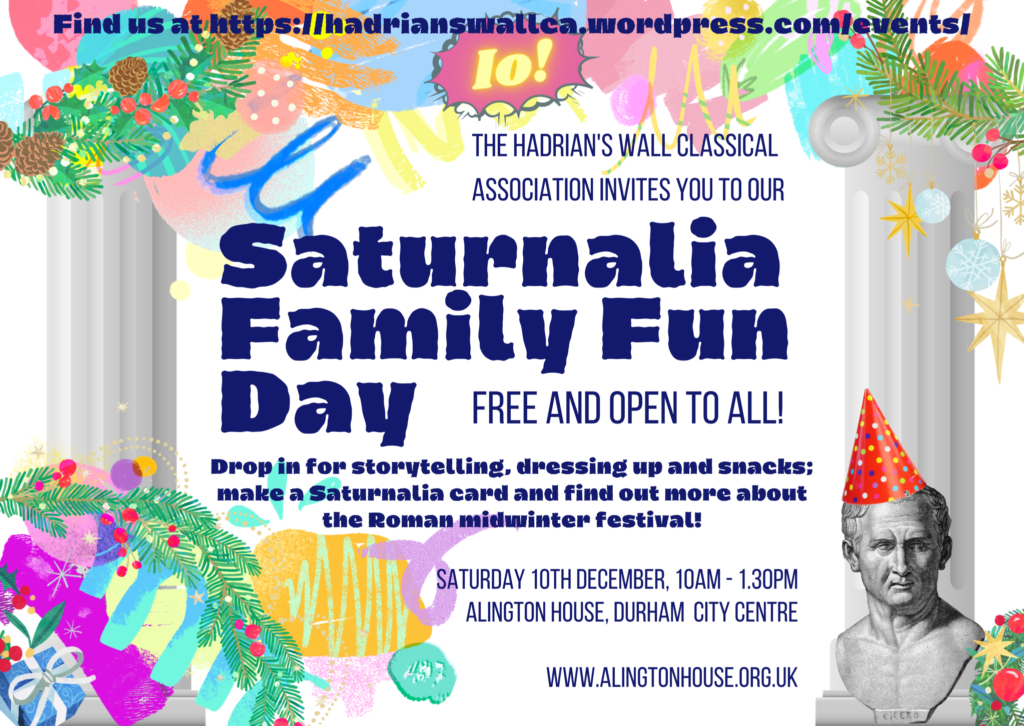
The Hadrian’s Wall branch was born during lockdown in 2021 and the new committee has already shown tremendous tenacity and vision to get up and running during the pandemic. They hope to support people interested in the ancient world who are based in the Far North, anywhere in the region of the Wall, and would be delighted to hear from you if you’d like to volunteer or get involved in any way. The branch’s inaugural programme of events opens with a Roman midwinter family event this December.
Southampton Centenary
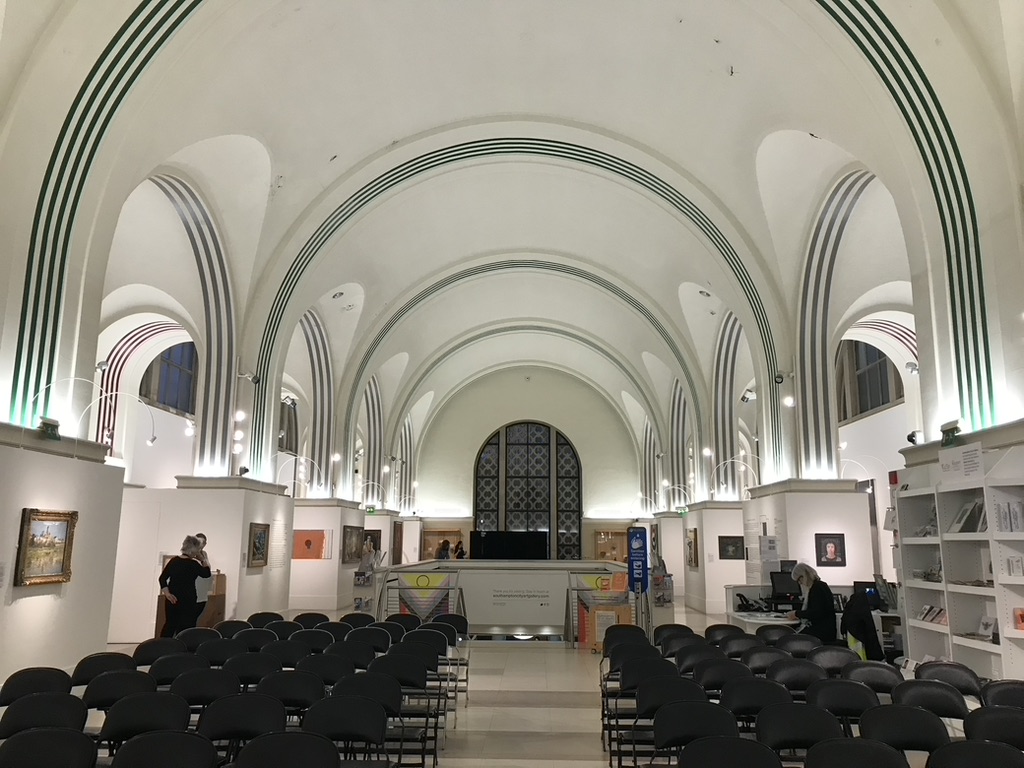
Fast forward a couple of weeks and a scenic trip along the cross-country mainline brought me to Southampton where the beautiful City Art Gallery, with its Art Deco interiors, was host to 100 local CA members and guests who celebrated, fittingly, 100 years of the branch.
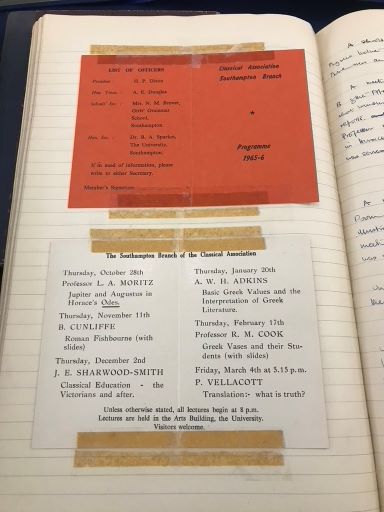
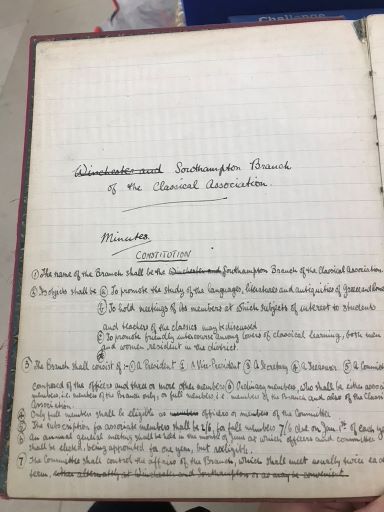
As we enjoyed sandwiches and scones next to paintings by Monet and Gainsborough, we were treated to a brilliant mini exhibition on local finds from Roman Southampton and were encouraged to explore some branch memorabilia, including flyers and lecture programmes from across the decades and minute books dating all the way from the inaugural meeting in 1922!
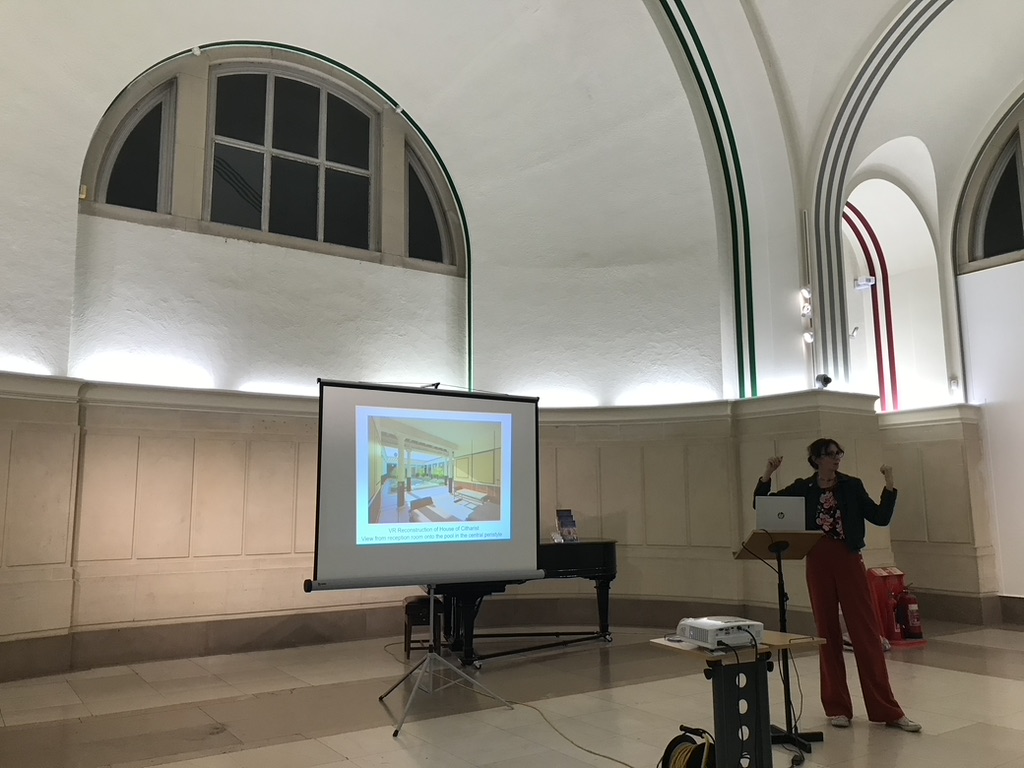
It was a pleasure to meet lots of members and volunteers, including local school teachers and some young students, and it was particularly special to chat to Professor Brian Sparkes and his wife Diana, mainstays of the local classics community, who are not only previous committee members but have been branch members for what is surely a record-breaking sixty years – and counting! Branch Secretary Jacqui Meredith welcomed everyone and introduced Dr Shelley Hales of Bristol University who delivered an excellent talk on Pompeian celebration spaces, from triclinia to al fresco dining areas, which whetted our appetites for yet more celebrations. A really entertaining Q&A ensued, with plenty of insightful questions from young audience members too. The October air was warmed by the congenial company and classics chat and we didn’t want Dr Hales to stop! It is lovely to see such old and established branches thriving and still welcoming new audiences in their 101st year…
Exeter Centenary
On Wednesday 19 October, the South-West branch celebrated its centenary in fine style at the University of Exeter with a lecture by Peter Wiseman entitled A Centenary and an Ocean-Going Hero: Tales from the South-West. Fittingly, we also took the opportunity to celebrate Peter himself, who has played so crucial a role in the branch’s history, and his recent receipt of the Kenyon Medal, awarded to him by the British Academy for his contribution to the fields of Roman history and literature.
Peter’s lecture deftly and ingeniously wove together two separate but connected strands. The first was the history of the branch, from its creation alongside the University College of the South-West in 1922 to hosting the first CA conference of the post-war era in 1945 in the half-ruined city of Exeter, which had suffered serious damage in the blitz. Peter graciously acknowledged the contributions of all those who worked tirelessly to keep the branch going in more recent decades, modestly downplaying his own contribution. The second was a story of local history, intertwining the archaic Greek legend of Herakles sailing the Ocean with the trade-routes by which metals and other produce from northern Europe reached the peoples of the Mediterranean. Prompted by a request from Steve Hobbs of the North Devon Archaeological Society, Peter explored the textual evidence for Hartland Point in North Devon as ‘the cape of Herakles’, described in Ptolemy’s Geography as close to a settlement that could have been the recently discovered Romano-British temple at Clovelly Dykes.
Peter’s lecture concluded with a powerful and salutary reminder of the important role that branches play in connecting communities interested in the ancient world: “I end as I began, with a reminder of the sheer size of the ‘parish’ for which we are notionally responsible. I believe there will always be a demand for the various types of expertise that classicists can provide. The challenge is to identify it and make ourselves available”.
Join Us!
To find out what is happening near you, check out our Events page where you can filter ‘branch events’ or find your closest classics community on our Branches page.