


However, there are many schools in the UK that don’t have the time or opportunity to study Latin or Greek as discrete subjects. I started thinking about students at these schools and how could they access this fascinating and useful approach to understanding English. Could there be some way to engage them in a ‘light-touch’ way without the formal study Latin or Greek, and in a way that would benefit their English vocabulary and wider literacy?
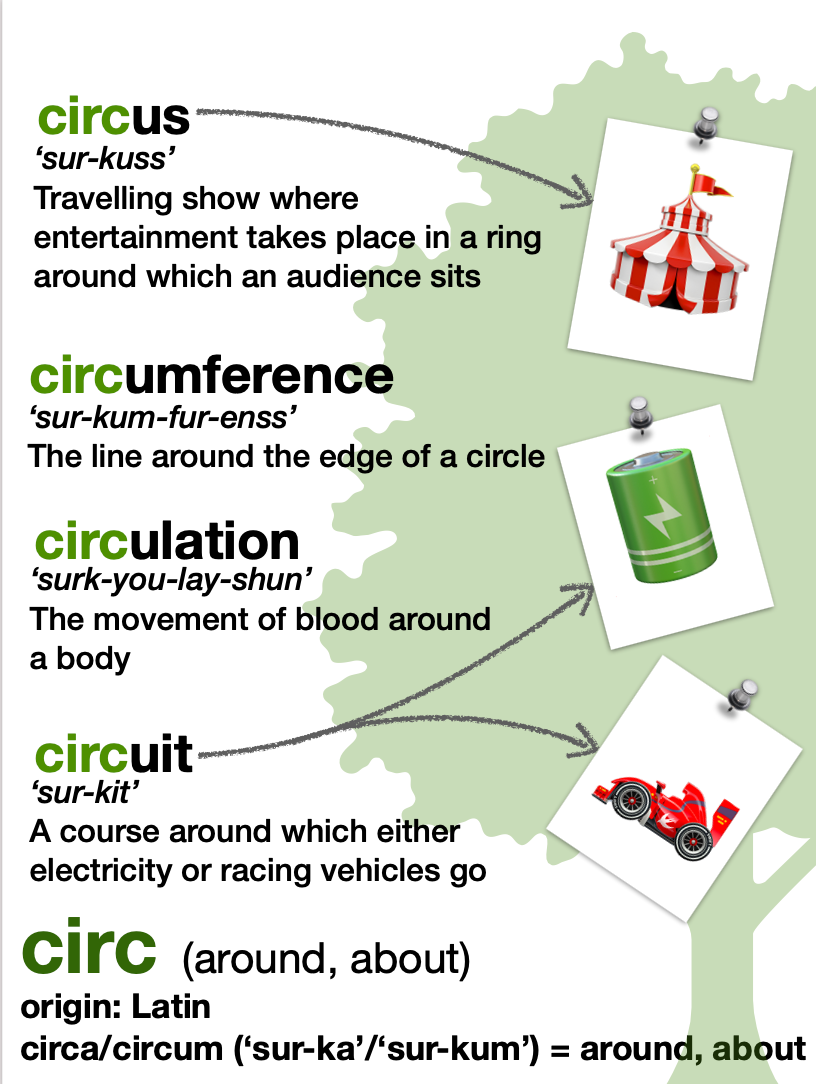
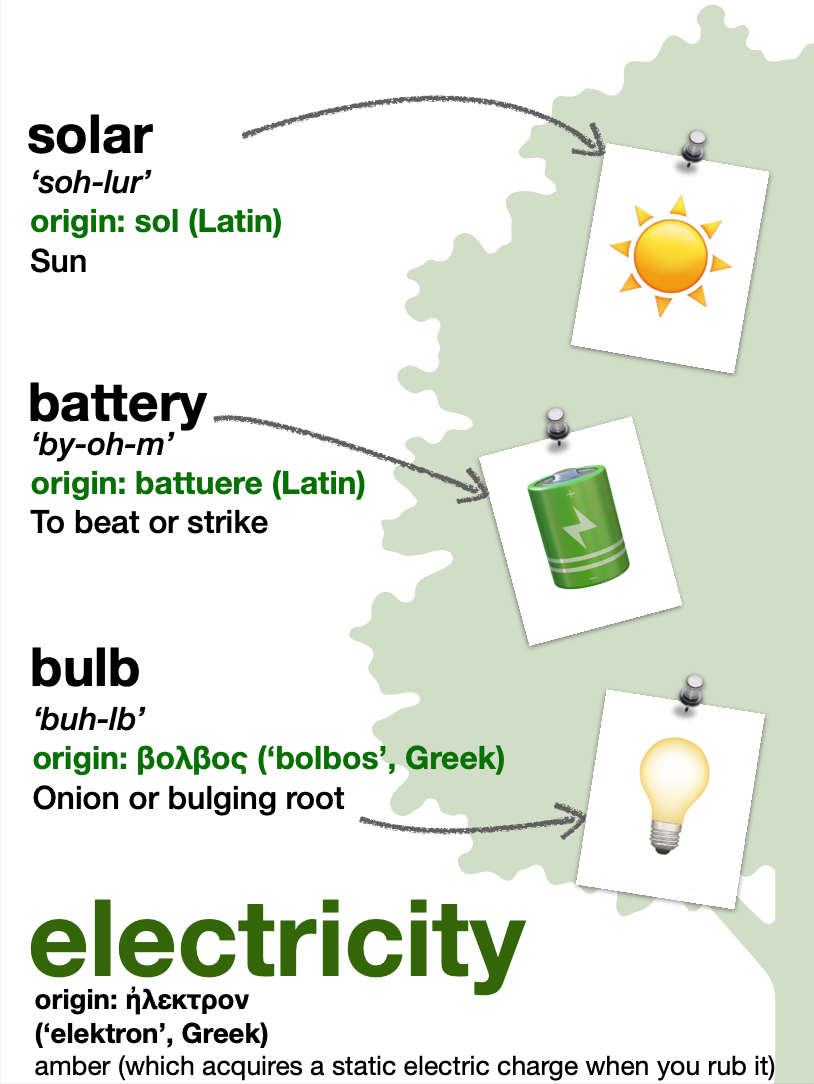
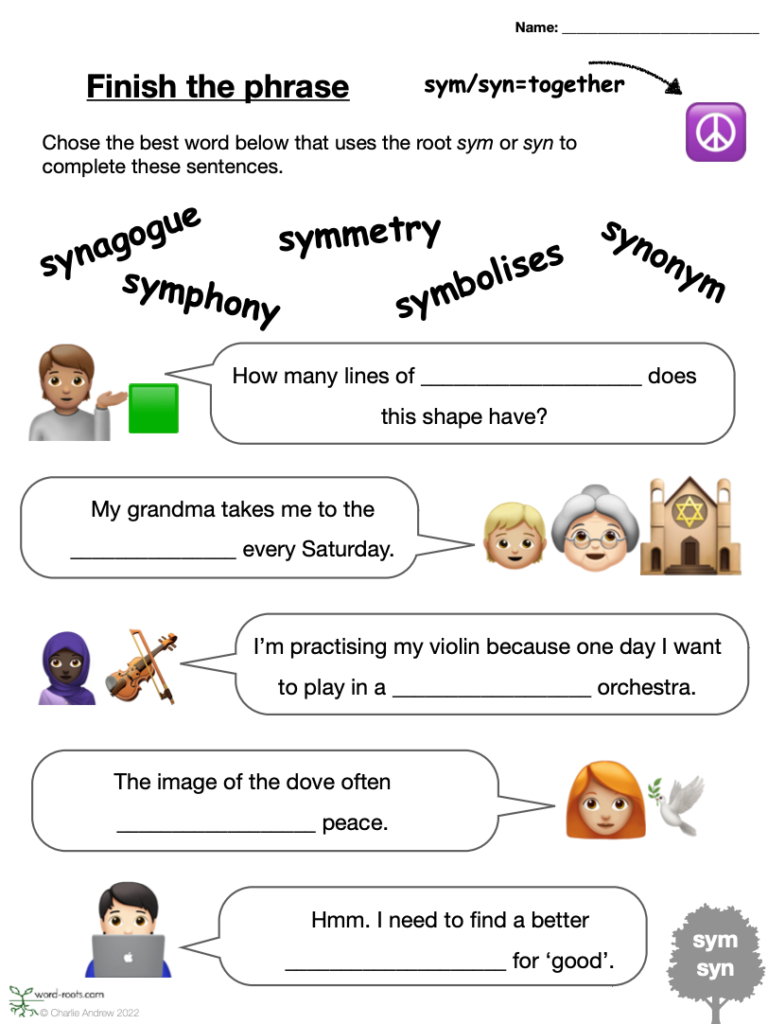
In response, in 2019 I put together some trial classroom resources that drew on the Latin and Greek etymology of English vocabulary. These resources were designed for students aged from age 8 upwards, with each set of resources focussing on one Latin or Greek root. Sets contained a colourful poster that could be displayed digitally or printed out, plus five student worksheets that progressively introduced ambitious English vocabulary through the framework of the target root.
I quietly published these resources under a new section of maximumclassics.com and, to be honest, pretty much forgot about them for a while. Or at least, until I next checked my site’s statistics. Word Roots quickly became one of MC’s most visited pages, and some of the most downloaded resources. Feedback from teachers testified to the usefulness of the worksheets and of the systematic approach in general. So, I kept on making more and then, finally, moved all of the resources to their own site at word-roots.com.
As you’ll see if you visit the site, some of the resources are free to download and others have a £1 tag. Since Maximum Classics is run as a community interest company (CIC), any profits made on content sales are ploughed back into developing more free resources. More kids get access to the joy and usefulness of Latin and Greek, and the virtuous circle continues.